Industrial weighing performance is only as strong as the sensing element beneath the machine. A scale, hopper, batching system, feeder, or force-measurement device may look mechanically robust from the outside, but its real accuracy begins with the sensor converting force into a stable electrical signal. That sensor is the load cell. When the wrong load cell is selected, the entire weighing system can suffer from drift, repeatability problems, overload damage, difficult calibration, unstable control, and inconsistent product quality.
For manufacturers, that risk is not theoretical. If a feeding or batching process runs 16 hours per day and material overuse reaches only 0.5%, the annual cost can become significant. On a line consuming 300 kilograms of additive per day, a 0.5% error equals 1.5 kilograms per day. Across 300 operating days, that means 450 kilograms of unnecessary material usage. If the additive costs US$8 per kilogram, the hidden annual loss is US$3,600 on just one stream. In more valuable chemical, pharmaceutical, or functional-material applications, the cost can be much higher.
A load cell for weighing machine therefore deserves more than a basic specification check. It must be matched to the machine structure, load range, operating environment, control method, and business objective. This article explains how the technology works, how to size and install it correctly, how to compare common types, and how to avoid selection mistakes that reduce long-term reliability. It also shows how Transcell supports industrial weighing projects through load cells, controllers, and complete weighing-related solutions.
What Is a Load Cell for Weighing Machine?
A load cell for weighing machine is a force sensor that converts the mechanical load applied by a scale, hopper, feeder, or process vessel into an electrical signal that can be measured, amplified, and displayed as weight.
In practical terms, the load cell is the measuring core of the equipment. When weight is applied, the metal elastic element inside the sensor deforms slightly. Strain gauges bonded to that elastic element change electrical resistance in response to the deformation. A weighing instrument or controller reads that change, applies calibration data, and converts it into a usable weight signal. The operating principle sounds simple, but the performance depends on mechanical design, material quality, sealing, overload protection, temperature behavior, cable stability, and installation accuracy.
Many buyers mistakenly think of the load cell as an interchangeable commodity. In reality, different machine structures require different sensor geometries and capacities. A small platform scale, a dosing hopper, a large tank, a checkweigher, and a material-testing machine may all measure weight or force, but they do not impose the same mechanical demands. That is why the correct load cell for weighing machine must be selected according to the application rather than by price alone.
How Does a Load Cell for Weighing Machine Work?
A load cell for weighing machine works by using elastic deformation and strain-gauge measurement to translate a physical force into a proportional electrical output that a controller can interpret as weight.
Most industrial load cells use a Wheatstone bridge circuit built from strain gauges. As the elastic body deforms under load, the strain gauges stretch or compress. Their resistance changes by a very small amount, and the bridge converts that change into a millivolt signal. The signal is then processed by an amplifier, indicator, or controller. Because the output is small, signal quality matters. Noise, poor grounding, moisture ingress, cable damage, and unstable excitation voltage can all degrade performance.
For weighing machines, the process can be summarized in five steps. First, the structure transfers force into the sensor. Second, the sensor deforms within its designed elastic range. Third, the strain gauges convert deformation into an electrical change. Fourth, the weighing electronics scale the signal through calibration. Fifth, the system uses the weight information for display, control, batching, alarms, or data logging. In dynamic applications, the controller may also filter vibration and noise so that the output remains useful for control purposes rather than only static display.
Because the load cell is part of a system rather than a standalone device, its performance is directly connected to mounting hardware, cable routing, and signal-processing quality. This is one reason many industrial users pair the sensor with a suitable weighing controller rather than relying only on a generic indicator.
Why Does the Right Load Cell for Weighing Machine Matter So Much?
The right load cell for weighing machine matters because it determines weighing accuracy, repeatability, overload safety, control stability, and the long-term operating cost of the entire weighing system.
Consider three production realities. First, an inaccurate signal leads to material loss. Second, an unstable signal leads to poor control. Third, a damaged or drifting sensor causes downtime and troubleshooting expense. In batching, even a small offset can move a formula outside specification. In process feeding, poor weight feedback can reduce the value of a high-quality feeder. In tank weighing, a mechanically stressed or misaligned cell can create uneven loading, resulting in calibration problems and shorter service life.
The quality effect is equally important. In industries such as modified plastics, specialty chemicals, building materials, food ingredients, and pharmaceuticals, weight consistency is often tied to product consistency. If the weight signal is wrong, the recipe can be wrong. If the recipe is wrong, downstream performance can suffer. This is why the load cell should be treated as a strategic component, not just a spare part.
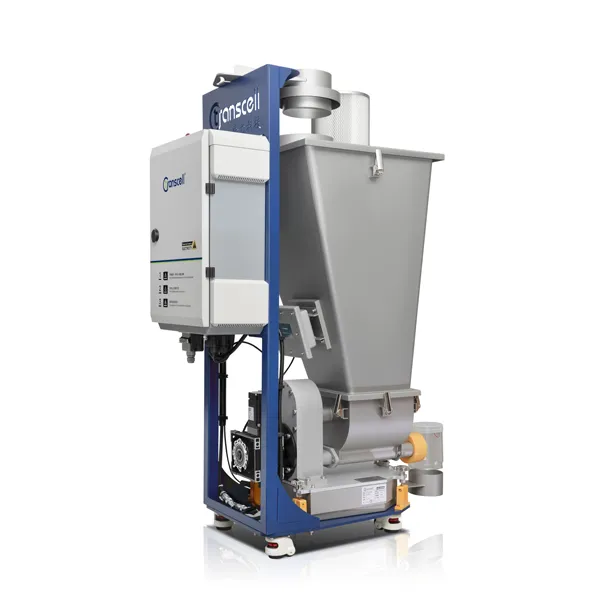
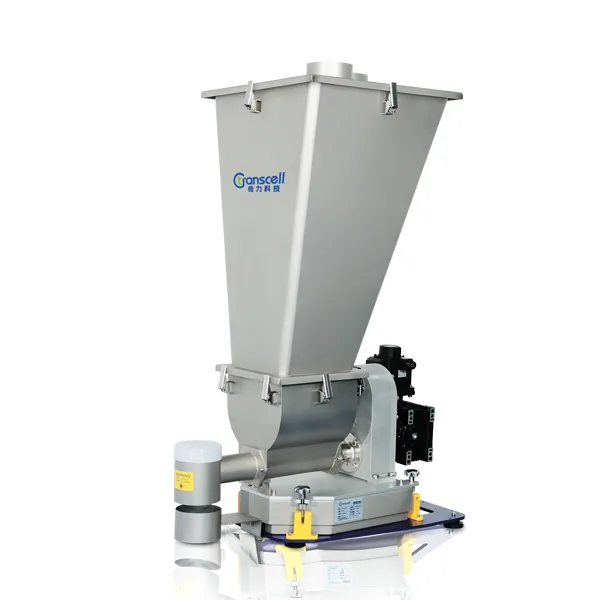
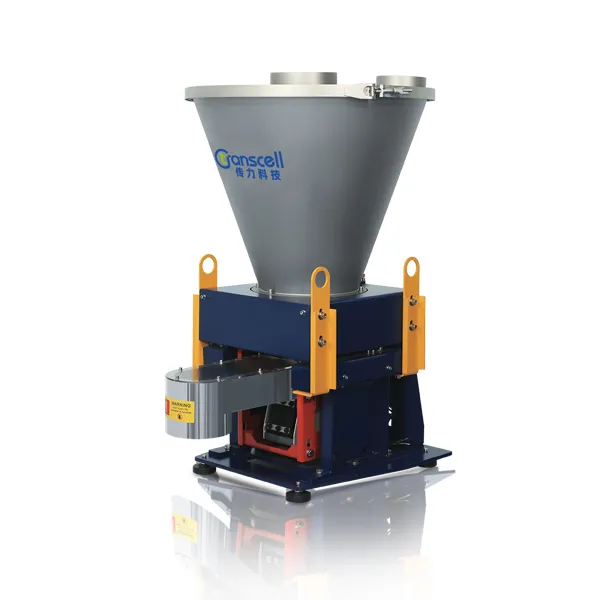
Transcell's own site emphasizes that the load cell is the sensing core for weighing and force-measurement devices, especially in applications such as batching scales, hopper scales, and loss in weight feeder systems where mass feedback directly influences process accuracy. That relationship is particularly important when the customer's target is not simply weighing, but precise dosing and controlled production.
Which Types of Load Cell for Weighing Machine Are Most Common?
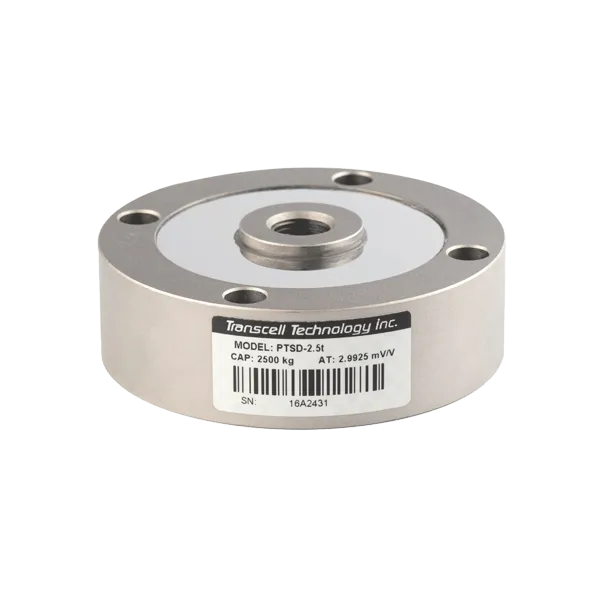
The most common load cell for weighing machine types include single point, S type, shear beam, spoke type, and related variants, each designed for different mounting conditions, load ranges, and application behaviors.
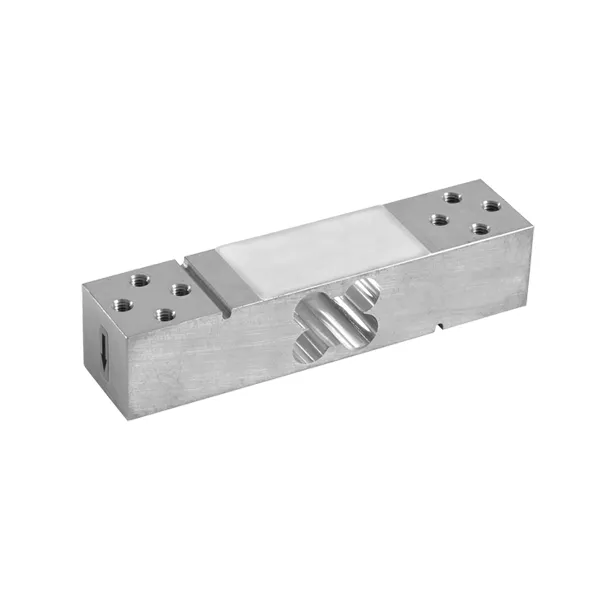
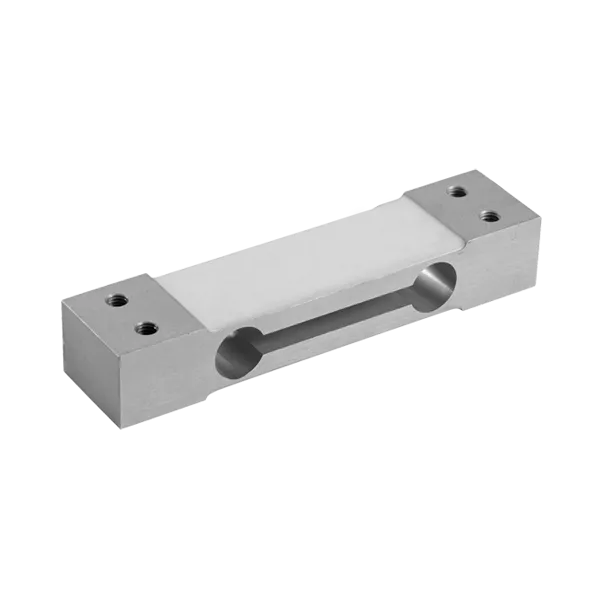
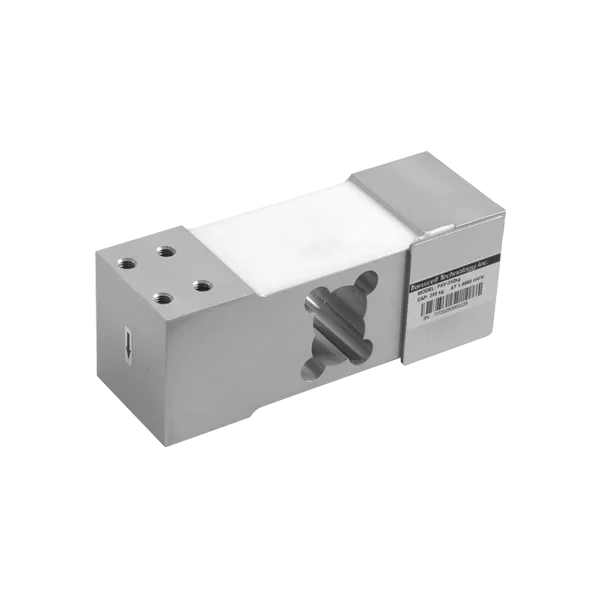
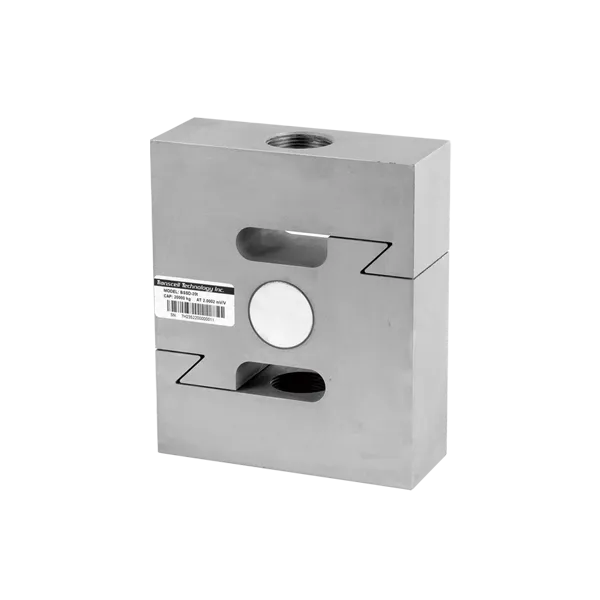
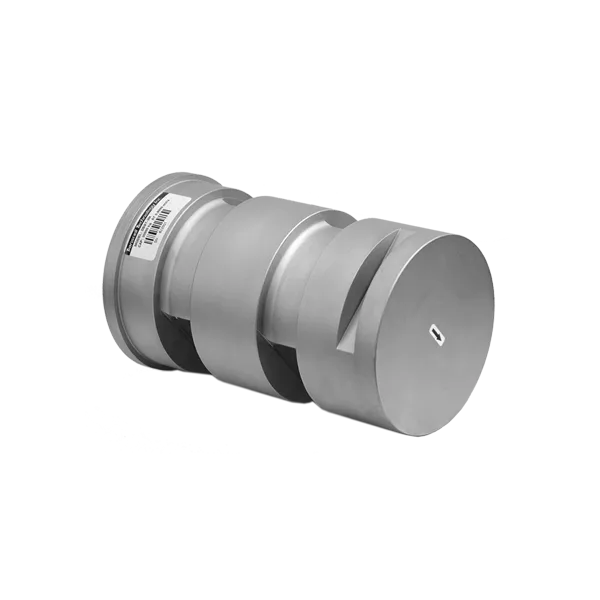
Single point load cells are common in compact scales and small platform applications. They are designed so that off-center loading can still be measured within specified limits, making them practical for retail, packaging, and small industrial weighing equipment. S type load cells are used for tension and compression, which makes them useful in hanging scales, suspended hoppers, material testing, and some batching systems. Shear beam and dual shear beam load cells are common in tank, hopper, and floor-scale applications because they provide strong mechanical support and good stability. Spoke-type load cells are often used in testing machines, truck scales, and larger structures that require robust force transfer.
On Transcell's site, examples include single point models such as FAW, FAV, and FATS, an S type model such as BSSD, a spoke-type model such as DBSL-XS, and a dual shear beam model such as DBST. These product types signal that the company covers both small equipment and heavier industrial weighing requirements.
| Load cell type | Typical load range | Best-fit applications | Main advantage | Main caution |
|---|
| Single point | Low to medium | Packaging scales, platform scales, small hopper scales | Compact design and tolerance for limited off-center loading | Not ideal for heavy tanks or harsh overload conditions |
| S type | Low to medium | Suspended hoppers, hanging systems, material testing | Works in both tension and compression | Requires careful alignment to avoid side load |
| Shear beam / dual shear beam | Medium to high | Floor scales, batching scales, large hopper scales | Strong mechanical stability and industrial durability | Mounting hardware quality strongly affects performance |
| Spoke type | Medium to very high | Truck scales, test machines, large force applications | Robust structure and strong load capacity | Should be matched carefully to structural force path |
The table is a selection guide, not a replacement for engineering review. The right load cell for weighing machine is the type that matches the structure, accuracy goal, and environment together.
How Do You Size a Load Cell for Weighing Machine Correctly?
To size a load cell for weighing machine correctly, you must calculate the maximum live load, dead load, load distribution, shock factor, overload risk, and safety margin rather than selecting capacity based only on nominal product weight.
Buyers often begin with the expected product weight. That is only one part of the equation. In a hopper system, for example, the sensor may carry the vessel weight, support structure, attachments, and material together. If a hopper weighs 400 kilograms empty and holds up to 600 kilograms of material, the gross supported load is already 1,000 kilograms. If the system uses four equally loaded cells under ideal conditions, the average static share per cell is 250 kilograms. But ideal conditions rarely exist. Uneven distribution, vibration, refill shocks, and structural asymmetry mean the working capacity per sensor should be higher.
A practical selection method is to calculate the total maximum supported load, divide by the number of sensors, and then apply a safety factor based on application severity. For a calm static tank, the factor may be moderate. For a hopper receiving impact during refill, the factor should be larger. In washdown or outdoor environments, one should also consider sealing and corrosion resistance, not only capacity. In many applications, under-sizing creates more risk than moderate oversizing; however, excessive oversizing can reduce signal resolution at low loads. The goal is a balanced selection, not the largest number on the datasheet.
For weighing machines used in dosing or batching, it is wise to size the load cell together with the controller and process objective. If a machine measures small recipe changes on top of a large tare weight, sensitivity matters. If the machine is mostly concerned with high-capacity bulk weighing, robustness may matter more. That is why capacity should always be considered together with resolution and required usable signal range.
How Should Accuracy, Repeatability, and Stability Be Evaluated?
Accuracy, repeatability, and stability should be evaluated as a system-level requirement, meaning the load cell for weighing machine must be judged not just by datasheet values but by real performance in the installed structure and operating environment.
Customers frequently ask for high accuracy, but that phrase can mean different things. Repeatability describes whether the same load produces the same signal repeatedly. Nonlinearity describes how closely the output follows an ideal straight relationship. Hysteresis describes whether the reading differs when the load is approached from above or below. Creep describes how the output changes while a constant load remains applied over time. Temperature effects describe how zero and span change with ambient conditions.
For production use, repeatability often matters more than isolated laboratory accuracy. A batching system with strong repeatability can often be controlled reliably even if the displayed weight requires calibration adjustment. A system with poor repeatability will be difficult to control even if the calibration appears acceptable at one test point. Stability over time is also critical. If the zero drifts during a shift, the operator may start compensating manually, and confidence in the machine will fall quickly.
A sensible evaluation process includes three layers: sensor specification, installation quality, and live application testing. This is especially true when the weighing signal is used for control rather than only display. In closed-loop processes, noisy or drifting feedback can create constant corrections, unstable feed rates, or unnecessary alarms.

How Do You Install a Load Cell for Weighing Machine Without Introducing Error?
Installing a load cell for weighing machine correctly requires a clean vertical force path, proper mounting hardware, mechanical restraint design, cable protection, and control of side loads, shock loads, and thermal influences.
Installation mistakes cause many field problems blamed incorrectly on the sensor itself. If the structure twists, if the mounting surfaces are not level, if the load does not pass through the intended axis, or if side forces pull on the cell, the output can become unstable. Likewise, rigid piping, tight flexible connections, or poorly routed cables may introduce parasitic forces that distort the reading.
For hopper and tank systems, good practice includes evenly distributed support points, compatible mounting kits, free movement where thermal expansion occurs, and physical protection against overload or lift-off when necessary. Cable routing should avoid abrasion, pinch points, and electrical interference. Grounding should be clean and deliberate. In washdown or wet environments, sealing and connector protection are especially important.
These details matter because the load cell is measuring tiny deformations. Any unintended mechanical influence can look like weight. That is why installation should be treated as part of the sensor system, not as a minor assembly step done after procurement.
How Do You Match a Load Cell for Weighing Machine with a Controller?
Matching a load cell for weighing machine with a controller means ensuring signal compatibility, required channel count, filtering capability, calibration flexibility, communication options, and control-function fit for the application.
The sensor provides the raw signal, but the electronics determine how useful that signal becomes. A high-quality cell paired with weak or mismatched electronics will not deliver full value. The controller or instrument should support the correct excitation voltage, input sensitivity, filtering behavior, and calibration functions. If multiple cells are summed in one system, the signal architecture and junction handling must also be considered.
For industrial applications, communication matters as much as measurement. Users may need analog output, relay output, Modbus, PLC integration, alarm functions, batching logic, or data exchange with a supervisory system. This is where controller choice becomes a strategic decision. A weighing system used only for static readout needs less functionality than one driving recipe execution or real-time process adjustment.
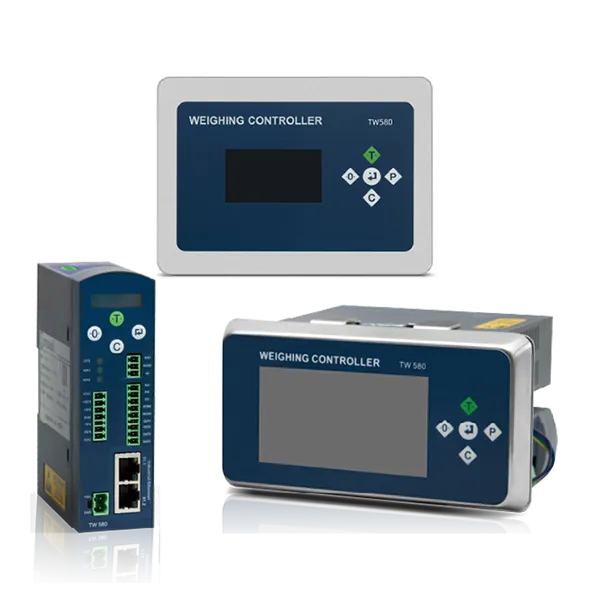
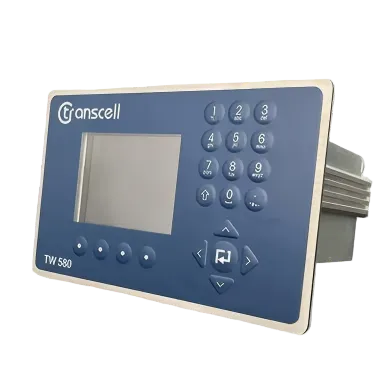
On Transcell's site, the TW580 is described as a modular weighing instrument, while the TW580C is positioned for high-speed packaging scenarios. That distinction is useful: it reminds the buyer that the controller should be chosen for the process context, not only the sensor input. If the goal is future scalability, a controller with better communications and control logic may deliver better ROI even if the initial purchase cost is higher.
What Should Buyers Check Before Choosing a Load Cell Supplier?
Before choosing a load cell supplier, buyers should check product fit, engineering support, application knowledge, quality consistency, documentation, communication speed, and the supplier's ability to support the complete weighing objective.
Many quotations look similar on paper. The differences emerge during application review and after-sales support. A strong supplier asks relevant questions: What is the machine type? Is the load static or dynamic? What are the tare and maximum material loads? How many support points are used? What is the environment? How will the signal be processed? Is the application washdown, corrosive, dusty, or vibration-prone? The supplier that asks these questions is more likely to protect the customer from avoidable mistakes.
Documentation also matters. Buyers should request dimensional drawings, wiring information, performance specifications, and where needed, calibration or quality documents. In export-oriented B2B cooperation, responsiveness and technical clarity are just as important as catalog breadth. If the supplier cannot discuss mounting constraints or signal-conditioning needs, the risk of field issues increases.
It is also helpful when the supplier understands the surrounding system. A customer sourcing a load cell for weighing machine may later need a controller, a batching upgrade, or a feeder-related application. A partner with a broader weighing portfolio can simplify future projects and spare-parts planning.
Where Does Transcell Fit into Industrial Weighing Projects?
Transcell fits into industrial weighing projects as a practical partner that combines load cells, weighing controllers, and process-weighing experience for customers that need more than an isolated component purchase.
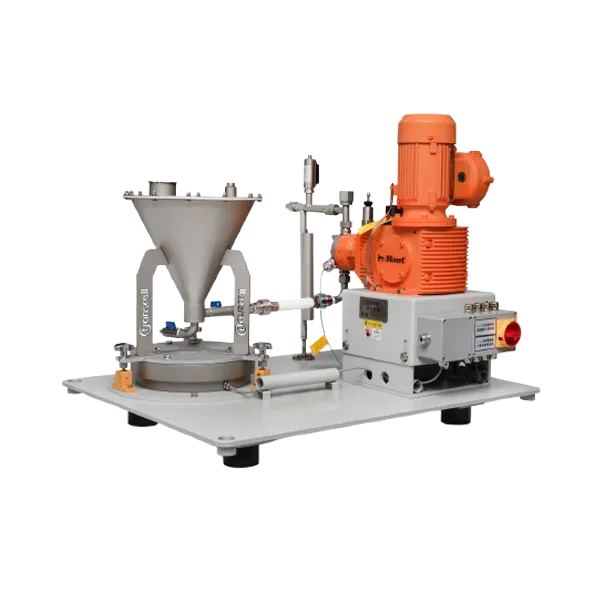
According to the company's website, Transcell focuses on loss-in-weight feeders, small material batching systems, industrial scales, weighing controllers, and related metering solutions. The site also highlights application coverage in modified plastics, chemicals, lithium battery, food, building materials, and pharmaceutical-related industries. That positioning is valuable because many customers are not buying a sensor in isolation; they are trying to improve an operating process.
The company also presents business-strength signals that support B2B trust: more than 40 years of experience, a 4,500-square-meter factory area, a 400-square-meter R&D center, and a 200-square-meter testing and experimental center. For overseas buyers, these figures matter because they help demonstrate that the supplier is not simply trading generic components, but investing in engineering capability.
For customers evaluating a load cell for weighing machine, Transcell's value is strongest when the application touches weighing control or feeding performance. If the customer later expands from basic static weighing into continuous dosing, batching automation, or machine integration, the relationship can extend naturally from sensor selection into broader weighing-system support.
Frequently Asked Questions
The most useful FAQs about load cell for weighing machine selection usually focus on capacity, installation, controller compatibility, calibration, lifespan, and replacement strategy.
1. Can one load cell type fit every weighing machine?
No. The best type depends on whether the machine is a platform scale, hopper, suspended structure, testing machine, batching unit, or process feeder. Capacity, mounting geometry, and loading direction all influence the correct choice.
2. Is a higher-capacity load cell always safer?
Not necessarily. More capacity can add overload margin, but too much oversizing may reduce useful signal sensitivity in low-load conditions. Capacity should be selected using total supported load, distribution, and safety factor not guesswork.
3. Why does a load cell read incorrectly after installation even when it passed factory testing?
Field errors are often caused by mechanical side load, uneven support, rigid piping, cable strain, poor grounding, or misaligned mounting surfaces. Many apparent sensor problems are actually installation problems.
4. How often should a weighing machine be calibrated?
The interval depends on process criticality, environment, usage intensity, and quality requirements. High-value or regulated processes are normally checked more often than simple noncritical weighing applications.
5. Can a load cell be replaced with an equivalent model from another brand?
Sometimes, but only if capacity, dimensions, output characteristics, mounting method, and environmental rating are compatible. A near-match is not always a safe replacement in an industrial structure.
6. What information should I send when asking for a quotation?
Provide machine type, application, maximum and minimum loads, number of support points, environment, required accuracy, output or controller requirements, and if possible a drawing or photo of the mounting structure.
Conclusion
A load cell for weighing machine is the heart of industrial weighing performance. It influences not only display accuracy but also process control, material usage, uptime, and customer confidence in the machine itself. The best selection process combines capacity calculation, type matching, installation discipline, controller compatibility, and supplier support. When those elements are aligned, the result is a weighing system that performs consistently rather than one that demands constant adjustment.
For buyers who need a reliable weighing foundation and especially for those whose projects may expand into feeding, batching, or automation working with a supplier that understands the full weighing context can reduce project risk. That is where Transcell's combined portfolio of load cells, weighing controllers, and process-weighing solutions can create practical value.
External References
 CN
CN