Continuous production lines in plastics compounding, specialty chemicals, food processing, building materials, new energy, and pharmaceutical manufacturing share a common vulnerability: the feeding system. When the material being dosed is free-flowing and consistent, almost any feeder will perform adequately. When the material is sticky, flaky, fibrous, crushed, or high-moisture, the feeding system becomes the most likely point of failure in the entire production line.
The failure modes are predictable and expensive. Sticky powders and high-moisture bulk solids form bridges across the hopper outlet, stopping material flow entirely. Flaky and fibrous materials wrap around screw flights, progressively reducing throughput until the screw stalls. Crushed and irregular particles create unpredictable bulk density variation that causes volumetric feeders to drift and gravimetric feeders to hunt. Each of these failure modes produces the same outcome: unplanned downtime, manual intervention, inconsistent formulation ratios, and the kind of quality variation that generates customer complaints and audit findings.
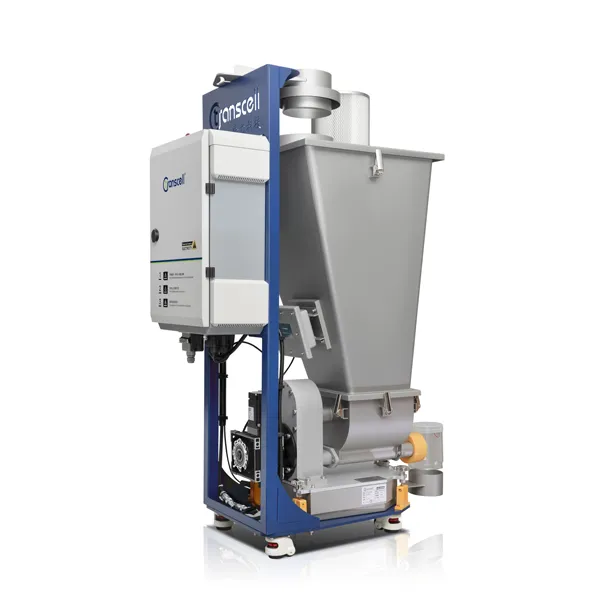
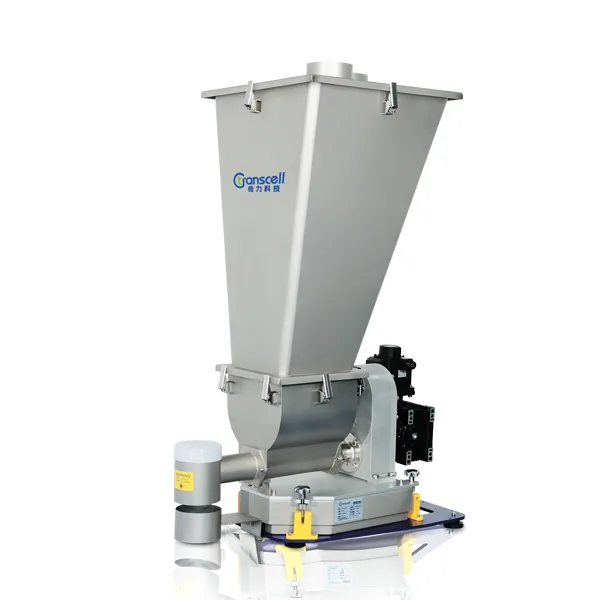
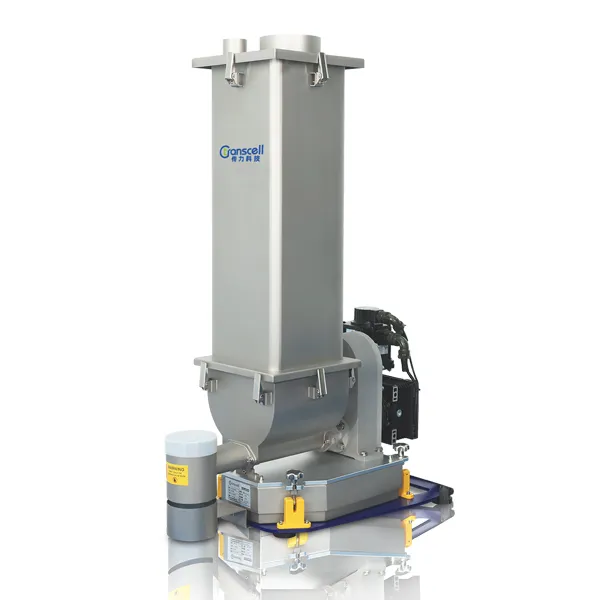
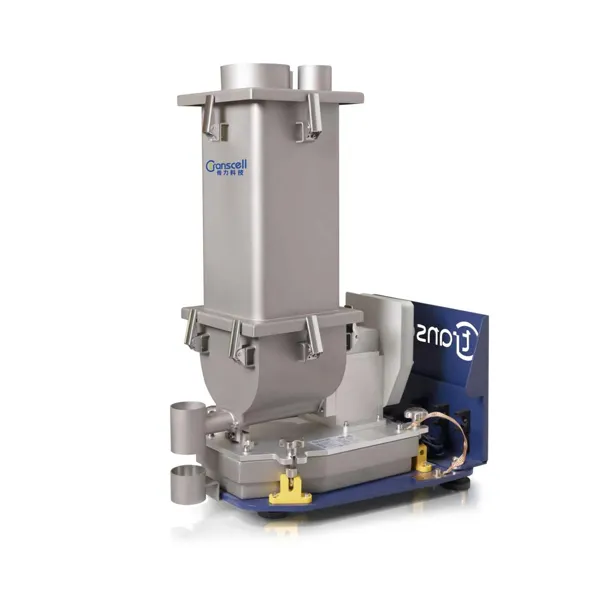
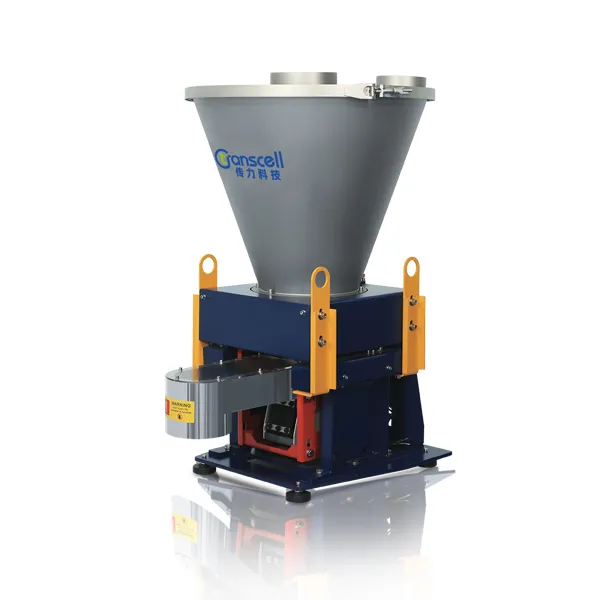
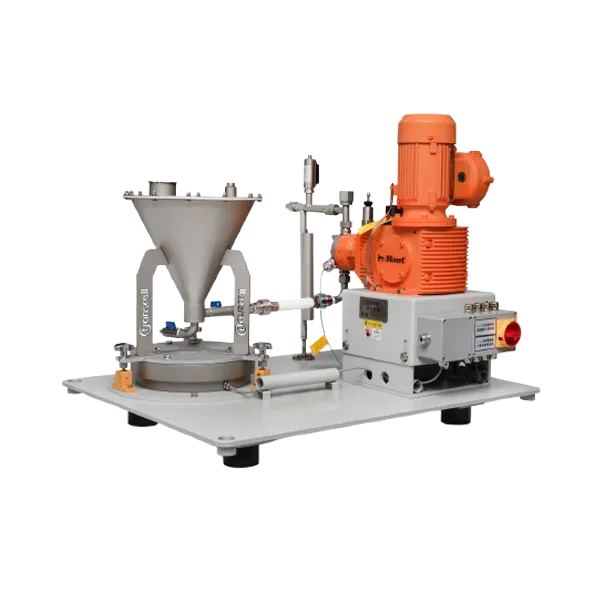
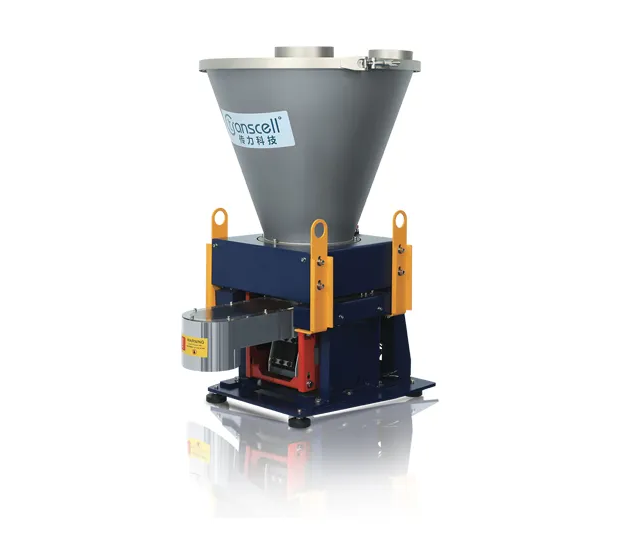
A vibrating feeder—specifically a vibrating loss-in-weight feeder—addresses these failure modes at their physical root cause. By using tuned high-frequency, micro-amplitude vibration to convey material rather than relying on screw rotation or gravity alone, it breaks the weak adhesion forces between particles that cause bridging and blockage, while simultaneously providing the real-time gravimetric control needed for accurate continuous dosing. Transcell's vibrating loss-in-weight feeder integrates vibratory conveying technology with loss-in-weight dynamic metering, using high-frequency micro-amplitude vibration for material conveying, and is specifically designed for irregularly shaped materials such as fibrous and crushed materials.
Why a Vibrating Feeder Outperforms Screw Feeders for Difficult Bulk Solids
The screw feeder is the default choice for continuous dosing because it is mechanically simple, well-understood, and cost-effective for free-flowing powders and granules. Its limitation is structural: the screw works by pushing material forward through a confined channel. When the material resists this pushing—through stickiness, irregular shape, or tendency to compact—the screw becomes the problem rather than the solution.
The specific failure mechanisms of screw feeders with difficult materials:
Sticky and high-moisture materials adhere to the screw flights and barrel wall, progressively building up a layer that reduces the effective channel volume and eventually causes the screw to stall. The buildup is not uniform, which means the feed rate becomes erratic before the stall occurs—producing quality variation that is difficult to diagnose because it appears as a weighing or control problem rather than a mechanical one.
Flaky and fibrous materials do not flow around the screw flights—they wrap around them. A single long fiber or large flake caught on a flight can initiate a progressive accumulation that blocks the screw within minutes. For materials like glass fiber, carbon fiber, natural fiber additives, or recycled plastic flakes, screw feeding is often simply not viable without frequent manual intervention.
Crushed and irregular particles create bridging at the hopper outlet because their irregular shapes interlock under the pressure of the material column above. Once a bridge forms, material flow stops completely until the bridge is broken—either by mechanical agitation or manual intervention.
How a vibrating feeder solves each of these problems:
A vibrating tray feeder moves material by imparting controlled kinetic energy to the bulk solid through the tray or chute surface. The high-frequency, micro-amplitude vibration—rather than mechanical contact between a rotating element and the material—breaks the weak adhesion forces between particles and between particles and the contact surface. This has three practical consequences:
Sticky materials cannot build up a stable adhesion layer on a vibrating surface because the vibration continuously disrupts the adhesion mechanism
Fibrous and flaky materials are conveyed along the tray surface without the wrapping and entanglement that screw contact causes
Irregular particles are kept in motion by the vibration energy, preventing the interlocking that causes bridging at the hopper outlet
The result is consistent material flow from materials that would cause a screw feeder to require frequent cleaning stops or complete replacement.
Working Principle: Tuned Vibration and Real-Time Gravimetric Control
The operating principle of Transcell's vibrating loss-in-weight feeder combines two independent but complementary systems: the vibratory conveying mechanism and the loss-in-weight control loop.
The vibratory conveying mechanism:
The HD-ZL150 linear vibrator drives the discharge chute at high frequency and micro-amplitude. The vibration parameters—frequency and amplitude—are tuned to the material's physical characteristics. For light, fragile materials, lower amplitude prevents particle breakage while still providing sufficient energy to maintain flow. For heavier or more cohesive materials, higher amplitude provides the energy needed to break adhesion and maintain consistent discharge.
The vibrating discharge chute (Φ102/Φ159) connects the metering bin to the process line. The chute geometry is designed to minimize dead zones where material can accumulate and to direct the vibration energy efficiently into the material flow path. The self-cleaning effect of the vibrating surface—where the continuous micro-motion prevents material from adhering and building up—reduces the cleaning frequency compared with static chutes or screw barrels.
The loss-in-weight control loop:
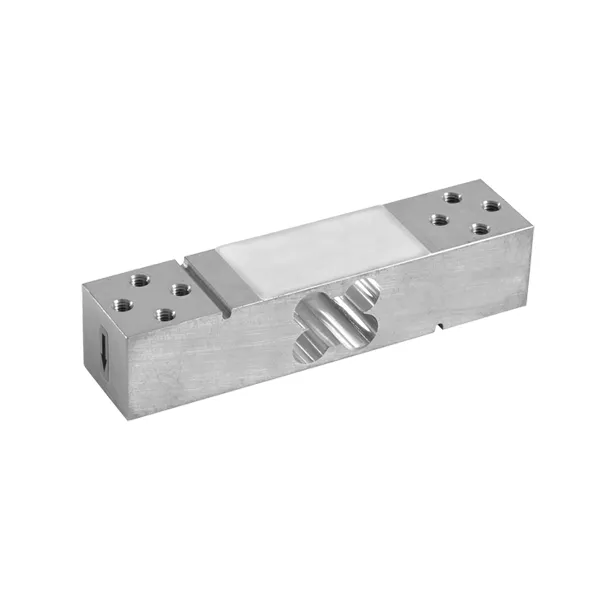
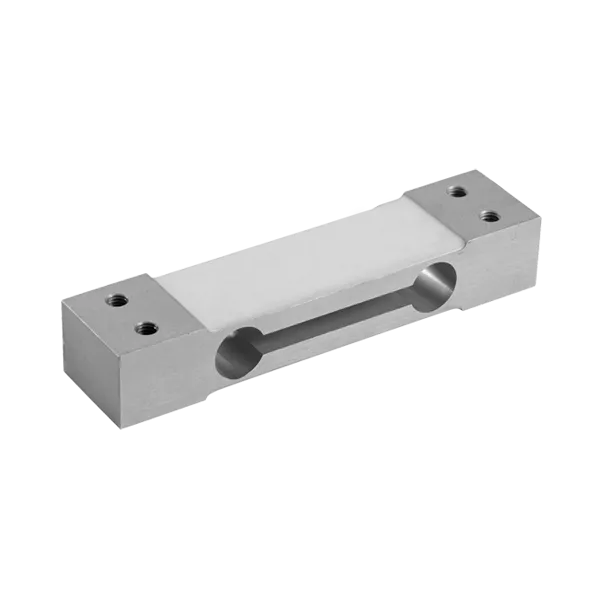
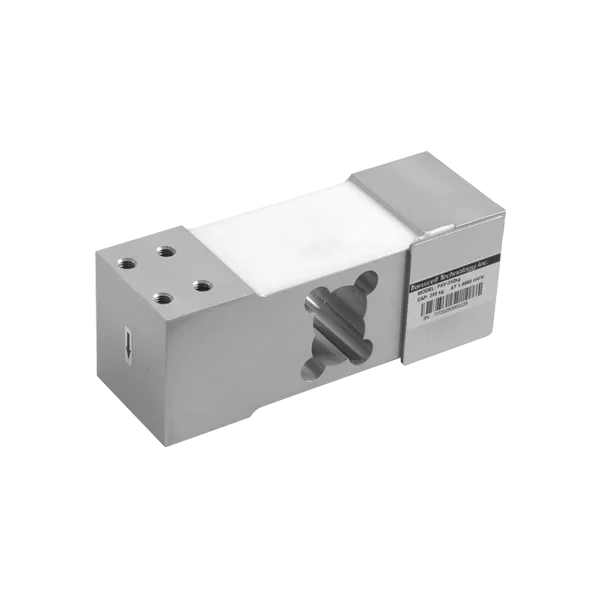
The metering bin (80L or 120L) sits on two FSSB-100kg high-precision sensors. The controller reads the combined weight signal continuously and calculates the actual weight-loss rate—the actual feed rate in kg/h or g/h. This actual rate is compared with the target setpoint. If the actual rate is below target, the controller increases vibration intensity or adjusts the discharge chute opening. If the actual rate is above target, it reduces the output. This correction happens in real time, continuously, without operator intervention.
The refill transition:
When the metering bin reaches its low-level threshold, the system initiates refill from the collecting hopper (5L) or upstream supply. During refill, the controller switches to volumetric mode—maintaining the last known vibration setting—and returns to gravimetric control once the refill is complete and the weight signal has stabilized. The quality of this transition management directly affects the accuracy of the dosing record during high-frequency refill cycles.
Why this combination matters for difficult materials:
The vibratory conveying mechanism ensures that the material actually flows at the rate the controller is trying to achieve—eliminating the gap between commanded output and actual output that makes screw feeders unreliable with sticky or irregular materials. The loss-in-weight control loop ensures that any remaining variation in actual flow rate is detected and corrected in real time. Together, they provide the consistent material flow that continuous processes require from materials that conventional feeders cannot handle reliably.
Key Specifications of the Transcell Vibrating Feeder
For reliable operation across demanding industrial applications, buyers should evaluate the feeder against the following published standard parameters and configuration options.
Standard Technical Specification
| Specification | Standard Parameter | Application Relevance |
|---|
| Metering bin | 80L / 120L | Matches production line refill frequency requirements |
| Collecting hopper | 5L | Buffer volume for refill transition management |
| Hopper support material | Q235-A | Structural frame material |
| Discharge chute regulating port | Φ168 | Adjustable outlet for flow rate control |
| High-precision sensor | FSSB-100kg × 2 | Dual-sensor configuration for stable weighing |
| Linear vibrator | HD-ZL150 | Tuned vibration source for material conveying |
| Vibrating discharge chute | Φ102 / Φ159 | Two chute diameter options for different flow rates |
| Material-contact parts | SS304 | Standard corrosion resistance for industrial applications |
| Environment temperature | 0–40°C | Covers standard indoor production environments |
| Material temperature | 0–50°C | Covers most ambient-temperature bulk solids |
| Paint color | RAL 5003 | Standard industrial finish |
All parameters above are standard specifications. Transcell confirms that customization is available based on actual production requirements—including SS316 contact parts, food-grade or pharmaceutical-grade designs, explosion-proof configurations, and modified hopper or chute geometries for specific material behaviors.
Buyer Configuration Checklist
Before requesting a quotation, buyers should confirm the following parameters:
Material name, particle shape (flakes, strips, fibers, crushed particles, sticky powder), and bulk density
Moisture content and variation range
Target feed rate: minimum, nominal, and maximum in kg/h
Required dosing accuracy (e.g., ±0.5% or project-specific requirement)
Hopper volume requirement based on refill frequency and line continuity
Contact material requirement: SS304 standard, SS316 for corrosive or pharmaceutical applications, food-grade for direct food contact
Dust control requirements: enclosed design, dust extraction connection
Control system integration: PLC protocol, HMI interface, communication standard
Installation space constraints: footprint, height, discharge elevation
Application Scenarios: Where Vibrating Feeders Solve Screw Feeder Limitations
The industrial vibratory doser delivers its strongest value in applications where material shape, stickiness, or moisture content makes screw feeding unreliable. The following scenarios represent the highest-value deployment contexts.
Modified Plastics and Compounding Glass fiber, carbon fiber, natural fiber additives, recycled plastic flakes, and irregular flame-retardant particles are among the most common materials that cause screw feeder blockage in plastics compounding lines. A vibrating feeder handles these materials without the wrapping and entanglement that screw contact causes, maintaining consistent feed rates across long production runs without manual intervention.
Chemical Production Sticky powders, granulated intermediates with irregular crystal shapes, and materials that compact under pressure are common in specialty chemical production. The vibrating tray surface prevents adhesion buildup, and the loss-in-weight control loop maintains accurate dosing even when bulk density varies between batches.
Food Processing Flakes, strips, high-moisture powders, and fragile dry ingredients require gentle handling that screw feeders cannot always provide. The vibrating conveying mechanism moves material without the shear and compression that screw rotation applies, preserving particle integrity while maintaining consistent flow. For food applications, SS316 contact parts and food-grade soft connections are available.
Building Materials Light particles, fibrous additives, and crushed materials used in cement, gypsum, and composite building material production often have irregular shapes and variable bulk densities that make volumetric feeding unreliable. The vibrating loss-in-weight feeder provides the gravimetric accuracy needed for consistent formulation ratios regardless of bulk density variation.
New Energy Materials Battery electrode materials, conductive additives, and specialty powder blends for new energy applications often require stable continuous dosing at controlled rates. The combination of gentle vibratory conveying and real-time gravimetric control provides the dosing stability that electrochemical performance consistency requires.
Pharmaceutical and Fine Chemical Processing Sensitive powders, active pharmaceutical ingredients, and fine chemical intermediates that require gentle, controlled dosing without mechanical contact damage benefit from the vibrating conveying principle. For regulated production environments, the SS316 contact material option and quick-release cleaning design support GMP compliance.
Installation, Selection, Maintenance, and TCO: Reducing Downtime with Self-Cleaning Vibratory Feeding
Selection Workflow
Step 1 — Analyze material behavior. Confirm stickiness, moisture content, particle shape, bridging tendency, fragility, and abrasiveness. This analysis determines whether a vibrating feeder is the appropriate choice and what configuration modifications are needed.
Step 2 — Choose the feeding principle. Screw feeder for free-flowing powders and granules where screw contact does not cause blockage or degradation. Vibrating feeder for flaky, fibrous, sticky, crushed, or irregular materials where screw feeding is unreliable.
Step 3 — Define the feed-rate range. Confirm minimum, nominal, and maximum feed rate requirements. The ratio between maximum and minimum determines the required control range and vibration adjustment capability.
Step 4 — Confirm contact material and compliance requirements. SS304 for standard industrial applications; SS316 for corrosive, food-adjacent, or pharmaceutical applications; food-grade soft connections and sanitary design for direct food contact or GMP environments; explosion-proof motor and controller for combustible powder environments.
Step 5 — Plan refill and discharge geometry. Match the collecting hopper volume to the refill frequency and line continuity requirements. Confirm discharge chute diameter (Φ102 or Φ159) against the process line inlet dimensions.
Step 6 — Integrate the control system. Connect the weighing signals and feeder control to the PLC or HMI. Confirm communication protocol, data refresh rate, alarm outputs, and recipe management requirements.
Step 7 — Run real-material testing. Test the feeder with the actual production material before approving the specification. Verify bridging resistance, feed stability, residue buildup on the tray and chute, and cleaning frequency under realistic production conditions.
Maintenance and TCO Advantages
Reduced downtime from screw blockage is the primary TCO advantage for plants currently using screw feeders with difficult materials. A production line that stops for 30 minutes every shift for screw cleaning loses approximately 6% of available production time—a loss that compounds across every production day of the year.
Self-cleaning vibratory surface reduces the frequency of manual cleaning interventions. The continuous micro-motion of the vibrating tray and chute prevents material from adhering and building up in the way that static surfaces and screw barrels do. For sticky or high-moisture materials, this can reduce cleaning frequency from multiple times per shift to once per day or less.
More stable continuous dosing from the combination of vibratory conveying and loss-in-weight control reduces the formulation variation that causes off-spec batches and rework. For plants where additive cost is significant, the material savings from more accurate dosing add to the TCO advantage.
Lower operator intervention from reliable automatic feeding reduces the labor cost of manual feeder management and the quality risk of operator-dependent feeding decisions.
Transcell's after-sales support—including a dedicated hotline, commissioning engineers, response within 30 minutes, solution within 8 hours, and on-site service within 24 hours where applicable—reduces the operational risk of feeder downtime in continuous production environments where a single feeder failure can halt an entire production line.
Conclusion
Sticky, flaky, fibrous, and irregular materials can disrupt continuous production in ways that screw feeders cannot reliably prevent. A vibrating feeder solves this by using tuned high-frequency, micro-amplitude vibration to break adhesion forces, prevent bridging, and maintain consistent material flow—while loss-in-weight gravimetric control keeps dosing accurate regardless of bulk density variation. Transcell's vibrating loss-in-weight feeder combines the HD-ZL150 linear vibrator, dual FSSB-100kg precision sensors, SS304 contact parts, 80L/120L metering bin options, and customizable configurations for demanding industrial processes across modified plastics, chemicals, food, building materials, new energy, and pharmaceutical applications.
Visit the Transcell Vibrating Loss-in-Weight Feeder product page to request a recommended configuration and quotation.
Please submit the following details for an accurate recommendation:
Work condition: Industry, material name, sticky or flaky or fibrous or crushed condition, moisture content, dust level, operating temperature
Quantity: Number of feeders, production lines, annual procurement plan
Size/spec: Target feed rate (minimum/nominal/maximum), hopper volume, discharge chute size, contact material requirement, installation space, control interface and communication protocol
Target metrics: Feeding accuracy, flow consistency, reduced blockage frequency, cleaning interval target, downtime reduction goal
Current problems: Hopper bridging, screw clogging, inconsistent discharge, sticky buildup on screw or barrel, frequent cleaning stops, unstable feed rate, high maintenance labor cost
FAQ
1. What is a vibrating feeder?
A material feeding device that uses controlled vibration—rather than screw rotation or gravity alone—to move bulk solids through a tray, chute, or hopper. In a vibrating loss-in-weight feeder, the system simultaneously weighs material loss in real time and adjusts vibration output to maintain the target feed rate. Transcell's vibrating loss-in-weight feeder uses high-frequency, micro-amplitude vibration and is specifically designed for irregularly shaped materials such as fibrous and crushed materials.
2. Vibrating feeder vs. screw feeder: which is better for difficult materials?
A screw feeder is the appropriate choice for free-flowing powders and granules where screw contact does not cause blockage, wrapping, or degradation. A vibrating feeder is the better choice for sticky, flaky, fibrous, crushed, or irregular materials because it eliminates the mechanical contact that causes screw blockage and wrapping, reduces bridging through continuous vibration energy, and provides a self-cleaning surface effect that reduces manual cleaning frequency.
3. What is the ROI of using a vibrating feeder?
ROI comes from multiple directions: fewer production stoppages from screw blockage and hopper bridging (recovering lost production time), reduced manual cleaning labor (lowering operating cost), more stable continuous dosing (reducing off-spec batches and rework), and lower maintenance frequency from the self-cleaning vibratory surface. For plants currently experiencing multiple cleaning stops per shift with difficult materials, the production time recovery alone can justify the investment within months.
4. Does a vibrating feeder require production line modification?
Some integration work is typically required: hopper connection and structural support, discharge chute alignment with the process line inlet, vibration isolation between the feeder and the surrounding structure, weighing system setup and calibration, and PLC or HMI control connection. The exact scope depends on the existing line layout, the material's discharge elevation requirements, and the refill method selected.
5. What parameters are needed for correct selection and quotation?
Material type and name, particle shape (flakes, strips, fibers, crushed particles, sticky powder), bulk density and variation range, moisture content, stickiness or adhesion tendency, target feed rate (minimum, nominal, maximum), dosing accuracy requirement, hopper volume, discharge chute size requirement, contact material specification (SS304/SS316/food-grade), dust control requirements, explosion-proof classification if applicable, control system and communication protocol, installation space constraints, and current flow problems such as bridging, clogging, or inconsistent discharge.
 CN
CN