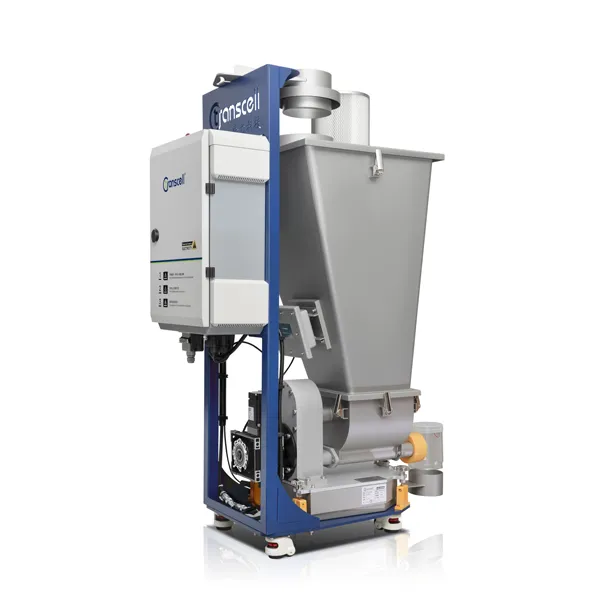
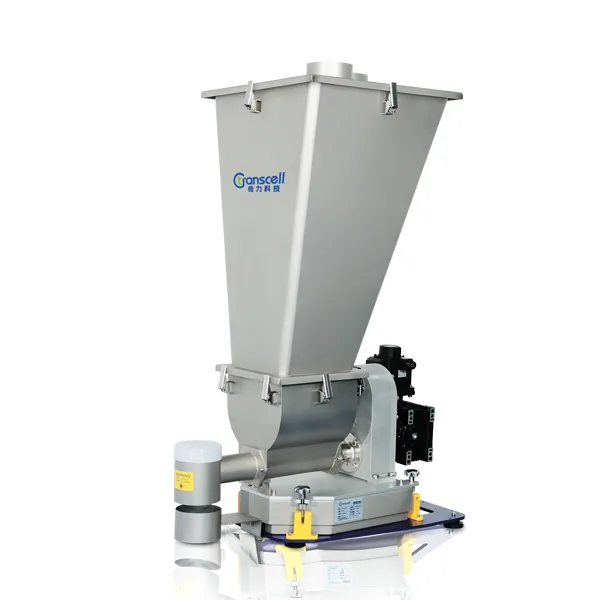
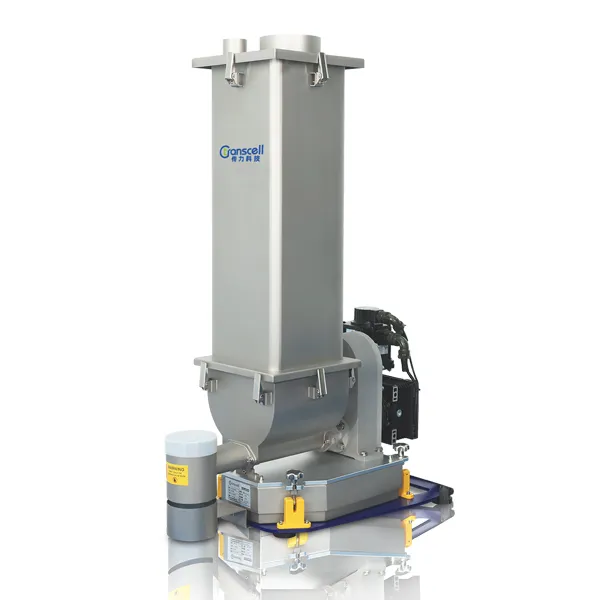
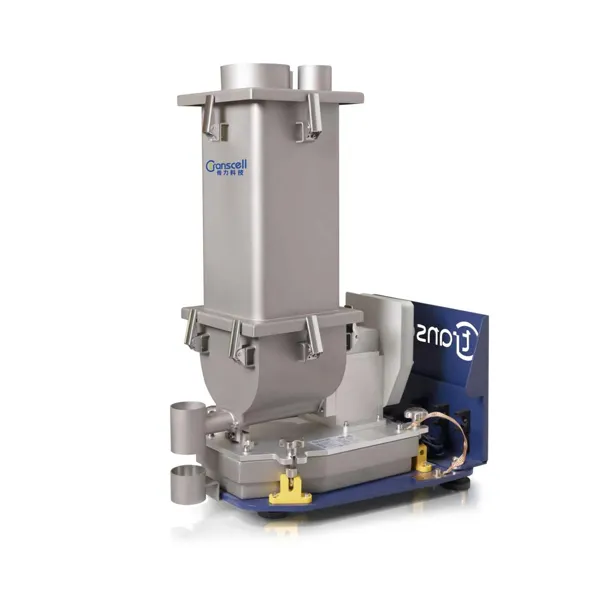
Micro-dosing has moved from a peripheral concern to a central production variable. For manufacturers in modified plastics, specialty chemicals, food ingredients, pharmaceutical production, and new energy materials, the accuracy of a micro feeder directly determines formulation consistency, raw material cost, audit compliance, and product quality. The problem that experienced procurement teams encounter repeatedly is this: a low-cost micro feeder performs acceptably during factory acceptance testing, then begins to drift after three to six months of continuous operation. Resolution degrades, zero-point stability deteriorates under thermal cycling and vibration, communication delays cause dosing fluctuations that the operator cannot diagnose, and the supplier's after-sales response is slow or unavailable.
By the time the drift is identified and quantified, the plant has already produced months of off-spec product, wasted expensive additives, and accumulated the kind of quality records that create audit risk. The cost of the "savings" from the cheaper feeder has been paid many times over in material waste, rework, and downtime.
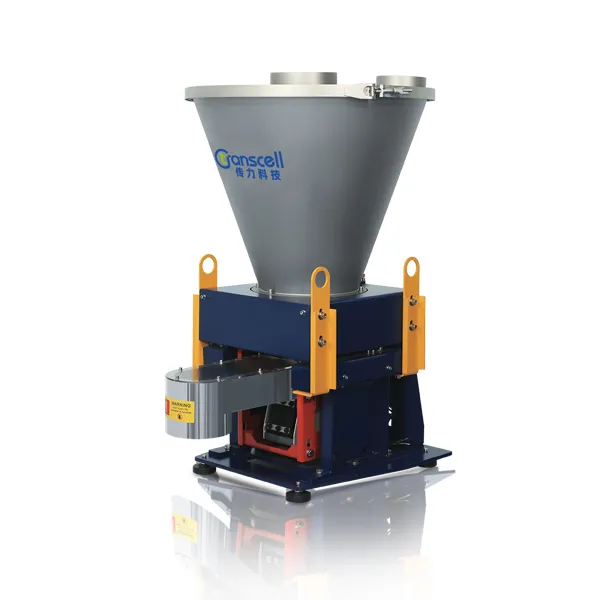
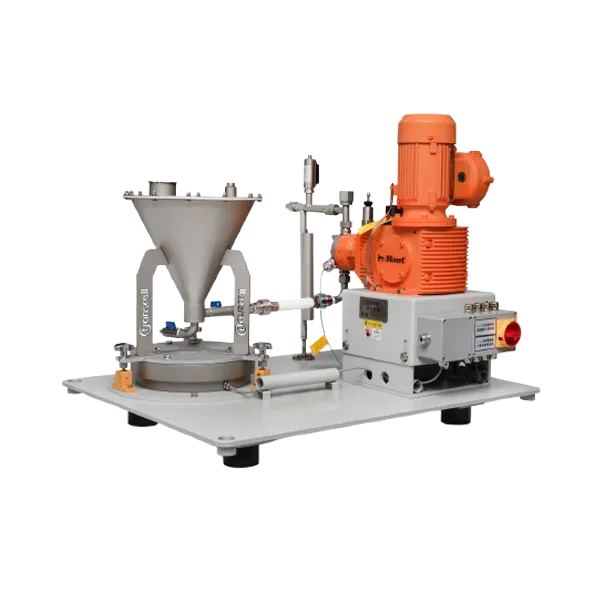
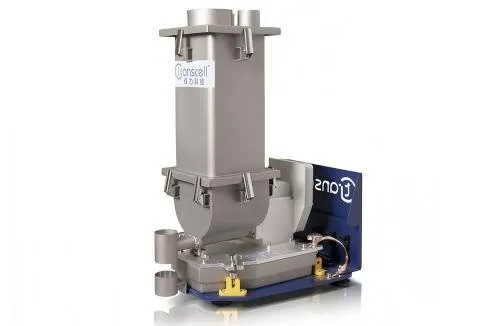
A micro loss-in-weight feeder from a qualified supplier solves this by combining ultra-high-resolution weighing, closed-loop feed-rate control, stable long-term sensor performance, and industrial communication capability in a system designed specifically for ultra-low flow materials. Transcell describes its micro loss-in-weight feeder as high-precision automated equipment designed for the metering and conveying of ultra-low flow materials, addressing the industry pain points of small dosage, high precision, and stable conveying for micro-additives, precious powder materials, and high-activity materials. The following four metrics give B2B buyers a structured framework for evaluating long-term stability—not just initial performance.
Metric 1: Weighing Resolution and Low-Flow Repeatability
Resolution is the first technical filter for any micro feeder evaluation. If the weighing system cannot detect small weight changes quickly and consistently, the controller cannot correct feed-rate deviation in time—and the closed-loop advantage of a loss-in-weight system is lost.
Why resolution matters more at micro-dosing rates:
At standard loss-in-weight feed rates of 50–500 kg/h, a load cell with 1-gram resolution provides more than adequate sensitivity. At micro-dosing rates of 0.1–5 kg/h, the same 1-gram resolution represents 0.02–1% of the per-second weight change—potentially too coarse for the controller to make meaningful corrections within the required response time. A micro screw feeder requires a load cell and signal processing chain that can detect weight changes at the gram or sub-gram level, with a sampling rate fast enough to support real-time closed-loop control at ultra-low flow rates.
What buyers should evaluate:
Minimum stable feed-rate range: confirm the lowest feed rate at which the system maintains its specified accuracy—not just the nominal feed rate
Load cell capacity vs. dosing range: a load cell sized for the hopper capacity must still provide adequate resolution at the actual dosing rate; confirm the ratio between load cell capacity and minimum detectable weight change
Signal filtering: aggressive filtering reduces noise but introduces lag; confirm that the filter settings are appropriate for the required control response time at the target feed rate
Repeatability over long shifts: request data on feed-rate stability over 8-hour and 24-hour continuous operation periods, not just short-duration acceptance tests
Performance under vibration: micro feeders are often installed adjacent to extruders, compressors, or conveyors that generate significant vibration; confirm that the weighing system maintains resolution under realistic installation conditions
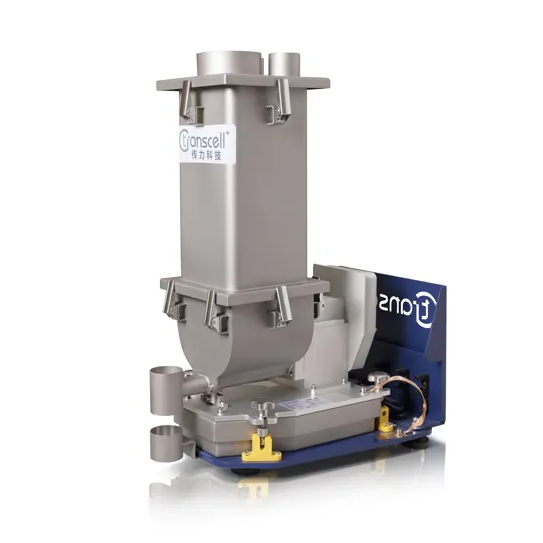
Transcell's micro loss-in-weight feeder is specifically designed for ultra-low flow metering and conveying, with a 15L metering bin, 5L U-shaped hopper, and 0.4 kW servo motor—a configuration that provides the mechanical precision and control sensitivity required for micro-additive dosing at rates where standard feeders cannot maintain adequate accuracy.
Metric 2: Zero-Point Drift and Long-Term Sensor Reliability
Initial accuracy is easy to demonstrate. Long-term zero-point stability is what separates a reliable micro feeder factory's product from a low-cost alternative that performs well for the first 90 days and then begins to drift.
The mechanisms of zero-point drift in micro feeders:
Thermal cycling: load cells are sensitive to temperature changes. A feeder installed in a production environment that cycles between startup and shutdown temperatures will experience thermal expansion and contraction in the load cell mounting structure, potentially shifting the zero point over time. High-quality load cells with temperature compensation circuits minimize this effect; budget load cells do not.
Vibration fatigue: continuous vibration from the production environment can cause micro-creep in load cell mounting hardware, gradually shifting the mechanical zero point. Proper vibration isolation design and high-quality fastening hardware reduce this risk.
Material buildup: powder accumulation on the hopper exterior, soft connections, or load cell mounting points adds apparent weight that shifts the tare reading. A feeder design that minimizes material accumulation on weighing-critical surfaces reduces the frequency of manual tare correction.
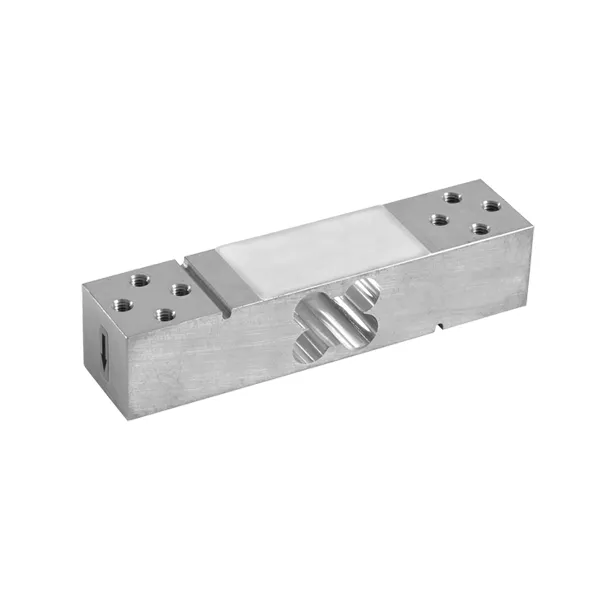
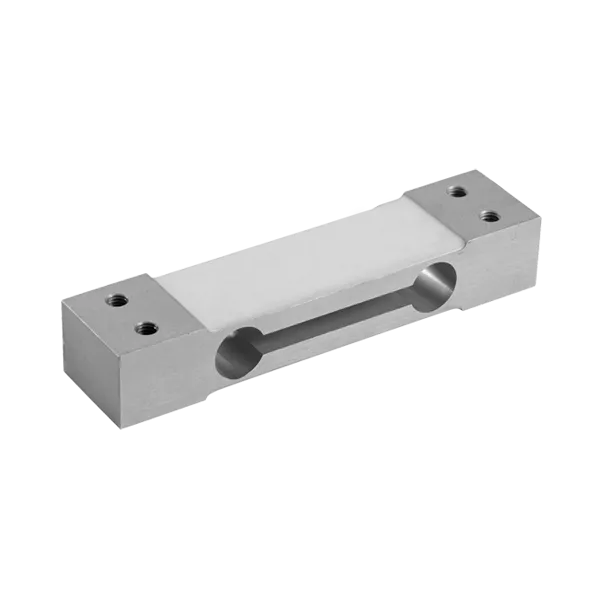
Sensor aging: load cell output can drift over time due to changes in the strain gauge bonding, moisture ingress, or fatigue in the sensing element. High-quality load cells from established manufacturers with documented long-term stability specifications provide a more reliable baseline than unbranded components.
What buyers should ask:
How often does zero calibration or re-zeroing need to occur under normal production conditions?
Does the system support automatic tare correction, and under what conditions does it trigger?
What is the load cell brand and specification, including temperature coefficient and long-term stability rating?
What is the expected calibration interval, and what does calibration require in terms of production downtime?
Are replacement load cells available from stock, and what is the lead time?
For industrial weighing standards compliance, buyers should also confirm whether the feeder's weighing system meets the applicable metrology standard for the production environment—particularly for pharmaceutical and food applications where weighing equipment qualification is part of the regulatory framework.
Metric 3: Communication Delay and Control Response
A micro feeder that weighs accurately but communicates slowly creates a different category of dosing problem. In modern production lines, the feeder must exchange data with PLC, HMI, SCADA, MES, or extrusion line controls at a rate that supports real-time closed-loop correction. Communication delay that exceeds the control loop's response requirement causes the controller to act on stale data—producing dosing oscillations that appear as accuracy problems but are actually latency problems.
The communication requirements for 2026 smart manufacturing:
Data refresh rate: for micro-dosing applications, the controller needs weight data at a refresh rate that supports correction within the required response time. A system that updates weight data every 500ms may be adequate for standard feed rates but insufficient for micro-dosing where the per-second weight change is small and the correction window is narrow.
PLC integration: confirm the communication protocol (Modbus RTU, Modbus TCP, Profibus, EtherNet/IP, or proprietary) and verify compatibility with the existing PLC platform before specifying the feeder. Protocol mismatches that are discovered during commissioning cause project delays and integration costs that exceed the price difference between compatible and incompatible systems.
Refill event handling: during hopper refill, the weight signal is disrupted. The controller must switch to volumetric mode, maintain the last known feed rate, and return to gravimetric control smoothly after refill. The quality of this transition—and how it is communicated to the PLC—affects the accuracy of the dosing record during refill events.
Alarm output and fault logging: a micro feeder handling expensive or regulated materials must provide clear alarm outputs for feed-rate deviation, low hopper level, communication fault, and sensor error. Fault logging with timestamps supports the production traceability records that quality audits require.
Recipe management: for multi-product lines, the ability to store and recall feed-rate recipes from the PLC or HMI reduces setup time and operator error when changing between formulations.
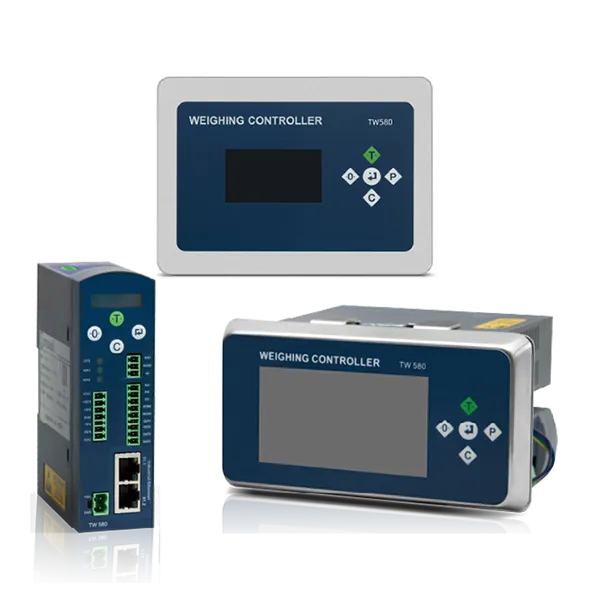
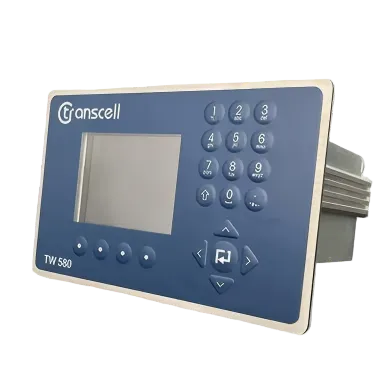
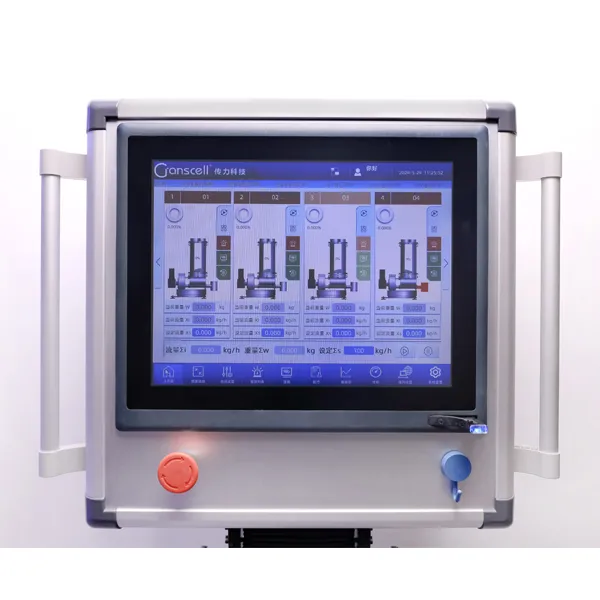
Transcell's loss-in-weight feeder portfolio is positioned around advanced sensor and control technology for precise, reliable, and intelligent material handling—a control architecture that supports the communication performance and integration flexibility that 2026 smart manufacturing environments require.
Metric 4: Material Compliance, Cleanability, and Safety Design
A micro feeder that handles high-value or regulated materials must meet the material contact, cleaning, and safety requirements of the production environment. This is not a secondary consideration—it is a procurement filter that eliminates non-compliant equipment before the accuracy evaluation begins.
Material contact compliance:
Transcell's standard micro feeder specification lists SS304 for all material-contact parts—a baseline that covers most industrial, chemical, and food-adjacent applications. For pharmaceutical production, food-contact applications with stricter regulatory requirements, or corrosive chemical environments, SS316 or SS316L may be required. Buyers should confirm the contact material specification and request the material certificate before approving the equipment for regulated production environments.
Soft connection design:
The soft connection between the feeder and the process line isolates the weighing system from external vibration and prevents dust leakage. Transcell's standard specification uses cloth cover and silicone rubber soft connections—materials that provide adequate isolation for most industrial applications. For food or pharmaceutical applications, food-grade silicone or PTFE soft connections may be required to meet material contact standards.
Explosion-proof requirements:
For combustible powders—including many organic chemicals, food starches, pharmaceutical excipients, and battery materials—the production environment may be classified as a dust explosion zone. In these environments, the feeder motor, controller, sensor wiring, and grounding system must meet the applicable explosion-proof standard (ATEX in Europe, IECEx internationally, or NEC/NFPA in North America). Confirm the hazardous area classification before specifying the feeder, and verify that the supplier can provide the required explosion-proof certification.
Cleanability:
For multi-product lines or applications where cross-contamination is a quality or regulatory concern, the feeder must be designed for efficient cleaning. Quick-release connections, minimal dead zones in the screw and hopper geometry, and smooth internal surfaces that do not trap material are the design features that determine cleaning time and effectiveness. Request a cleaning procedure from the supplier and evaluate it against the production line's changeover time requirements.
Complete compliance checklist:
| Requirement | Standard Specification | Enhanced Option |
|---|
| Contact material | SS304 | SS316 / SS316L for corrosive or pharma applications |
| Soft connection | Cloth cover / silicone rubber | Food-grade silicone / PTFE |
| Motor | Standard industrial | Explosion-proof (ATEX/IECEx/NEC) |
| Controller | Standard enclosure | Explosion-proof or remote-mounted |
| Grounding | Standard | Verified static dissipation for combustible powders |
| Temperature range | 0–40°C ambient / 0–50°C material | Confirm against actual production conditions |
| Cleaning design | Standard disassembly | Quick-release, CIP-compatible for food/pharma |
Selection Workflow, Installation, and TCO: Why Supplier Capability Is the Fifth Metric
B2B Selection Workflow
Step 1 — Define material behavior. Powder, granule, micro-additive, high-activity material, sticky powder, bridging material, or hygroscopic powder. Material characterization—bulk density, particle size, flowability, moisture content, and abrasiveness—determines the screw design, hopper geometry, and agitation requirement.
Step 2 — Confirm the dosing range. Minimum, nominal, and maximum feed rate in kg/h or g/h. The ratio between maximum and minimum feed rate determines the required control range and the load cell specification.
Step 3 — Evaluate weighing stability. Resolution at the minimum feed rate, zero-point drift specification, load cell brand and temperature coefficient, vibration isolation design, and calibration interval.
Step 4 — Check communication and control. PLC compatibility, data refresh rate, communication protocol, alarm outputs, recipe management, and refill event handling.
Step 5 — Confirm compliance requirements. Contact material, soft connection material, explosion-proof classification, FDA or GMP documentation, and cleaning design.
Step 6 — Request real-material testing. Test the feeder with the actual production material—not a substitute—before approving the specification. Material behavior in the actual feeder often differs from laboratory characterization, and real-material testing is the only reliable way to validate accuracy at the target feed rate.
Step 7 — Evaluate long-term service capability. Spare parts availability, load cell replacement lead time, controller support, remote troubleshooting capability, and preventive maintenance schedule.
TCO and Long-Term Service Value
The TCO argument for a high-precision micro feeder supplier with strong service capability is straightforward: the cost of a feeder that drifts after three months is not the replacement cost of the feeder—it is the accumulated cost of wasted additives, off-spec product, production downtime, and quality investigation labor that occurs between the onset of drift and its identification and correction.
Transcell's after-sales system includes a dedicated hotline, commissioning engineers, response within 30 minutes, solution within 8 hours, and on-site service within 24 hours where applicable. This service commitment reduces the operational risk of micro feeder downtime in continuous production environments where a single feeder failure can halt an entire production line.
Transcell's global presence—founded in Chicago in 1981 with over four decades of weighing technology innovation and a network spanning the U.S. and Asia—provides the long-term spare parts availability and technical support continuity that strategic B2B sourcing requires. A supplier who cannot guarantee load cell availability in five years is not a strategic partner for a production line with a 10-year operating horizon.
Conclusion
A micro feeder procurement decision in 2026 should be evaluated on four long-term stability metrics—weighing resolution, zero-point drift, communication response, and material compliance—not on initial price alone. A cheap feeder that drifts after three months creates far higher costs through wasted additives, off-spec batches, downtime, and audit risk than the price difference between a budget and a quality system. Transcell's micro loss-in-weight feeder is designed for ultra-low flow materials and precision micro-additive dosing, with SS304 contact parts, servo-driven configuration, customization support, and a global service system built for industrial B2B buyers.
Visit the Transcell Micro Loss-in-Weight Feeder product page to request a recommended configuration and quotation.
Please submit the following details for an accurate recommendation:
Work condition: Industry, material name, powder or granule or additive type, bulk density, particle size, moisture content, flowability, dust or explosion risk
Quantity: Number of feeders, production lines, annual procurement plan
Size/spec: Target feed rate (minimum/nominal/maximum), accuracy target, hopper volume, screw type, contact material requirement, control interface and communication protocol, installation space
Target metrics: Weighing resolution, zero-point stability, calibration interval, communication response time, dosing accuracy, compliance requirement (SS316/FDA/explosion-proof)
Current problems: Accuracy drift after months of operation, frequent calibration, over-feeding of expensive additives, unstable micro-dosing, communication delay, material bridging, contamination risk, poor after-sales support
FAQ
1. What is a micro feeder?
A precision dosing system designed to feed very small quantities of powders, granules, or additives into a production line at ultra-low flow rates. A micro loss-in-weight feeder uses real-time weight-loss measurement and closed-loop control to maintain the target feed rate regardless of bulk density variation or powder flow changes—providing the accuracy that standard volumetric or larger loss-in-weight feeders cannot achieve at micro-dosing rates.
2. Micro feeder vs. standard loss-in-weight feeder: which should I choose?
A standard loss-in-weight feeder is appropriate for normal feed rates where the load cell capacity and resolution are well-matched to the dosing range. A micro feeder is the correct choice for ultra-low-flow additives, expensive powders, high-activity materials, and applications where small dosing errors cause quality failures or significant material cost—specifically where the required feed rate falls below the reliable operating range of a standard feeder.
3. What is the ROI of investing in a high-precision micro feeder?
ROI comes from reduced material waste (eliminating the over-feeding safety margin that volumetric and low-resolution gravimetric systems require), fewer off-spec batches (reducing rework and disposal cost), less downtime (from stable weighing and control performance), lower calibration burden (from high-quality sensors with long calibration intervals), and better long-term product consistency (supporting customer quality requirements and audit compliance). For expensive micro-additives, even a 0.5% reduction in over-feeding can generate annual savings that exceed the feeder investment within 12–18 months.
4. Does a micro feeder require production line modification?
Some integration work is typically required: feeder mounting and structural support, upstream refill connection (manual, vacuum, or pneumatic), discharge alignment with the process line, PLC or HMI communication wiring, dust control at the discharge point, and access provisions for cleaning and calibration. The scope depends on the existing line layout and the refill method selected. Transcell's commissioning engineers support the integration process to minimize installation complexity and production downtime.
5. What parameters are needed for correct selection and quotation?
Material type and name, bulk density and variation range, particle size distribution, moisture content, flowability characteristics (free-flowing, cohesive, bridging tendency, hygroscopic), target feed rate (minimum, nominal, maximum in kg/h or g/h), accuracy requirement, hopper size, contact material requirement (SS304/SS316/food-grade), FDA or GMP documentation requirement, explosion-proof classification if applicable, control system and communication protocol, installation space constraints, and current failure mode such as accuracy drift, bridging, poor repeatability, or communication delay.
 CN
CN