Choosing between gravimetric and volumetric feeding is often presented as a simple choice between higher accuracy and lower equipment cost. That framing is incomplete. The right feeder is the one that produces the lowest total cost per acceptable unit of product over the life of the line. Initial purchase price matters, but so do ingredient overfeed, off-spec production, process instability, labor, calibration, cleaning, downtime, traceability, and the ability to run new recipes without rebuilding the feeding system.
A volumetric feeder controls the mechanical displacement of material. It assumes that a given screw speed, belt speed, valve opening, or vibration setting corresponds to a predictable volume per unit time. A gravimetric feeder measures mass and uses that measurement to control delivery. In a loss-in-weight system, the feeder calculates the rate at which hopper weight decreases and corrects its output continuously.
Neither technology is automatically right for every line. A stable pellet fed into a noncritical process may not justify gravimetric control. A costly additive, density-variable powder, regulated formulation, or continuous process with narrow tolerances often does. This article provides a practical ROI framework for selecting between the two approaches and explains how Transcell configures weighing and feeding systems around the material, process risk, and business objective.
What Is the Fastest Answer to the Gravimetric vs Volumetric Feeder Question?
A gravimetric feeder usually delivers better ROI when mass accuracy, material cost, density variation, product quality, or traceability has meaningful financial value, while a volumetric feeder can deliver better ROI when material behavior is stable and the process can tolerate mass-flow variation.
The decision should not begin with a supplier quotation. It should begin with the cost of error. If a 2% feeding deviation creates negligible financial or quality impact, a simpler volumetric unit may be sensible. If the same deviation consumes tens of thousands of dollars in additive, changes a certified formulation, produces scrap, or destabilizes downstream equipment, closed-loop gravimetric control is likely to pay for itself.
Production teams should therefore answer four questions first:
How much can bulk density or screw fill change during normal operation?
What does one percentage point of overfeed, underfeed, or variation cost per year?
How quickly would a feeding deviation affect product quality or line stability?
What level of process evidence, alarms, totals, and traceability is required?
These answers establish whether the project is primarily a material-movement task or a process-control task. Volumetric feeders are effective material movers. Gravimetric feeders are material movers integrated with continuous mass measurement and feedback.
What Is a Volumetric Feeder?
A volumetric feeder delivers a calibrated volume of material per unit time by controlling a mechanical device without continuously measuring the mass that leaves the feeder.
The most common example is a screw feeder. During calibration, the operator runs the screw at a known speed for a defined time, collects material, weighs the sample, and establishes an expected output. The controller then uses screw speed as the operating variable. If 30 revolutions per minute produced 300 kg/h during calibration, the system assumes that the relationship remains sufficiently stable.
This approach can work well when material bulk density, particle packing, moisture, headload, flowability, and screw fill remain consistent. It also offers several practical advantages: lower initial cost, fewer weighing components, simpler installation, less sensitivity to external vibration, and straightforward maintenance.
The limitation is that the feeder cannot directly detect whether the mass delivered per revolution has changed. Material buildup, a partially blocked hopper, density variation, aeration, segregation, moisture, or a different lot can reduce or increase mass flow even though motor speed remains unchanged. The feeder may continue to report normal operation because the mechanical command is correct while the actual mass entering the process is not.
What Is a Gravimetric Feeder?
A gravimetric feeder measures material mass and adjusts its feeding device so that actual delivery follows a target mass rate or batch weight.
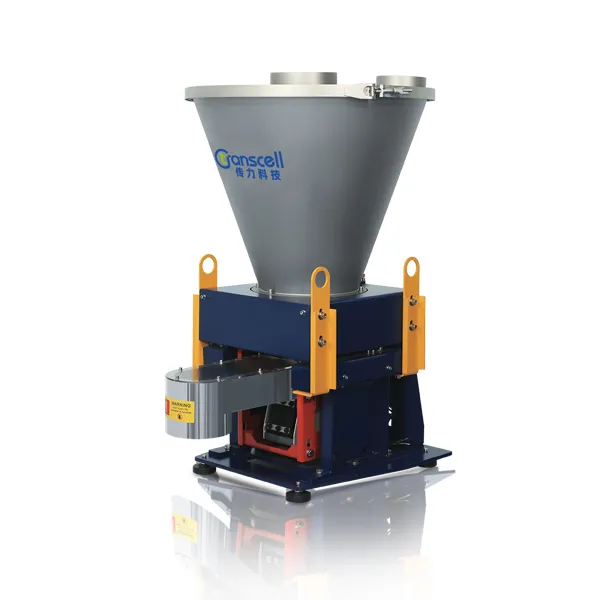
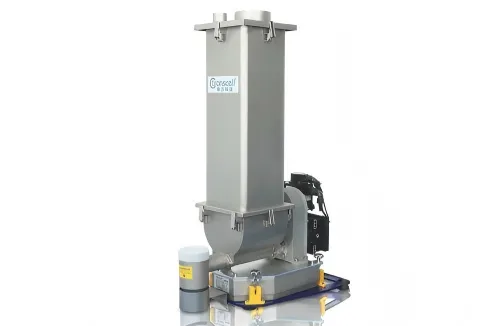
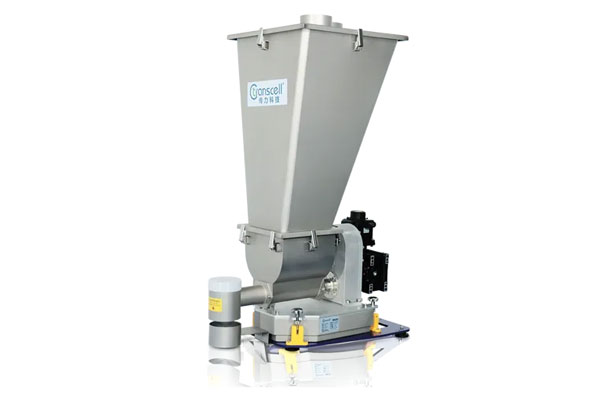
Gravimetric systems include loss-in-weight feeders, weigh-belt feeders, gain-in-weight batch systems, and other configurations in which mass measurement is part of the control loop. In continuous processing, loss-in-weight is widely used because it weighs the entire feeder and material inventory, calculates the reduction in weight over time, and corrects screw, belt, pump, or vibration speed.
When bulk density decreases, a volumetric feeder may deliver less mass at the same speed. A gravimetric feeder identifies the slower weight loss and increases output to restore the setpoint. When density rises, it can reduce speed. This does not eliminate every disturbance, but it gives the system direct feedback about the variable that formulation control normally requires.
Gravimetric equipment has a higher installed cost because it requires load cells or another weighing device, a stable structure, flexible connections, a capable controller, refill logic, calibration, and more disciplined installation. The financial question is whether those additional capabilities reduce operating cost or process risk by more than their lifecycle cost.
How Do the Two Feeding Principles Differ?
Volumetric feeding controls an assumed volume-to-mass relationship, while gravimetric feeding controls measured mass and can correct many changes in material density or flow behavior.
| Decision Factor | Volumetric Feeder | Gravimetric Feeder | ROI Implication |
|---|
| Primary control variable | Screw speed, belt speed, vibration, valve position, or pump speed | Measured mass flow or weight change | Gravimetric control reduces reliance on calibration assumptions |
| Response to bulk-density change | Does not directly detect the change | Measures the resulting mass-flow change and corrects output | Higher value when density varies or ingredients are costly |
| Initial equipment cost | Usually lower | Usually higher | Volumetric systems can win when process risk is low |
| Installation sensitivity | Lower sensitivity to vibration and force bypass | Requires stable support, flexible connections, and protected weighing | Installation quality influences gravimetric payback |
| Process data | Speed and calculated output | Actual weight trend, mass flow, totals, refill status, deviation | Gravimetric systems support traceability and diagnosis |
| Typical application | Stable free-flowing material and noncritical dosing | Variable materials, high-value ingredients, narrow recipes, continuous processing | Choose according to cost of deviation |
| Maintenance focus | Drive, screw, hopper flow, calibration relationship | All volumetric items plus load cells, flexible connections, calibration, and refill control | Gravimetric maintenance costs more but can prevent larger process losses |
Why Does Bulk Density Matter So Much?
Bulk density matters because volumetric feeders move space, but production recipes are usually specified by mass.
Bulk density is the mass of a bulk material divided by the volume it occupies, including the voids between particles. It can change because of particle-size distribution, moisture, aeration, storage time, vibration, conveying method, temperature, or supplier lot. Even when chemical composition is unchanged, the same one-liter volume may contain a different mass.
Assume a volumetric screw delivers 100 liters per hour. At a bulk density of 0.60 kg/L, mass flow is 60 kg/h. If density falls to 0.54 kg/L after pneumatic conveying or material aeration, mass flow drops to 54 kg/h, a 10% reduction. The feeder can maintain exactly the same screw speed and volume while the process receives six kilograms less per hour.
A gravimetric feeder sees the actual mass loss. The controller attempts to increase output until the measured rate returns to 60 kg/h. The success of that correction still depends on screw capacity, material flow, weighing stability, and control limits, but the system has information that a purely volumetric unit lacks.
Density variation is not always large. Uniform pellets stored and conveyed consistently may remain stable enough for a volumetric feeder. The business case should use measured plant data rather than assuming that every powder varies dramatically or every pellet remains constant.
How Should Feeding Accuracy Be Evaluated?
Feeding accuracy should be evaluated by repeatability, linearity, stability, refill behavior, and sampling time under production-like material and operating conditions.
A single accuracy percentage can be misleading. A feeder may look accurate when output is collected for ten minutes because short fluctuations average out, yet the same feeder may create second-to-second pulses that disturb an extruder or continuous blender. Conversely, a short sample may show noise that has little effect on a large downstream surge vessel.
Useful performance questions include:
What is the average deviation from setpoint?
How repeatable is delivery at a fixed rate?
How does performance change between 10%, 50%, and 100% of the intended rate range?
What happens during and immediately after refill?
Does the feeder remain stable after several hours of temperature change or material buildup?
What sampling interval matches the sensitivity of the downstream process?
The test should use actual production material. A substitute powder with similar color or nominal density may not reproduce cohesion, aeration, electrostatic behavior, particle breakage, or screw fill. It should also include the real refill method because refill can change material packing and feeder behavior.
Which Cost Categories Belong in an ROI Comparison?
A valid feeder ROI comparison includes capital cost, installation, material consumption, quality loss, labor, downtime, maintenance, changeover, validation, data requirements, and residual flexibility.
Capital and Installation Cost
Volumetric equipment normally has the lower purchase price. Gravimetric equipment adds a weighing frame, load cells, controller functions, flexible connections, calibration, and more engineering. Installation may also require a stiffer platform and vibration isolation. These differences must be included honestly rather than treating equipment price as the entire project cost.
Raw Material Cost
Plants often overfeed a valuable ingredient to avoid falling below a minimum specification. If a volumetric feeder can drift because of density or flow change, the safety margin becomes a recurring material cost. Gravimetric control may allow the target to move closer to the true formulation requirement.
Scrap and Rework
Underfeeding can be more expensive than overfeeding. It may cause weak mechanical properties, incorrect color, low active concentration, poor flame performance, unstable viscosity, failed inspection, or customer complaints. The cost includes discarded product, reprocessing, laboratory time, lost capacity, and delayed orders.
Downtime and Process Stability
A feeder that bridges, floods, blocks, or drifts can stop an entire line. A gravimetric system can provide early warning through weight trends and deviation alarms, but it also introduces components that require correct maintenance. ROI should compare expected line availability, not just feeder uptime.
Labor and Quality Control
Volumetric feeders may require more frequent catch tests and manual adjustment when material changes. Gravimetric systems can automate correction and record totals, but they require calibration and trained maintenance. The net labor effect depends on plant practices.
Flexibility and Future Recipes
A low-cost feeder may become expensive if a new product uses a lower rate, a more variable material, or a tighter specification. A configurable gravimetric platform can preserve value across product changes. However, no controller can make the wrong mechanical feeder suitable for every material; screws, agitation, hopper design, or even feeder type may still need to change.
What Does a Transparent ROI Calculation Look Like?
A transparent ROI calculation converts feeding deviation into annual material and quality cost using documented production volume, ingredient ratio, ingredient price, and expected improvement.
Consider a production line with the following assumptions:
Annual finished-product output: 10,000 metric tons
Target additive ratio: 5%
Annual target additive use: 500 metric tons
Additive price: USD 3,000 per metric ton
Annual operating time: 7,500 hours
Installed gravimetric project cost: USD 85,000
The target additive spend is 500 tons multiplied by USD 3,000, or USD 1.5 million per year. The table below compares several intentional overfeed margins used to protect a minimum formulation target.
| Feeding Scenario | Overfeed Margin | Extra Additive per Year | Extra Material Cost per Year | Difference vs 0.5% Case |
|---|
| Well-controlled gravimetric case | 0.5% | 2.5 tons | USD 7,500 | Baseline |
| Stable volumetric case | 2.0% | 10.0 tons | USD 30,000 | USD 22,500 |
| Typical risk-margin case | 3.5% | 17.5 tons | USD 52,500 | USD 45,000 |
| High-variation case | 5.0% | 25.0 tons | USD 75,000 | USD 67,500 |
Against the 3.5% scenario, the modeled annual material saving is USD 45,000. An USD 85,000 installed project would have a simple material-only payback of about 1.89 years, calculated as 85,000 divided by 45,000. If quality savings, reduced testing, or higher uptime add USD 15,000 per year, annual benefit becomes USD 60,000 and simple payback falls to about 1.42 years.
These figures are illustrative, not guaranteed performance. The model is valuable because every assumption can be replaced. A plant should use actual annual output, verified ingredient cost, historical catch-test data, quality records, and a realistic estimate of the margin that gravimetric control can remove.
The calculation can be summarized as follows:
Annual target ingredient mass = annual finished-product mass × target ingredient percentage.
Annual overfeed cost = annual target ingredient mass × overfeed percentage × ingredient price.
Annual net benefit = material saving + quality saving + labor saving + downtime saving − additional annual service cost.
Simple payback = installed project cost ÷ annual net benefit.
When Does a Volumetric Feeder Deliver the Better ROI?
A volumetric feeder delivers better ROI when material properties are stable, accuracy requirements are moderate, ingredient value is low, process consequences are limited, and simple equipment reduces cost without creating recurring losses.
Good volumetric applications often share several characteristics:
The material is a uniform pellet or granule with consistent bulk density.
The feed rate is comfortably within the screw’s stable operating range.
The ingredient represents a large percentage of the recipe, so a small relative variation has limited effect.
The downstream process has a surge hopper or batch step that averages short-term variation.
Operators can perform periodic calibration without significant labor or downtime.
There is no strict requirement for actual mass totals, closed-loop deviation alarms, or electronic batch records.
The cost of a feeding error is lower than the lifecycle cost of gravimetric equipment.
For example, moving a stable base resin into a process that already measures final batch weight may not require every upstream feeder to be gravimetric. A volumetric unit can also be effective as a refill device above a loss-in-weight feeder, where its task is to replenish the weighed hopper rather than control final process mass flow.
When Does a Gravimetric Feeder Deliver the Better ROI?
A gravimetric feeder delivers better ROI when feed-rate error creates material waste, quality risk, regulatory exposure, unstable downstream operation, or lost production that exceeds the additional cost of weighing and control.
The business case becomes stronger under the following conditions:
The ingredient is expensive, such as specialty additive, pigment, catalyst, active ingredient, flame retardant, or battery material.
Bulk density changes because of moisture, aeration, supplier lot, conveying, storage, or particle-size variation.
The ingredient is used at a low percentage and small absolute deviations change product performance.
The process is continuous, so an unnoticed feeding error can create a long quantity of off-spec product.
Product quality depends on stable ratios at short time scales.
The plant needs actual mass totals, trend data, alarms, and recipe traceability.
Manual catch tests and speed adjustments consume significant labor.
The line runs enough hours for small percentage improvements to accumulate into large annual savings.
A gravimetric weighing system is especially valuable when it prevents operators from compensating for uncertainty by adding a permanent safety margin. The feeder does not create value merely by being more sophisticated; it creates value when measurement enables the process to operate closer to the true target with controlled risk.
How Do Material Types Influence the Decision?
Material behavior influences the decision because both gravimetric and volumetric systems still depend on a mechanical feeding device that must move the material uniformly.
Free-Flowing Pellets and Granules
These materials are often the strongest candidates for volumetric feeding if density is stable and the recipe is not sensitive. They are also easy candidates for gravimetric feeding when ingredient value or traceability justifies closed-loop control. Single screws or vibratory devices may be suitable depending on particle fragility and rate.
Cohesive Powders
Cohesive powders can bridge and produce inconsistent screw filling. Gravimetric control detects the mass-flow result but cannot force material through a blocked hopper indefinitely. Twin screws, agitators, flexible-wall devices, or controlled vibration may be needed. A gravimetric controller can compensate within a range, but the mechanical design must first create stable flow.
Aerated or Floodable Powders
Aerated powders may behave like fluids and move unpredictably after refill or pneumatic conveying. Volumetric calibration can shift as aeration changes density. Gravimetric control is often valuable, but the system may also require deaeration time, controlled refill, suitable screw geometry, and isolation from conveying forces.
Fragile, Fibrous, or Abrasive Materials
A screw may damage fragile particles or wear rapidly with abrasive filler. A vibrating loss-in-weight feeder can be preferable because it meters without a rotating screw in the product stream. The choice between volumetric and gravimetric measurement remains separate from the choice of mechanical feeding device.
Liquids and Pastes
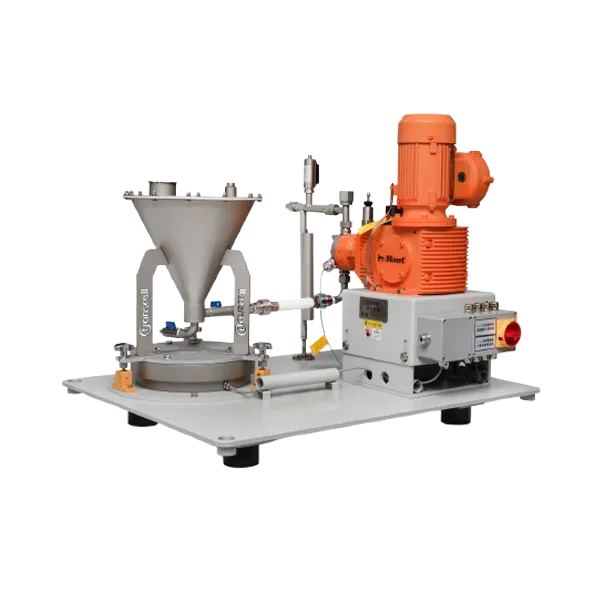
Pumps can operate volumetrically or as part of a gravimetric system. Viscosity, temperature, pulsation, gas entrainment, and pump slip affect actual flow. Gravimetric measurement can provide useful mass control when these variables change, particularly for high-value or formulation-critical liquids.
Can a Plant Use Both Technologies?
A plant can combine volumetric and gravimetric feeders strategically, using gravimetric control where error is expensive and volumetric control where material and process risk are low.
This hybrid approach often produces the best capital efficiency. A multi-ingredient line does not necessarily need identical feeder technology at every position. Base materials with stable properties may use volumetric devices, while pigments, catalysts, active ingredients, or variable powders use loss-in-weight feeders. The control system can coordinate both types through recipe setpoints and line-speed signals.
Plants can also stage an upgrade. A volumetric feeder may be installed with mechanical provisions for later conversion to gravimetric operation, although conversion feasibility should be confirmed before purchase. Adding load cells later is not always simple because the frame, flexible connections, refill arrangement, wiring, and controller must all support true weighing.
Another common combination is a volumetric refill device feeding a gravimetric loss-in-weight hopper. The refill device does not need to meter final process flow precisely; it only needs to replenish material quickly and consistently without disturbing the weighed feeder excessively.
What Hidden Costs Can Distort the Comparison?
Hidden costs distort feeder comparisons when quotations exclude structural work, refill equipment, commissioning, controls integration, cleaning time, spare parts, validation, or the production cost of poor feeding.
A low purchase price can become expensive if the feeder requires frequent manual calibration, creates long cleanout time, cannot achieve the minimum rate, or needs a custom screw after commissioning. A high-specification gravimetric feeder can also underperform financially if it is installed on a vibrating platform, connected with rigid piping, or operated by untrained personnel.
Include the following items in the lifecycle comparison:
Support frame, platform reinforcement, and access equipment
Refill hopper, valve, vacuum receiver, conveyor, or pneumatic transfer
Flexible sleeves, dust collection, containment, and grounding
Electrical panels, drives, PLC programming, communication licenses, and cabling
Factory test, material trial, site commissioning, and performance verification
Calibration equipment and documented procedures
Cleaning labor, changeover downtime, and product loss during purge
Spare screws, seals, bearings, load cells, and critical electronics
Operator and maintenance training
Expected service life and ability to support future recipes
The most defensible financial comparison uses total installed cost and annual net operating impact. It also includes a sensitivity analysis. If payback remains acceptable when expected savings are reduced by 25%, the project is more robust than one that depends on the most optimistic assumptions.
How Should You Validate a Feeder Before Purchase?
Feeder validation should reproduce actual material, rates, refill conditions, run duration, environmental disturbance, and acceptance criteria before the equipment is released for production.
A good test plan defines the purpose of the test. Is the priority average rate, short-term consistency, recipe ratio, refill recovery, minimum-rate performance, cleaning, or resistance to material buildup? Different goals require different sampling methods.
For gravimetric testing, record setpoint, measured rate, collected weight, sample duration, screw speed, hopper weight, refill status, motor load, and alarm history. Run multiple repetitions at low, normal, and high rates. Include at least several refill cycles. For a volumetric feeder, repeat calibration after changing hopper level, material lot, or conveying condition to quantify how stable the volume-to-mass relationship really is.
Acceptance criteria should be written before testing. They may include average deviation, standard deviation, maximum short-term error, refill recovery time, residual material after cleanout, maximum motor load, or changeover duration. A supplier should not be asked merely to demonstrate that material comes out of the feeder.
What Control and Data Functions Improve ROI?
Control and data functions improve ROI when they reduce manual adjustment, detect abnormal material flow, support recipe consistency, and provide evidence for quality and maintenance decisions.
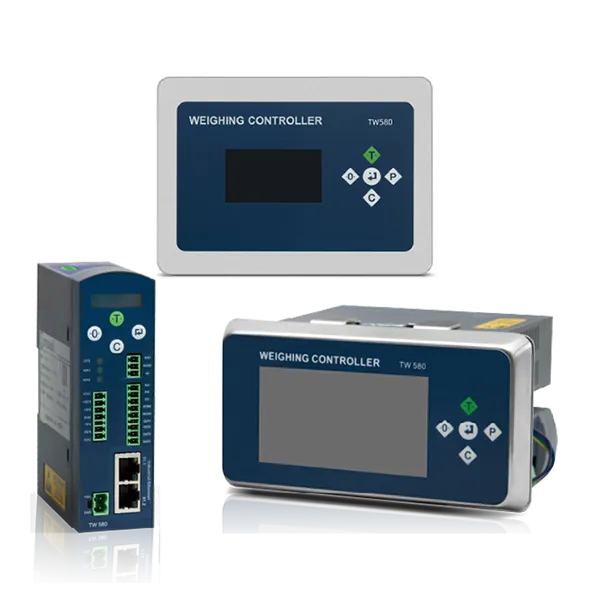
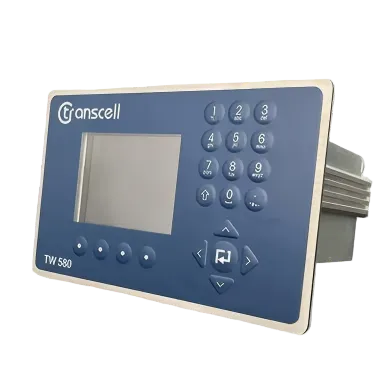
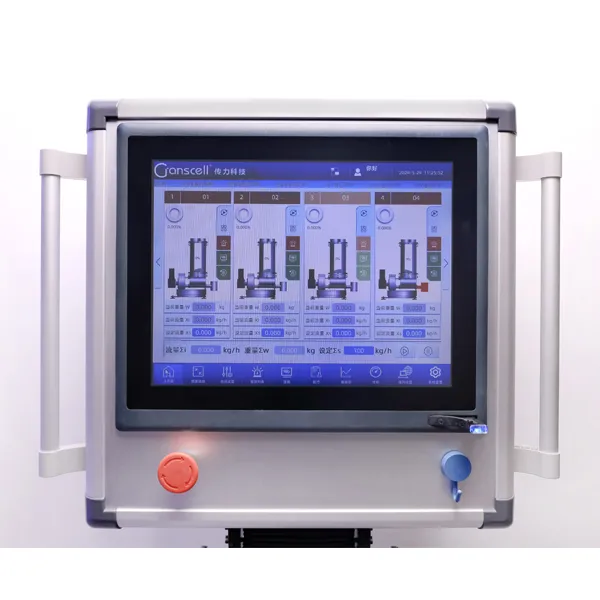
A capable weighing controller can manage setpoints, calculate actual flow, control refill, totalize material, store recipes, generate deviation alarms, and communicate with plant systems. Trend data can reveal whether screw speed is rising over time because of buildup or wear. Refill data can show whether an upstream conveying system is becoming slower. Weight alarms can indicate an empty hopper, blocked refill path, or unexpected material flow.
However, data only creates value when the plant defines how it will be used. Alarm limits should be meaningful, not so tight that operators ignore them or so wide that quality is already affected. Recipe permissions, calibration records, and maintenance trends should have clear ownership. Integration should include failure modes: the line must know what happens if communication is lost, weight becomes unstable, or the feeder reaches its speed limit.
How Does Transcell Approach Feeder Selection?
Transcell approaches feeder selection by matching the mechanical feeding method, weighing technology, controller, refill system, and service plan to the material and process economics.
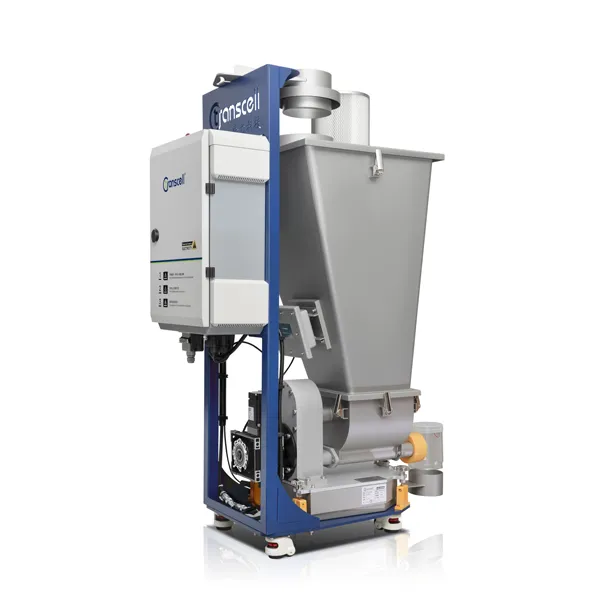
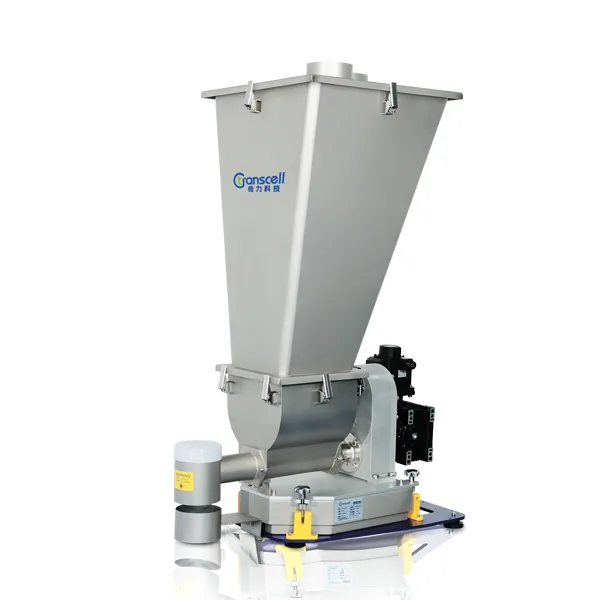
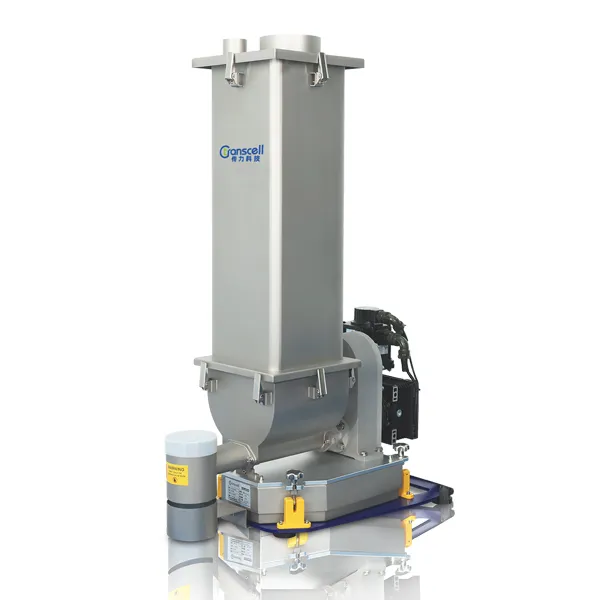
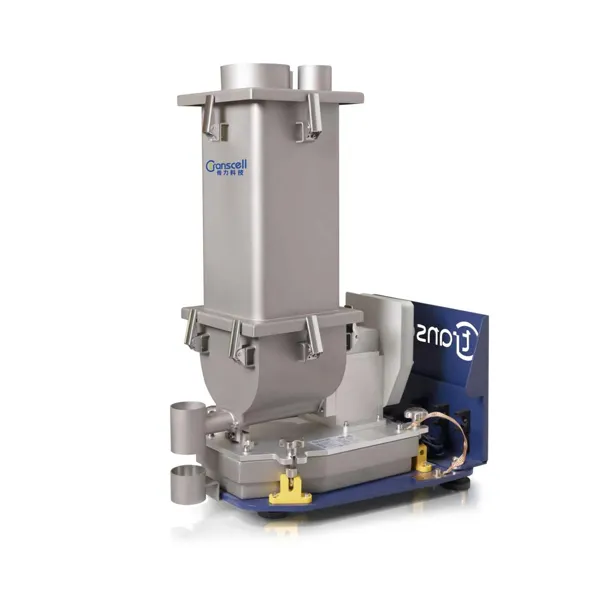
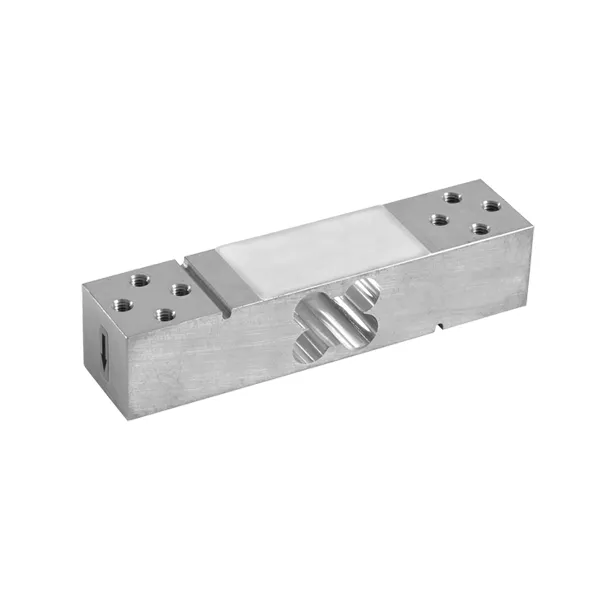
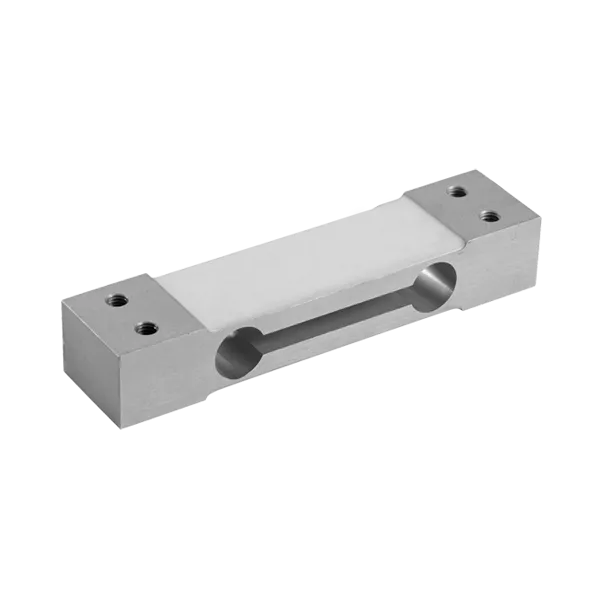
The Transcell product range includes single screw, double screw, micro, vibrating, and liquid loss-in-weight feeders, as well as load cells, weighing instruments, controllers, and industrial intelligent control systems. This range supports applications in modified plastics, chemicals, food, building materials, new energy, and pharmaceuticals.
A productive project discussion should include a representative material sample, minimum and maximum rates, bulk-density range, ingredient value, annual consumption, acceptable deviation, refill method, available space, electrical standard, cleaning method, and PLC protocol. These inputs allow the system to be evaluated technically and financially rather than selected from a catalog description alone.
For a line comparing volumetric and gravimetric options, Transcell can help build a test around the actual material and calculate the economic effect of reduced variation. The objective is not to specify the most complex feeder. It is to identify the lowest-risk configuration that meets the required process result and produces a defendable return over its service life.
Frequently Asked Questions
These FAQs summarize the most common purchasing and engineering questions about gravimetric and volumetric feeders.
1. Are gravimetric feeders always more accurate than volumetric feeders?
Gravimetric feeders have the advantage of direct mass feedback, but actual performance still depends on material flow, mechanical design, load-cell installation, control tuning, refill behavior, and testing method. A poorly installed gravimetric feeder can underperform, while a well-calibrated volumetric feeder can be effective with stable material and moderate accuracy requirements.
2. How much more does a gravimetric feeder cost?
The premium varies with feeder size, weighing technology, controller, construction, refill equipment, controls integration, and validation. Compare total installed cost rather than equipment price. The better question is whether annual material, quality, labor, and downtime savings recover the premium within the plant’s required payback period.
3. Can a volumetric feeder compensate for bulk-density changes?
Not directly, because it does not continuously measure mass. Operators can recalibrate when density changes, and external instruments may provide correction, but a standard volumetric feeder controls mechanical output. A gravimetric feeder measures the resulting mass flow and automatically adjusts within its operating range.
4. What payback period is reasonable for a gravimetric upgrade?
Many plants evaluate projects against internal thresholds such as one to three years, but the correct target depends on capital policy, process risk, product life, and regulatory requirements. Use actual annual ingredient spend, deviation, scrap, labor, and downtime data. Include conservative and optimistic scenarios rather than one estimate.
5. Which feeder is better for low feed rates?
Low-rate performance depends on material, screw size, screw geometry, drive control, weighing resolution, and required sampling time. Gravimetric control is often valuable because small mass errors are significant, but the mechanical device must avoid severe pulsation. Micro or twin-screw configurations may be considered for difficult powders and very low rates.
6. Can an existing volumetric feeder be converted to gravimetric operation?
Sometimes, but the conversion requires more than adding load cells. The frame must isolate the feeder, inlet and outlet connections must be flexible, refill must be controlled, the controller must calculate loss-in-weight, and the structure must limit vibration. A technical survey should compare conversion cost with a purpose-built gravimetric system.
Conclusion
The feeder with the better ROI is the one that minimizes total lifecycle cost while delivering the mass control, quality, uptime, traceability, and flexibility required by the production line.
Volumetric feeders remain a sound choice for stable materials and tolerant processes. Their lower capital cost, simple installation, and straightforward maintenance can produce excellent value when the relationship between mechanical output and mass remains predictable. Gravimetric feeders justify their additional cost when density variation, expensive ingredients, narrow formulations, continuous processing, quality risk, or data requirements make open-loop feeding expensive.
The most reliable decision uses plant data. Calculate the annual cost of overfeed and underfeed. Review scrap, rework, catch tests, labor, and downtime. Measure material density variation. Test the actual ingredient at the real operating range and through refill cycles. Then compare total installed cost with conservative annual savings.
Transcell can support this process with loss-in-weight feeders, weighing components, controllers, material testing, and integrated feeding solutions. By treating feeder selection as both an engineering decision and an economic model, you can invest where closed-loop mass control creates value and keep simpler volumetric equipment where it remains the most efficient choice.
External References
These external resources provide additional technical background on feeder principles, continuous-process accuracy, and load-cell measurement.
 CN
CN