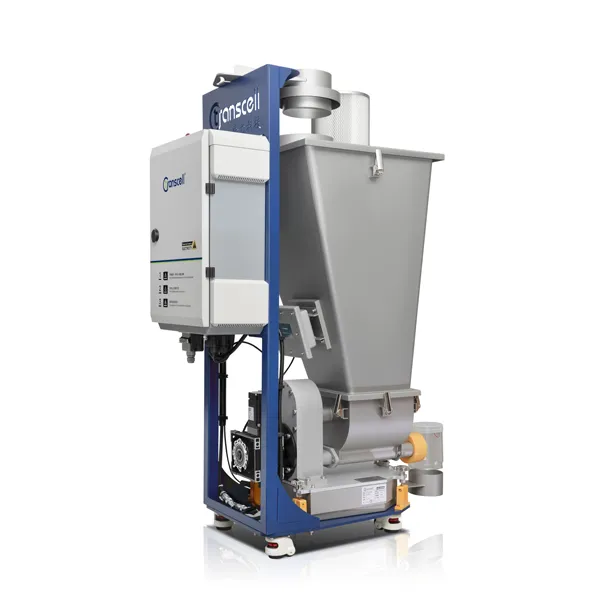
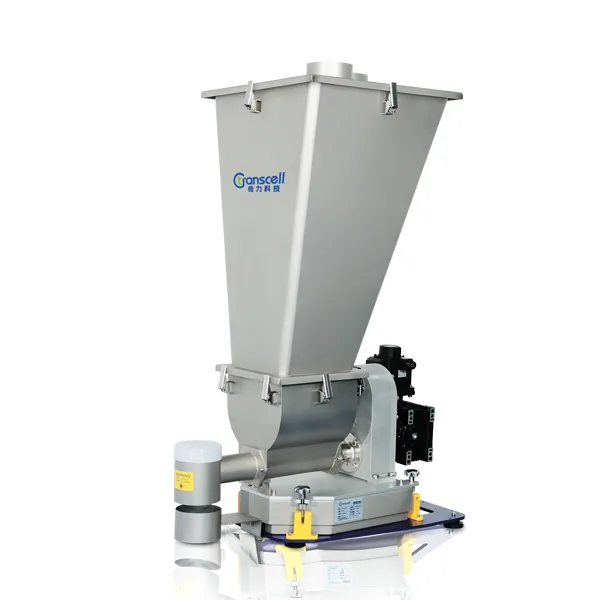
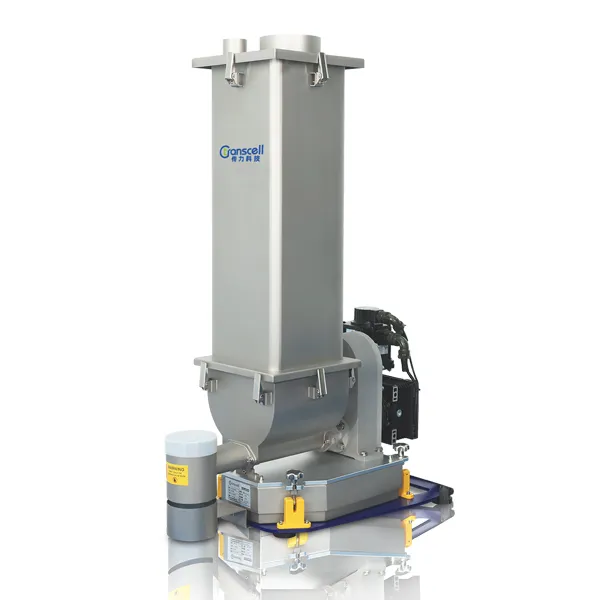
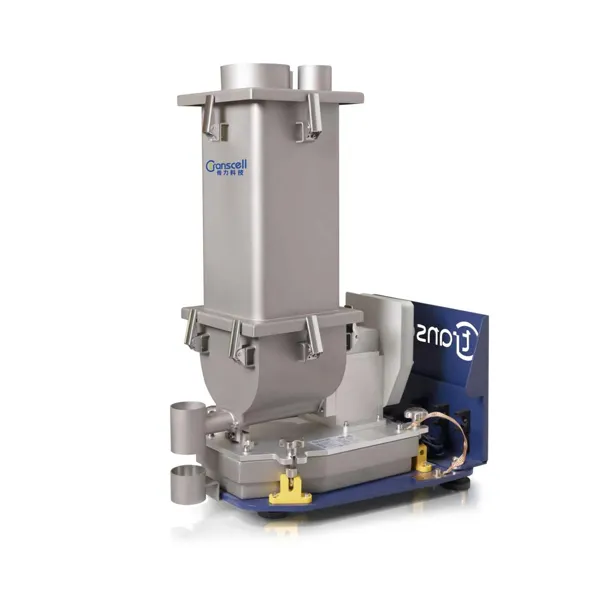
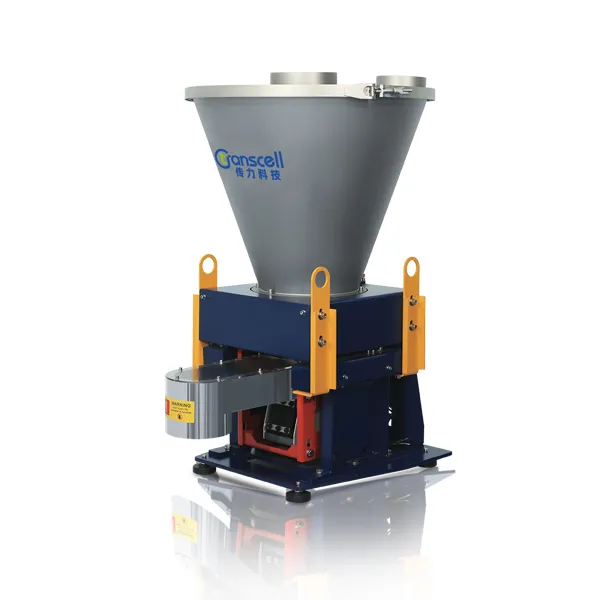
Selecting the right loss-in-weight feeder requires a detailed understanding of material characteristics, feeding accuracy requirements, production conditions, and automation objectives. Powders, granules, fibers, and liquids each behave differently during storage and transportation, meaning the optimal feeder configuration must be matched to the physical properties of the material rather than selected only by throughput capacity.
For industrial manufacturers, the most important consideration is whether the feeding system can maintain a stable mass flow rate under changing conditions. Variations in bulk density, humidity, particle size, viscosity, and material flowability can directly influence process consistency, product quality, and raw material consumption.
Transcell Group provides customized gravimetric feeding solutions for plastics, chemicals, food processing, pharmaceuticals, new energy materials, and other continuous production industries. By combining precision weighing technology, intelligent control systems, and application-focused feeder designs, Transcell helps manufacturers achieve reliable material dosing and improved process efficiency.
What Should You Consider Before Selecting a Loss-in-Weight Feeder?
The correct feeder selection begins with material analysis. Many feeding problems occur because equipment is selected according to production capacity alone without considering how the material behaves inside the hopper and feeding mechanism.
The most important selection factors include:
| Parameter | Impact on Feeder Selection |
|---|
| Material type | Determines feeding mechanism and structural design |
| Bulk density | Influences hopper volume and calibration stability |
| Particle size | Affects flow consistency and segregation risk |
| Moisture content | Can increase adhesion and bridging |
| Feeding accuracy | Determines weighing system requirements |
| Required throughput | Defines feeder size and motor capacity |
| Material temperature | Influences mechanical and control design |
| Cleaning requirements | Important for food and pharmaceutical industries |
A professional feeder selection process should evaluate the entire production environment, including upstream storage, refill method, downstream equipment, and required automation communication.
How Do You Select a Loss-in-Weight Feeder for Powders?
Powders represent one of the most challenging materials for continuous feeding because their flow behavior can change significantly during production.
Common powder materials include:
Pigments
Calcium carbonate
Chemical additives
Battery materials
Pharmaceutical powders
Mineral fillers
The main challenges include:
For these applications, the selected loss in weight feeder must provide accurate weighing while maintaining consistent material movement.
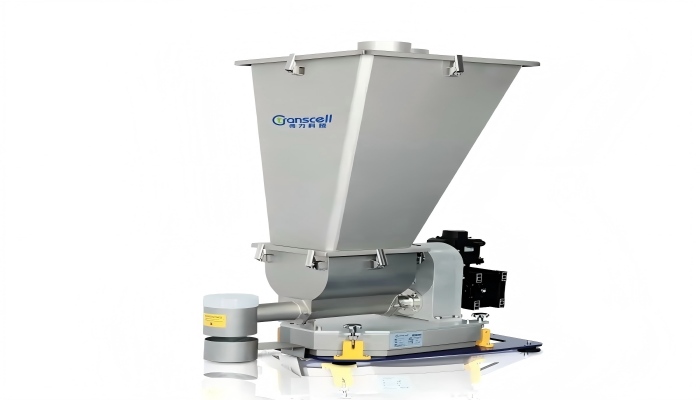
Why Do Powder Applications Require Special Feeder Designs?
Unlike granular materials, powders can create unstable feeding conditions because particles interact strongly with each other.
A powder may appear free-flowing during testing but behave differently after:
Therefore, feeder design should consider:
Hopper Geometry
The hopper shape directly affects powder movement.
A properly designed hopper should:
Agitation Technology
Some powders require mechanical assistance to avoid bridging.
Common solutions include:
Vertical agitators
Horizontal agitators
Vibrating assistance
Flexible hopper systems
Screw Configuration
The screw design determines how material is transported.
Single screw systems are often suitable for:
Free-flowing powders
Granules
Pellets
Difficult powders may require:
How Do You Choose a Feeder for Granules and Pellets?
Granules and pellets generally provide better flow behavior than powders, but accurate feeding still depends on stable material handling.
Typical applications include:
Plastic extrusion
Polymer compounding
Masterbatch production
Chemical blending
The main challenges are:
Bulk density variation
Particle segregation
Different pellet sizes
Refill fluctuations
Traditional volumetric feeders assume that every screw rotation delivers the same material quantity. However, actual material output changes when density or particle distribution changes.
A gravimetric approach continuously measures actual weight reduction and automatically adjusts the feeding rate.
A properly configured gravimetric feeder provides several advantages:
Real-time mass flow correction
Improved formulation accuracy
Reduced material waste
Better production repeatability
For industries using expensive additives or precise formulations, this difference can directly affect production cost and product quality.
How Are Fiber Materials Different From Powders and Granules?
Fiber materials require specialized consideration because they have unique physical characteristics.
Typical examples include:
Glass fibers
Carbon fibers
Cellulose fibers
Reinforcement materials
Unlike powders and pellets, fibers may:
Become entangled
Change bulk density easily
Create irregular feeding patterns
Wrap around mechanical components
What Problems Occur When Feeding Fibers?
Common problems include:
Fiber Bridging
Lightweight fibers may form structures inside the hopper, preventing continuous discharge.
Material Compression
Excessive mechanical pressure can damage fibers and reduce feeding consistency.
Flow Variation
The same weight of fiber may occupy very different volumes depending on packing conditions.
To solve these issues, engineers often select:
Low-stress conveying designs
Vibratory feeding mechanisms
Customized hopper structures
Optimized material contact surfaces
How Do You Select a Loss-in-Weight Feeder for Liquids?
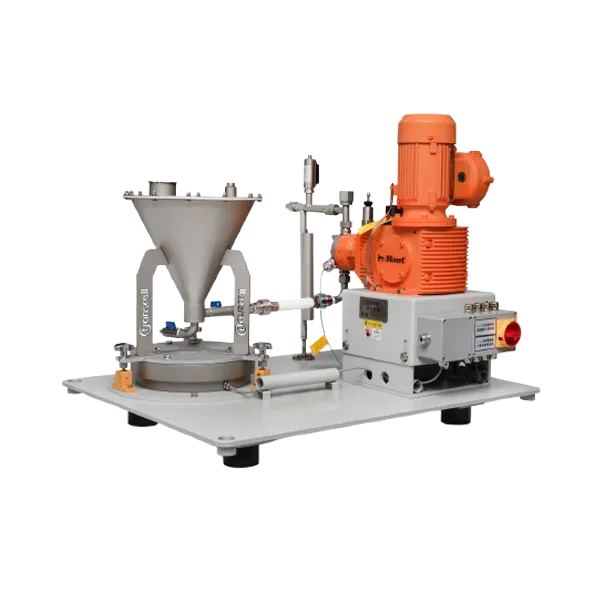
Liquid feeding requires a different engineering approach because the feeding system must control both weight measurement and fluid movement.
Important parameters include:
| Liquid Parameter | Why It Matters |
|---|
| Viscosity | Determines pump and piping requirements |
| Temperature | Affects flow characteristics |
| Chemical properties | Determines material compatibility |
| Density variation | Influences dosing accuracy |
| Required flow rate | Determines system capacity |
Liquid applications are commonly found in:
Chemical additives
Adhesives
Coatings
Lubricants
Polymer processing
A properly designed liquid feeder integrates accurate weighing with controlled pumping to maintain a stable dosing rate.
Compared with volumetric liquid dosing, gravimetric liquid feeding can compensate for:
This makes it especially valuable in processes where small dosing errors influence final product performance.
How Do You Compare Different Types of Loss-in-Weight Feeders?
There is no single feeder design suitable for every material. The correct configuration depends on the relationship between material properties, required accuracy, and production conditions.
The following comparison helps engineers understand the differences between common feeding approaches:
| Feeder Type | Suitable Materials | Main Advantages | Common Challenges |
|---|
| Single Screw Loss-in-Weight Feeder | Pellets, free-flowing powders, granules | Simple structure, reliable operation, easy maintenance | Limited performance with highly cohesive materials |
| Twin Screw Loss-in-Weight Feeder | Sticky powders, additives, difficult materials | Better conveying stability and material control | Higher equipment complexity |
| Vibratory Loss-in-Weight Feeder | Fragile particles, irregular materials, low-density materials | Gentle handling, reduced material damage | Requires careful vibration control |
| Liquid Loss-in-Weight Feeder | Chemicals, coatings, liquid additives | High dosing precision and automatic compensation | Requires pump and piping optimization |
Selecting the correct feeder type requires understanding not only the material but also the production objective.
For example:
A plastic extrusion line may prioritize continuous additive dosing.
A pharmaceutical process may prioritize accuracy and hygiene.
A chemical process may prioritize corrosion resistance and repeatability.
A battery material application may require stable powder feeding under strict formulation control.
What Accuracy Level Should You Expect From a Loss-in-Weight Feeder?
Feeder accuracy is influenced by multiple factors rather than one individual component.
Important performance factors include:
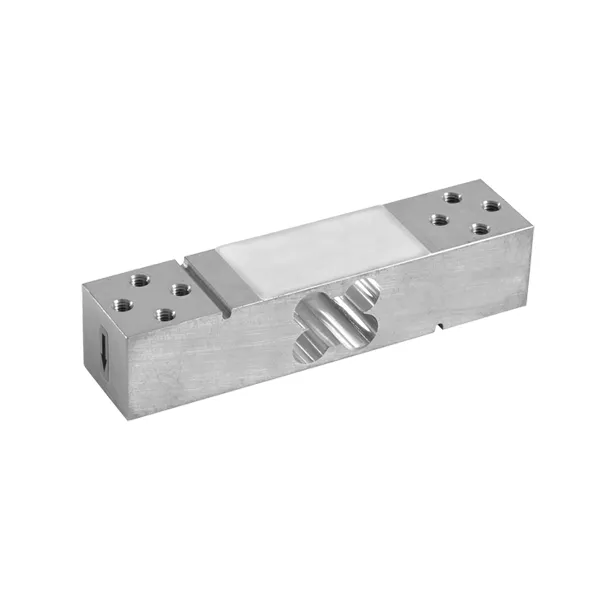
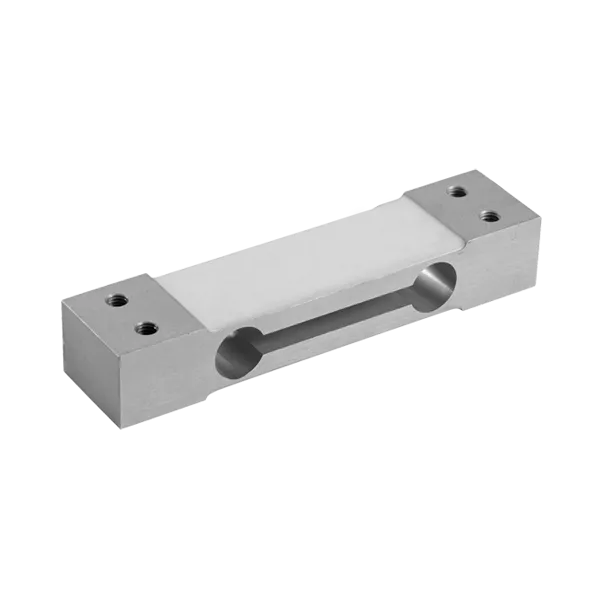
Load Cell Resolution
The weighing system must detect small changes in material weight while maintaining stability against external disturbances.
A high-quality weighing system should minimize the influence of:
Mechanical vibration
Temperature variation
Electrical noise
External movement
Feeding Mechanism Stability
Even the most accurate load cell cannot compensate for inconsistent material discharge.
The feeder must provide:
Stable material transportation
Smooth discharge
Controlled refill operation
Repeatable feeding performance
Control System Response
Modern loss-in-weight systems use intelligent algorithms to calculate instantaneous flow rates and adjust motor speed automatically.
The control system must manage:
Weight signal filtering
Feeding rate calculation
Motor adjustment
Refill compensation
A well-designed control system allows the feeder to respond quickly to production changes while maintaining stable output.
What Are Common Mistakes When Selecting a Loss-in-Weight Feeder?
Many feeding problems are caused by incorrect equipment selection rather than equipment failure.
Choosing Equipment Based Only on Maximum Capacity
A feeder operating near its maximum capacity may experience reduced accuracy.
The ideal operating range should provide enough flexibility for:
Ignoring Material Characteristics
Two materials with the same weight may behave completely differently.
For example:
Fine powder and plastic pellets require different feeding methods.
Long fibers and short particles require different conveying designs.
High-viscosity liquids require different pumping solutions.
Selecting Standard Equipment Without Application Testing
Industrial materials often behave differently from laboratory samples.
Professional feeder suppliers should consider:
How Can Manufacturers Improve Feeding Stability After Installation?
Even a correctly selected feeder requires proper installation and operation.
Maintain Correct Calibration
Regular calibration ensures that:
Weight measurement remains accurate
Feeding calculations remain reliable
Production consistency is maintained
Calibration should be performed when:
Control Material Refill Operation
During refill, additional material enters the weighing hopper, temporarily affecting measurement accuracy.
A good system should separate:
Feeding mode
Refill mode
Stabilization period
This prevents sudden feeding fluctuations.
Monitor Material Flow Conditions
Operators should regularly check:
Early detection prevents production interruptions.
Why Choose Transcell Group for Loss-in-Weight Feeding Solutions?
Selecting a feeder supplier is not only about purchasing equipment. It requires choosing a partner capable of understanding the complete production process.
Transcell Group focuses on industrial weighing and feeding technologies, providing customized solutions for manufacturers requiring accurate and stable material dosing.
The company supports applications involving:
Transcell Group's engineering approach focuses on:
Application-Based Design
Each feeder solution is developed according to:
Material characteristics
Required throughput
Accuracy requirements
Production environment
Integrated Weighing and Control Technology
Reliable feeding requires coordination between:
Mechanical design
Load cell technology
Control software
Automation systems
Long-Term Production Reliability
Industrial customers need equipment that performs consistently over long operating periods.
A properly engineered feeding system helps manufacturers:
Reduce raw material waste
Improve product consistency
Increase process automation
Minimize downtime
Frequently Asked Questions
1. What is the difference between a loss-in-weight feeder and a volumetric feeder?
A volumetric feeder controls material based on estimated volume, while a loss-in-weight feeder measures actual weight reduction over time.
Because material density can change, gravimetric feeding usually provides better accuracy for applications requiring consistent dosing.
2. Can one loss-in-weight feeder handle powders, granules, and liquids?
A single feeder design is generally not optimized for all material types.
Powders, granules, fibers, and liquids have different flow behaviors and usually require different feeding mechanisms.
However, customized systems can be designed with interchangeable components for multiple materials.
3. Why does my loss-in-weight feeder become unstable during operation?
Common causes include:
Troubleshooting should begin by analyzing both the material behavior and equipment operation.
4. How often should a loss-in-weight feeder be calibrated?
Calibration frequency depends on:
Critical processes may require more frequent verification, while stable applications may require periodic checks.
5. Are loss-in-weight feeders suitable for high-accuracy industrial applications?
Yes. Loss-in-weight feeders are widely used in industries where precise dosing is required.
Applications include:
Performance depends on correct feeder selection, installation, and calibration.
6. What information should I provide when selecting a loss-in-weight feeder?
Manufacturers should provide:
This information allows engineers to recommend the appropriate feeder configuration.
Conclusion
Selecting a loss-in-weight feeder for powders, granules, fibers, and liquids requires a complete understanding of material behavior, process requirements, and feeding technology. The most reliable feeding systems are not defined only by equipment capacity but by how effectively they maintain stable mass flow under real production conditions.
Powders require careful control of flowability and bridging prevention. Granules require consistent material transport and density compensation. Fibers require specialized handling to avoid irregular feeding. Liquids require precise integration between weighing technology and pumping systems.
A successful feeding solution combines mechanical design, accurate weighing, intelligent control, and application-specific engineering.
With extensive experience in industrial weighing and dosing applications, Transcell Group provides customized loss-in-weight feeding solutions designed to improve accuracy, reduce waste, and support reliable automated production.
External References
https://www.nist.gov/
https://www.iso.org/
https://www.fda.gov/
 CN
CN