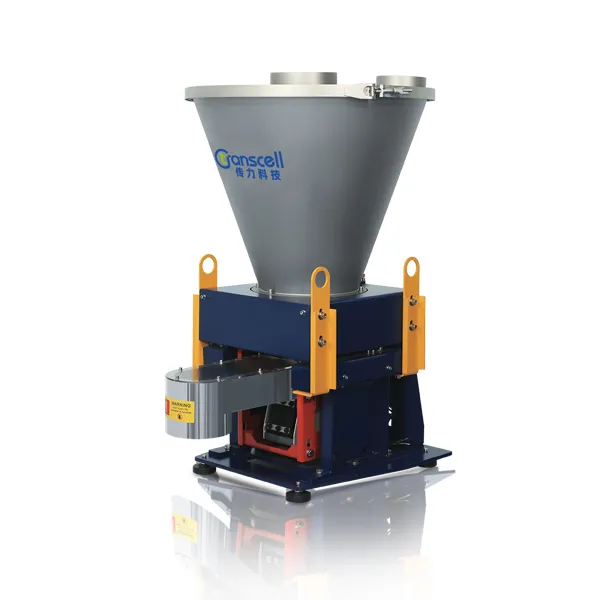
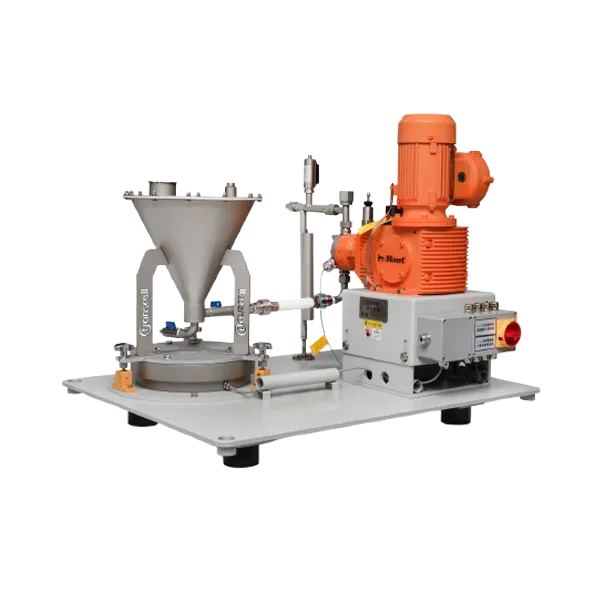
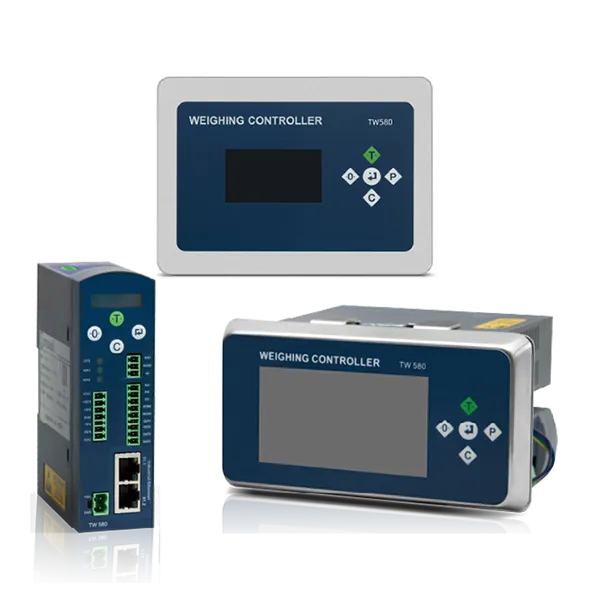
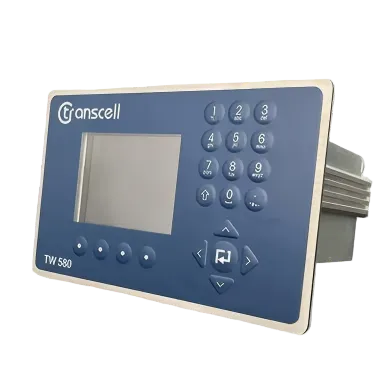
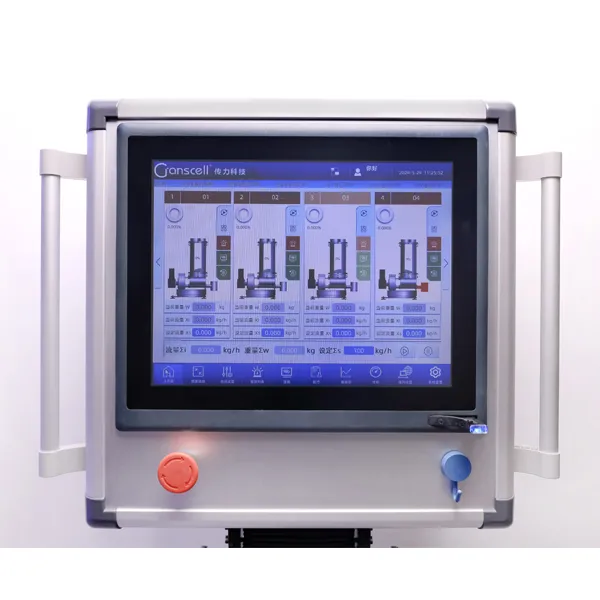
Material bridging and feeding instability are two of the most common challenges affecting loss-in-weight system performance. When materials do not discharge consistently from the hopper, the feeder cannot maintain a stable mass flow rate, resulting in inaccurate dosing, production variation, and increased material waste.
Preventing these issues requires more than increasing motor speed or changing operating parameters. The solution depends on understanding material behavior, optimizing hopper design, selecting the correct feeding mechanism, controlling refill operations, and integrating reliable weighing technology.
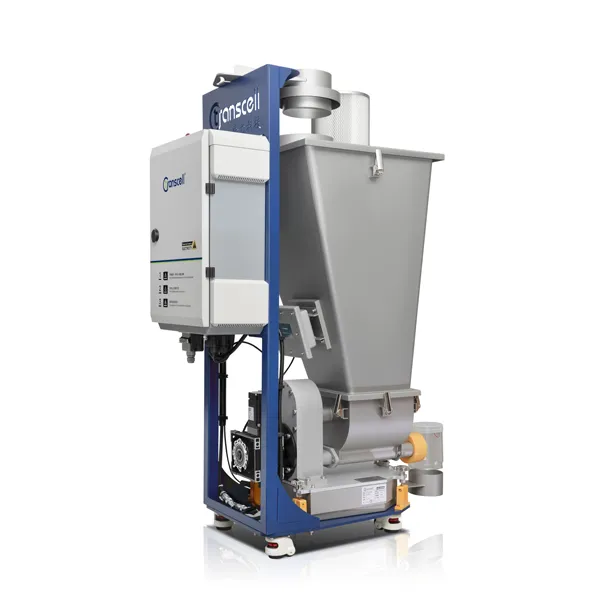
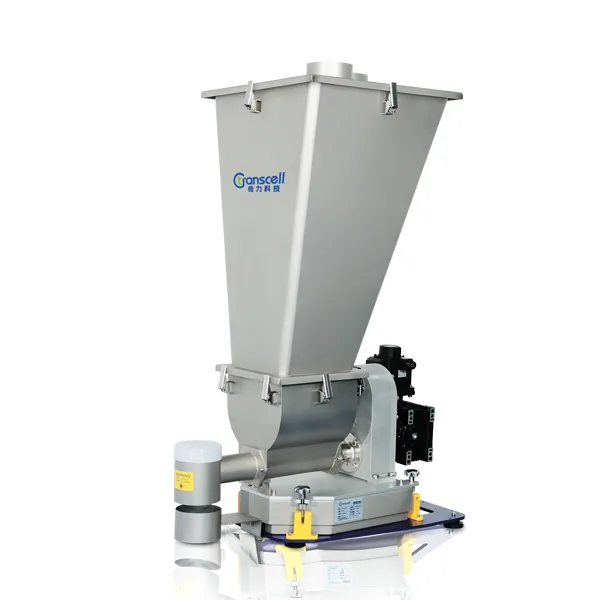
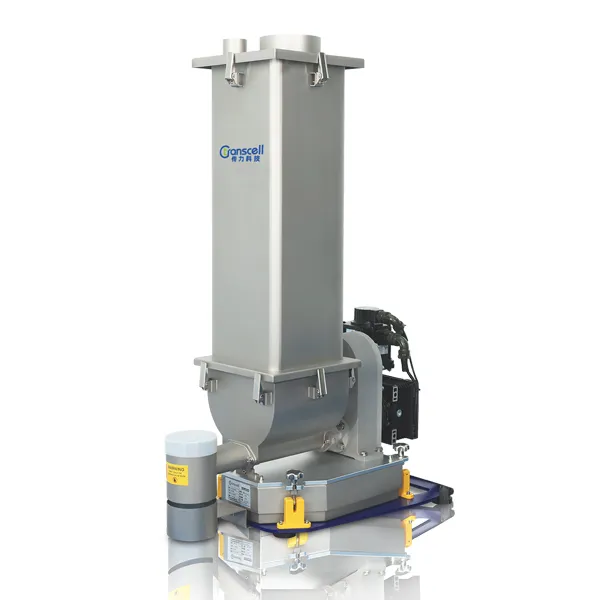
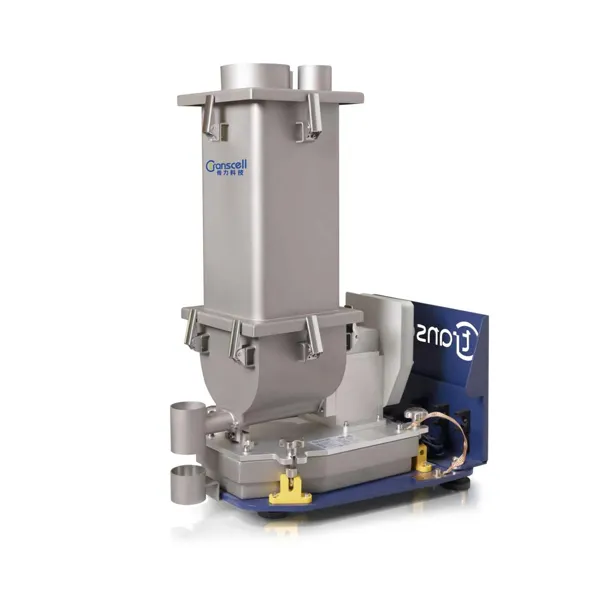
Transcell Group develops customized loss-in-weight feeding solutions for demanding industrial applications where consistent material flow is critical. Through proper mechanical design and intelligent control strategies, manufacturers can reduce bridging risks and achieve stable feeding performance for powders, granules, fibers, and other challenging materials.
Why Does Bridging Occur in Loss-in-Weight Systems?
Bridging occurs when material forms a stable structure above the feeder outlet, preventing continuous discharge.
Instead of flowing downward naturally, the material creates a temporary “bridge” that supports the weight above it.
When bridging happens, the feeder may experience:
Bridging is especially common with:
What Materials Are Most Likely to Cause Bridging Problems?
Material behavior is the most important factor influencing bridging.
Fine Powders
Fine powders often have strong internal forces between particles.
Examples include:
Mineral powders
Chemical additives
Pigments
Battery materials
These materials may experience:
High cohesion
Poor flowability
Electrostatic attraction
Lightweight Materials
Low-density materials occupy large volumes compared with their weight.
Examples:
Fibers
Flakes
Lightweight fillers
These materials can easily form structures inside the hopper.
Moist or Sticky Materials
Materials affected by humidity may:
How Can You Prevent Bridging in Loss-in-Weight Systems?
Preventing bridging requires a combination of mechanical design and process control.
The most effective solutions include:
1. Optimize Hopper Design
The hopper is one of the most important components affecting material flow.
A poorly designed hopper can create:
A properly designed hopper should consider:
Material angle of repose
Particle size
Bulk density
Moisture sensitivity
Important design factors include:
Hopper Angle
The wall angle should encourage continuous material movement.
Outlet Size
The discharge opening must be large enough to prevent material blockage.
Surface Finish
Smooth internal surfaces reduce material adhesion.
How Does Agitation Help Prevent Material Bridging?
For difficult materials, passive hopper design may not be enough.
Mechanical agitation systems can help maintain continuous flow by:
Breaking material structures
Preventing powder compaction
Improving discharge consistency
Common agitation methods include:
| Agitation Type | Suitable Materials | Main Function |
|---|
| Vertical agitator | Cohesive powders | Breaks internal material structures |
| Horizontal agitator | Dense powders | Improves material movement |
| Vibration assistance | Fragile or lightweight materials | Encourages discharge |
| Flexible hopper walls | Sticky materials | Prevents wall buildup |
The correct agitation method depends on the material characteristics and required feeding accuracy.
How Does Screw Selection Affect Feeding Stability?
The feeding screw directly influences material transportation.
Incorrect screw selection may cause:
Pulsating discharge
Material compression
Inconsistent output
Important screw design factors include:
Screw Diameter
A larger screw diameter may provide smoother transportation for higher throughput applications.
Screw Pitch
Pitch selection affects:
Material movement speed
Filling behavior
Feeding consistency
Screw Configuration
Different materials require different screw designs.
For example:
Free-flowing pellets may use standard screw designs.
Cohesive powders may require specialized screw geometry.
Lightweight fibers may require customized conveying structures.
Selecting the Right Feeder Technology for Stable Feeding
Different feeding technologies provide different advantages depending on the application.
| Feeder Technology | Best Applications | Stability Advantages |
|---|
| Screw feeder | Powders and granules | Accurate continuous feeding |
| Twin screw feeder | Difficult powders | Improved material control |
| Vibratory feeder | Fragile and irregular materials | Gentle handling |
| Liquid feeder | Liquid additives | Stable dosing control |
For applications involving fragile materials or materials requiring gentle transportation, a properly designed vibratory feeder can provide improved flow stability while minimizing material damage.
Why Does Refill Operation Cause Feeding Instability?
Refill operation is another major factor affecting loss-in-weight system stability.
During normal operation, the feeder measures weight loss continuously.
However, when new material enters the hopper:
The measured weight suddenly increases.
The control system must temporarily compensate.
The feeding signal may become unstable.
Poor refill management can result in:
How Can Refill Disturbance Be Reduced?
Control Refill Quantity
Large refill volumes create greater measurement disturbances.
A controlled refill strategy maintains:
Smaller weight changes
Faster stabilization
More consistent feeding
Optimize Refill Timing
The system should refill before the hopper reaches a critical low level.
This prevents:
Screw starvation
Sudden material shortage
Feeding interruption
Use Intelligent Control Algorithms
Modern systems can automatically compensate for refill effects by analyzing:
Weight changes
Feeding rate trends
Material behavior
What Causes Feeding Instability Besides Bridging?
Although bridging is a common issue, other factors can also create unstable feeding.
| Problem | Possible Cause | Solution |
|---|
| Irregular output | Poor material flow | Modify hopper or feeder design |
| Sudden feeding changes | Refill disturbance | Optimize refill control |
| Weight fluctuation | External vibration | Improve installation |
| Low accuracy | Incorrect calibration | Recalibrate system |
| Material blockage | Incorrect screw design | Select suitable feeding mechanism |
A complete diagnosis requires evaluating both the material and the equipment.
How Can Material Flow Behavior Be Improved in Loss-in-Weight Systems?
Stable feeding begins with understanding how the material behaves before it enters the feeder.
Engineers should evaluate several material properties:
| Material Property | Influence on Feeding Stability |
|---|
| Bulk density | Determines filling consistency and hopper capacity |
| Particle size distribution | Affects segregation and flow uniformity |
| Moisture content | Influences adhesion and material buildup |
| Cohesion level | Determines bridging tendency |
| Angle of repose | Indicates natural flow characteristics |
A material that appears easy to handle in storage may behave differently once it enters a continuous feeding process.
For example:
A dry powder may become cohesive under humidity changes.
A lightweight fiber may compress during storage.
Small particles may separate from larger particles during transportation.
Therefore, feeder selection should always consider real production conditions rather than only laboratory material samples.
How Can Powder Feeding Stability Be Improved?
Powder applications are among the most demanding because powders can easily change their flow characteristics.
Common improvement methods include:
Reduce Material Compression
Excessive pressure inside the hopper can compact powders and reduce flowability.
Solutions include:
Optimized hopper geometry
Controlled material level
Proper agitator selection
Prevent Wall Adhesion
Some powders stick to hopper surfaces because of:
Moisture
Electrostatic effects
Material characteristics
Possible solutions include:
Maintain Continuous Material Movement
A stable feeding system should avoid:
Consistent material movement improves both accuracy and repeatability.
How Does Vibratory Feeding Help Prevent Instability?
Vibration technology can be highly effective for materials that do not respond well to traditional screw feeding.
A vibratory feeding mechanism controls material movement through controlled vibration energy rather than direct mechanical conveying.
Advantages include:
For fragile particles, irregular shapes, or low-density materials, selecting an experienced vibratory feeder manufacturer helps ensure the equipment design matches the application requirements.
A professional supplier evaluates:
Material characteristics
Required feeding rate
Vibration parameters
Installation environment
before recommending the appropriate configuration.
How Can Engineers Troubleshoot Feeding Instability?
When a loss-in-weight system shows unstable performance, troubleshooting should follow a systematic approach.
Step 1: Check Material Conditions
First evaluate:
Has the material changed?
Is moisture content different?
Is particle size consistent?
Has storage time increased?
Material changes are often the hidden cause of feeding problems.
Step 2: Check Hopper Behavior
Observe:
Material level changes
Bridging formation
Wall buildup
Uneven discharge
If the hopper does not supply material consistently, the feeder cannot maintain stable output.
Step 3: Check Mechanical Components
Inspect:
Mechanical wear can gradually reduce feeding stability.
Step 4: Check Control Parameters
Review:
Incorrect parameters can create unstable adjustments even when the hardware is functioning properly.
Troubleshooting Guide for Loss-in-Weight Feeding Problems
| Symptom | Possible Cause | Recommended Action |
|---|
| Feeding rate suddenly decreases | Material bridging | Improve hopper design or add agitation |
| Output fluctuates continuously | Poor material flow | Review feeder configuration |
| Weight signal is unstable | External vibration | Improve installation isolation |
| Frequent calibration required | Material variation | Adjust control strategy |
| Feeding stops unexpectedly | Hopper blockage | Check discharge design |
| Inconsistent output after refill | Poor refill management | Optimize refill sequence |
A structured troubleshooting process reduces unnecessary downtime and prevents incorrect equipment adjustments.
Why Is System Integration Important for Feeding Stability?
Modern industrial production increasingly requires communication between feeding equipment and factory automation systems.
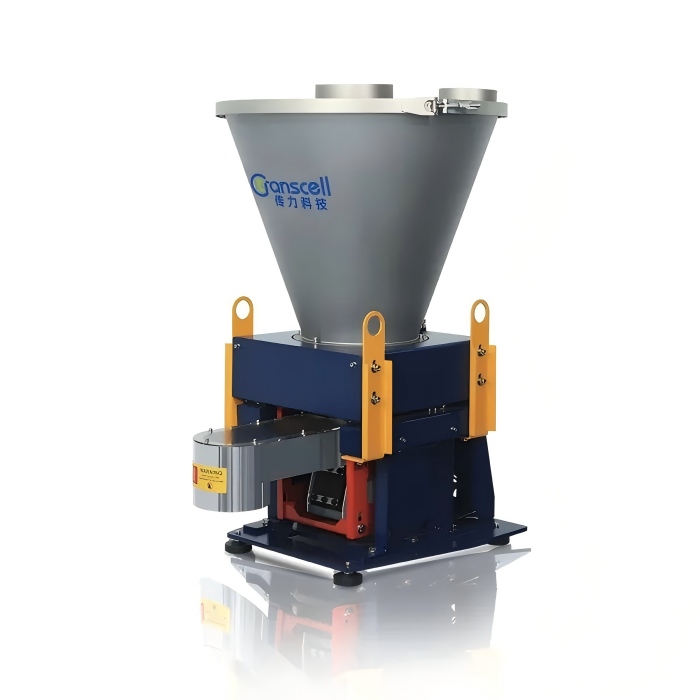
A complete loss in weight feeder system includes more than the feeder mechanism itself.
It combines:
Integration allows manufacturers to achieve:
For large-scale production environments, feeding data can be integrated with:
PLC systems
SCADA systems
MES platforms
This creates a more transparent and controllable manufacturing process.
How Does Transcell Group Help Prevent Feeding Problems?
Transcell Group approaches loss-in-weight feeding challenges from an engineering perspective.
Instead of providing a standard feeder without considering application conditions, Transcell evaluates:
Material characteristics
Feeding requirements
Production environment
Accuracy expectations
The company provides solutions designed for industries including:
Plastics
Chemicals
Food processing
Pharmaceuticals
Advanced materials
Key engineering considerations include:
Customized Mechanical Design
Different materials require different solutions.
Transcell Group considers:
Intelligent Control Technology
Stable feeding depends on accurate measurement and responsive control.
Advanced systems monitor:
Real-time weight changes
Feeding rate variation
Refill conditions
Production requirements
Long-Term Reliability
Industrial customers require systems that operate continuously with minimal interruption.
A properly designed loss-in-weight system helps:
Reduce material waste
Improve product consistency
Increase automation efficiency
Minimize production downtime
Frequently Asked Questions
1. What is material bridging in a loss-in-weight system?
Material bridging occurs when bulk material forms a stable structure above the feeder outlet, preventing continuous discharge. It is common with cohesive powders, lightweight materials, and moisture-sensitive products.
2. How can I prevent powder bridging in a feeder hopper?
Powder bridging can be reduced by optimizing hopper geometry, selecting suitable agitation methods, controlling moisture conditions, and choosing the correct feeding mechanism.
3. Why does my loss-in-weight feeder have unstable output?
Common causes include:
A complete system analysis is required to identify the actual cause.
4. Are vibratory feeders suitable for difficult materials?
Yes. Vibratory feeders can be suitable for fragile, irregular, or low-density materials because they provide gentle transportation and reduce mechanical stress.
5. Can one loss-in-weight system handle different materials?
Some systems can handle multiple materials through interchangeable components and adjustable parameters. However, highly different materials may require dedicated feeder configurations for optimal performance.
6. How often should feeding stability be checked?
Inspection frequency depends on the application.
Critical production processes should include regular monitoring of:
Feeding accuracy
Calibration status
Material behavior
Mechanical condition
Preventive maintenance helps avoid unexpected production interruptions.
Conclusion
Preventing bridging and feeding instability in loss-in-weight systems requires a combination of material understanding, mechanical optimization, and intelligent process control.
Bridging problems are rarely caused by a single factor. They usually result from the interaction between material properties, hopper design, feeder mechanism, environmental conditions, and operating parameters.
For powders, granules, fibers, and other challenging materials, the most effective solution is a properly engineered system designed around the real application.
Transcell Group provides customized gravimetric feeding solutions that help manufacturers improve stability, maintain accurate dosing, and achieve reliable automated production performance.
By selecting the correct feeder technology, optimizing material flow, and applying advanced weighing control, manufacturers can reduce waste, improve product consistency, and build more efficient production processes.
External References
https://www.nist.gov/
https://www.iso.org/
https://www.fda.gov/
 CN
CN