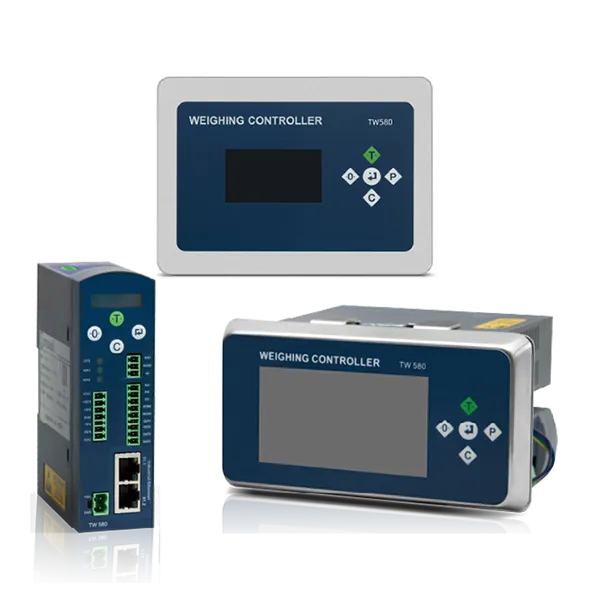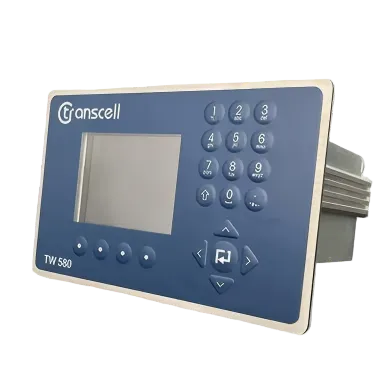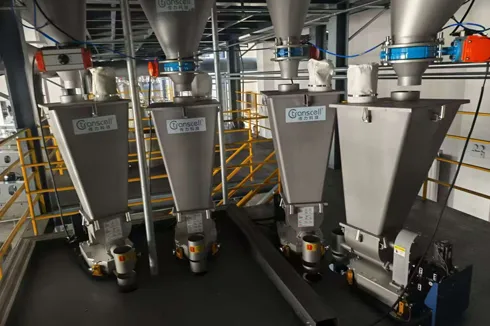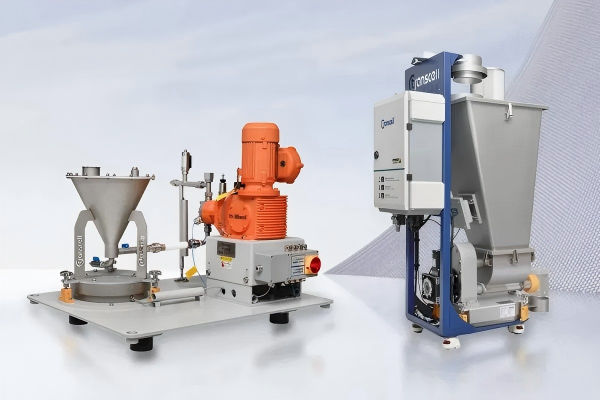
Loss-in-weight feeders are among the most important auxiliary equipment for extruders. Incorrect feeding can not only produce off-spec product, but may also lead to mechanical damage and personal injury.
The importance of feeders has received increasing attention over the past few years. During this time, double screw extruders with higher speeds and torque have made it possible to increase productivity by more than 100%.
These high-speed machines (exceeding 600 rpm) require loss-in-weight feeders with better short‑term accuracy than was needed in the past. Feed fluctuations that were tolerable at 400 rpm (e.g., during feeder refill) may be unacceptable at 600 to 1000 rpm. In a double screw compounder running at 1000 rpm, the residence time of plastic between entering the feed opening and beginning to melt is only 1 to 1.5 seconds. This is too short for the feeder to correct fluctuations, and torque spikes can cause machine shutdowns (a not‑uncommon occurrence).
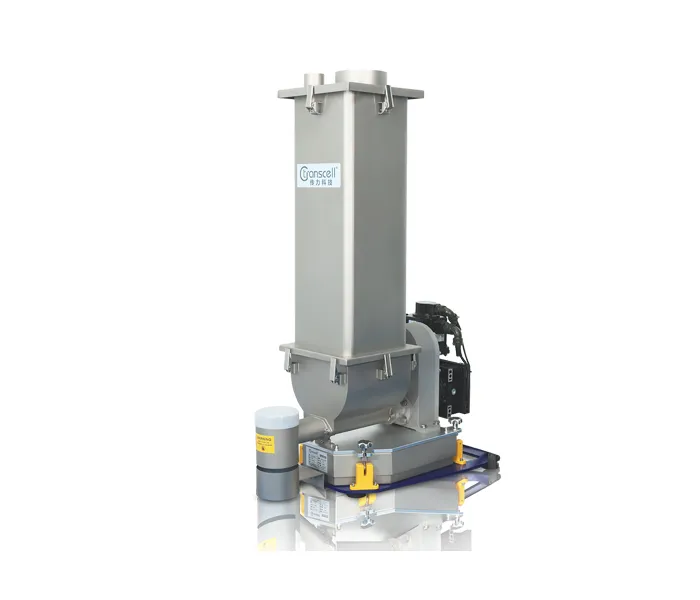
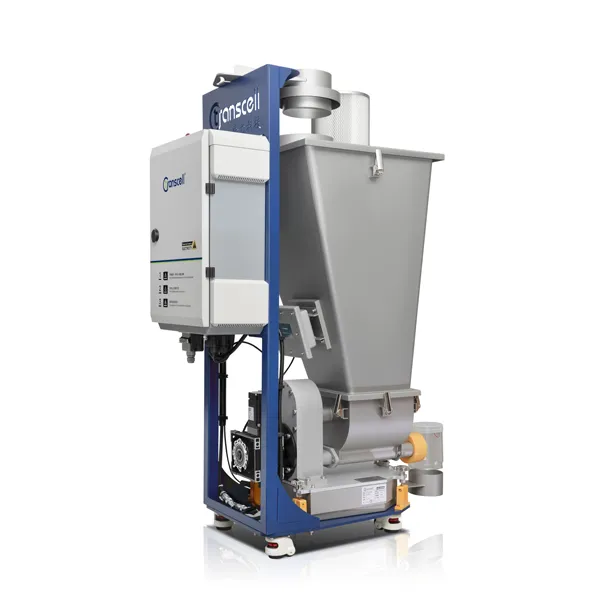
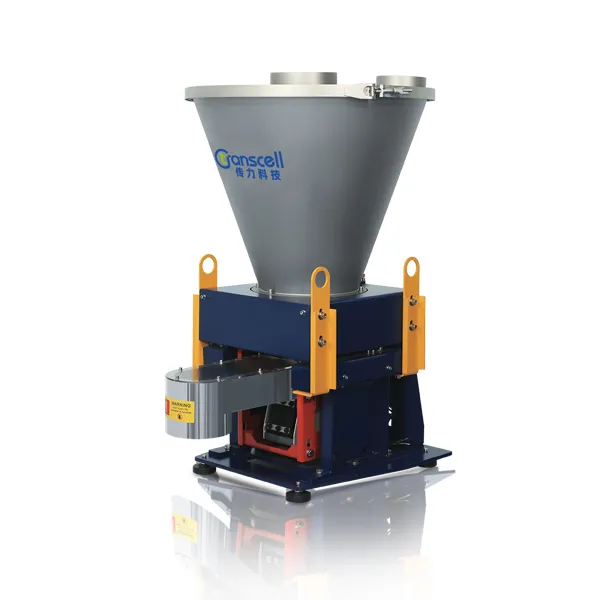
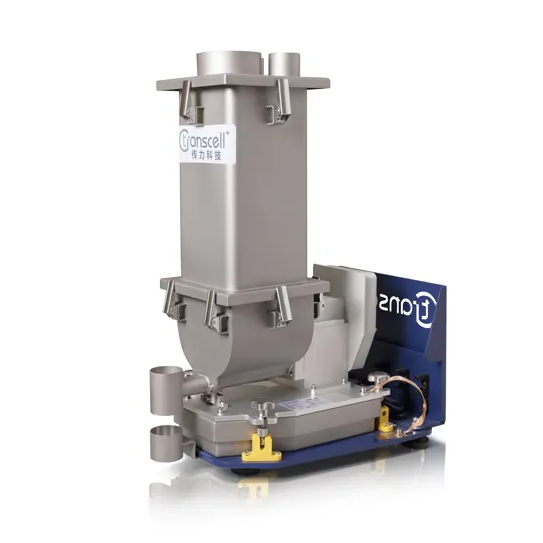
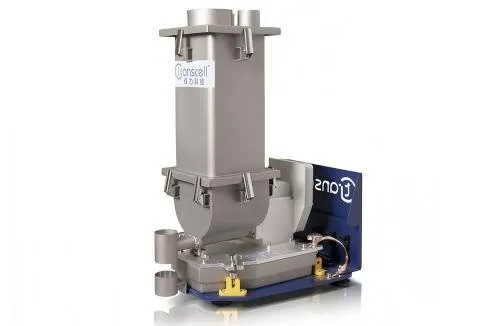
Double Screw Loss‑in‑weight Feeder | Source: Transcell Technology
Feeder manufacturers have improved their products to meet the need for precise, stable feeding for high‑speed extruders. But it is important that plant engineering and operations personnel also understand this issue when selecting and operating loss‑in‑weight feeding systems.
The “system” concept is critical, because if an extrusion line is to run efficiently, compounders need both a good individual loss‑in‑weight scale and a good overall feeding system.
To properly select and operate a loss‑in‑weight feeding system, compounders must avoid several common misconceptions about feeders – misconceptions that can lead to endless headaches and lost productivity.
Misconception 1: A twin‑screw feeder is always more accurate than a single‑screw feeder.
In fact, multi‑flight single‑screw feeders have proven to be equally accurate over a 1‑ to 2‑second timeframe. Twin‑screw feeders are versatile and handle free‑flowing powders and pellets well, but with shear‑sensitive materials they may bind in the twin screws, causing unstable flow, material agglomeration in the screws, and possible screw damage. An undersized or improperly configured double screw feeder can block on pellets or hard, granular materials. Also, replacement screws for a double screw feeder cost 50% to 100% more than those for a single screw feeder.
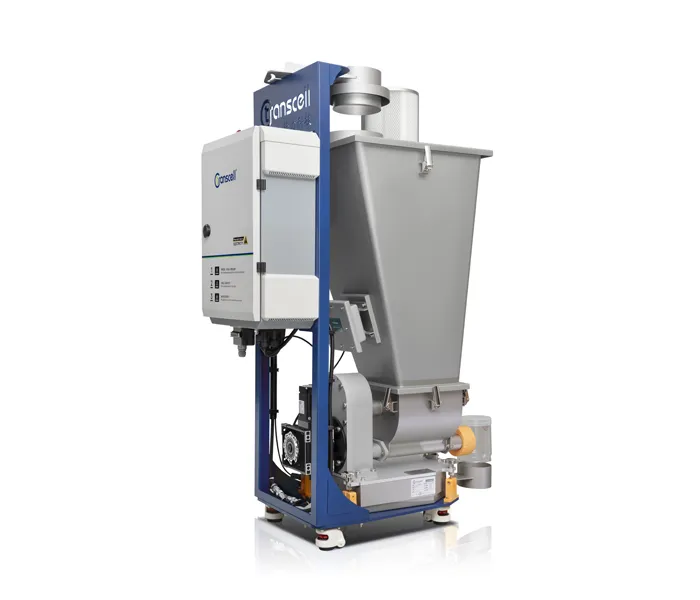
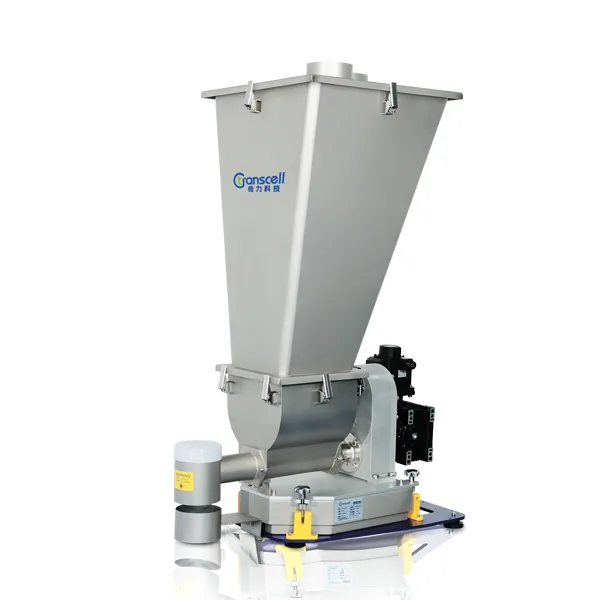
Single‑screw Loss‑in‑weight Feeder | Source: Transcell Technology
Misconception 2: Running a quick test before buying a feeding system is sufficient.
Running tests is a good way to evaluate feeding system performance and the overall capability of a supplier, but not all forms of testing are effective. Tests should be based on a written plan focused on your specific objectives, and should be run under conditions as close as possible to actual production. Tests should use your actual raw materials, and the materials should be conveyed the same way. For example, powder conveyed by dilute‑phase pneumatic conveying flows differently from the same material handled gently – the latter can have 33% higher bulk density.
Make sure to evaluate feeder performance over several refill cycles. Also, do not be afraid to give the system a “shock” while running to see how it behaves during unplanned disturbances.
Most feeding problems start with the refill system, so tests should also mimic the proposed refill system. Consulting with your supplier will give you insights from their equipment setup experience – for example, how many refills per hour they expect, or the hopper level at which they expect refill to begin. In addition, evaluate how often you will need to clean and reconfigure the feeding system. Some pigments and additives require hoppers made of special plastics or highly polished stainless steel for easy cleaning.
Misconception 3: The mounting location of the feeder on the compounder does not matter.
When installing the system, look at the operating environment: vibration must be minimized. Vent lines from the refill hopper and feeder (essential to prevent system blockages) must not contact the loss‑in‑weight scale equipment.
You also need to ensure that no one can drop or hit the feeder during startup – there is often a lot of activity around the machine at that time. At the same time, you must investigate the durability and replacement cost of the scale.
Misconception 4: Designing the feeder control system is the engineer's job, not the operator's.
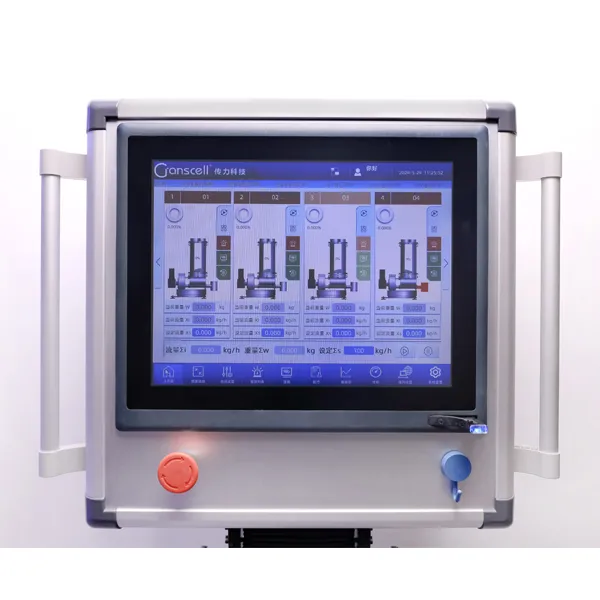
Your instrumentation & control engineers and process engineers should be involved in selecting and planning the feeder control system, but your lead operator must be involved in the detailed design. Engineers typically want every detail on the control system – which is good in principle. However, operators must ensure that the screens they have to use are clear and logical. Appropriate security levels for screens (typically three levels: operator, plant maintenance, and engineering) must also be considered. Otherwise, your feeding system may be slow to start up because it will be more difficult to commission.
Misconception 5: Vibrating loss‑in‑weight feeders are complex and not accurate enough.
Newer sensors and better control algorithms make vibratory feeders about as accurate as screw or belt feeders. For products very sensitive to excessive shear, such as chopped glass fiber, a vibrating feeder is a viable solution. A vibrating feeder handling glass fiber for 35% glass‑filled nylon 66 compound was recently shown to have a standard deviation of 0.015% over 22 test runs.
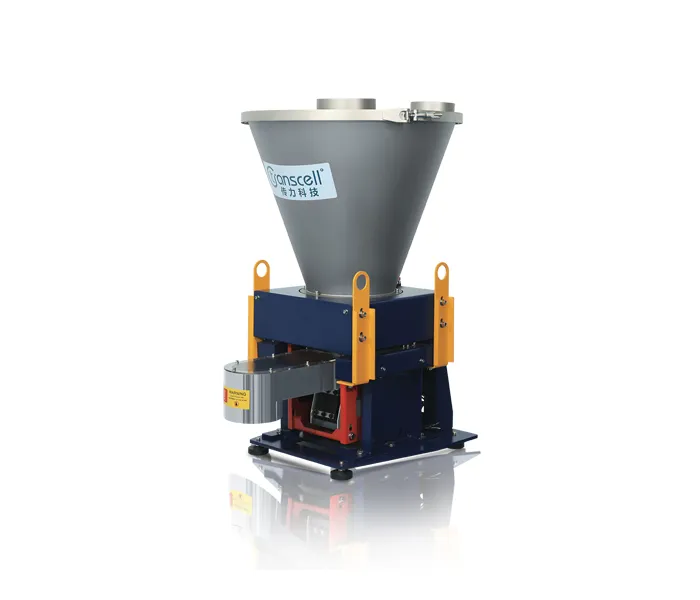
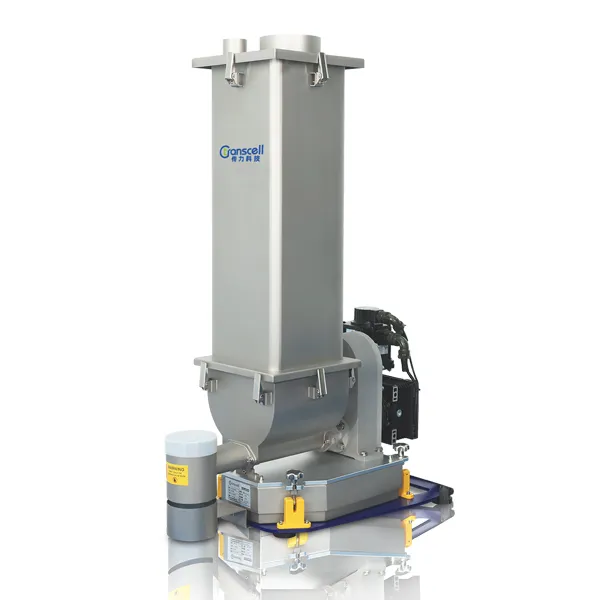
Vibrating Loss‑in‑weight Feeder | Source: Transcell Technology
Misconception 6: Only a loss‑in‑weight system can feed liquids accurately.
The density of a liquid is constant at a constant temperature, and its flowability seldom changes. Piston or diaphragm pumps work in the 1‑1000 cps range. If you need to monitor the liquid feed rate, a Coriolis‑type meter that measures flow disturbances, or an integral scale on the feed vessel, can indicate real‑time feed rate and alarm when it falls outside the target range. But a feedback loop for liquid rate control tends to create more problems than it solves.
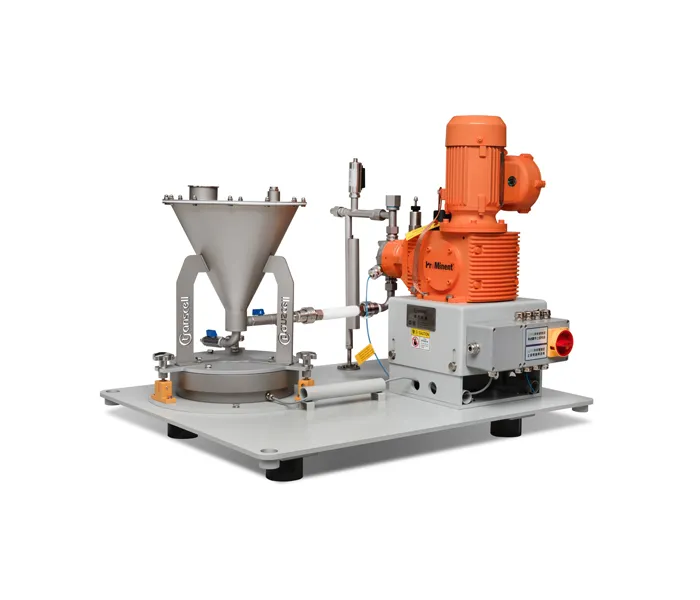
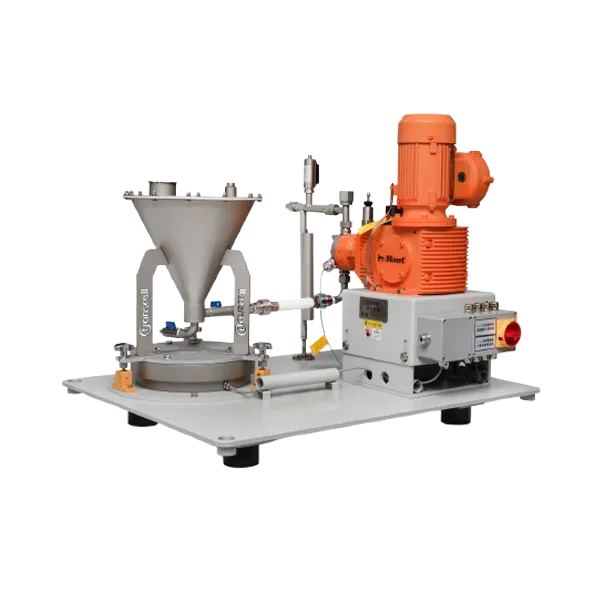
Liquid Loss‑in‑weight Feeder | Source: Transcell Technology
Misconception 7: A conventional solids feeder can replace a side‑feeder.
A typical side‑feeder has several components that a conventional solids hopper feeder does not have, including a wear‑resistant construction, a relatively high‑torque screw, a fully intermeshing screw, and metal gears (rather than nylon) for torque transmission. In some cases, a solids (hopper) feeder used as a side‑feeder machine was destroyed after only three to four days of operation. If a feeder salesperson says his solids feeder can be used as a side‑feeder, request a written guarantee of its performance and service life.
Misconception 8: Volumetric feeders are less accurate than loss‑in‑weight feeders.
A volumetric feeder that is well‑matched to the material can perform as well as – or even better than – a poorly matched loss‑in‑weight feeder. Gravimetric feeding is only a way to control and monitor the feeder; in the end, any feeder must consistently move material from the feed hopper onto the conveying screw or belt.
Every loss‑in‑weight feeder should be able to run in volumetric mode so that you can track actual weight loss over time. When evaluating different feeding systems (e.g., vibratory vs. screw), check the accuracy of each feeder in volumetric mode to understand the inherent precision of the feeder construction, separate from the ability of weight control to suppress system fluctuations. While on‑site adjustments can improve performance to some extent, a wrong feeder will still require design modifications or even a different type.
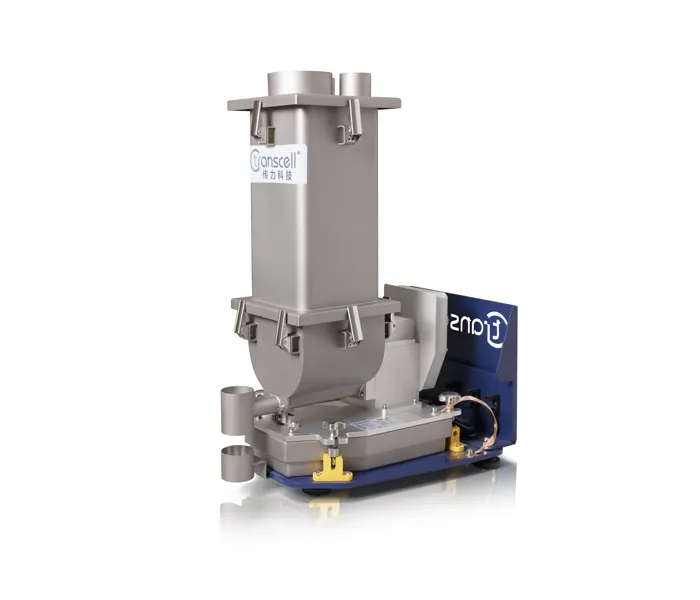
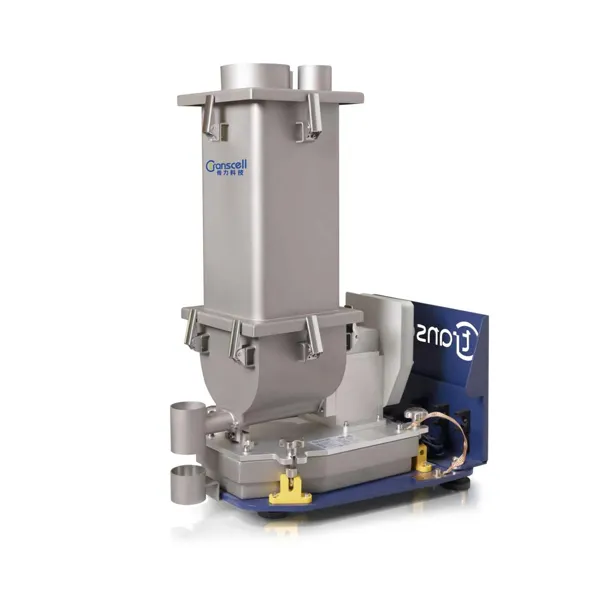
Micro Loss‑in‑weight Feeder | Source: Transcell Technology
Misconception 9: If the display shows the feeding system is operating at ±1% accuracy, everything is fine.
Remember how the feed rate is calculated. The displayed rate is the average weight loss in the hopper over a specific time span. The longer that time span, the more the displayed value is smoothed, damping any short‑term fluctuations. If your line is running at more than 600 rpm, you cannot ignore short‑term fluctuations – even if your data collection equipment does.
 CN
CN