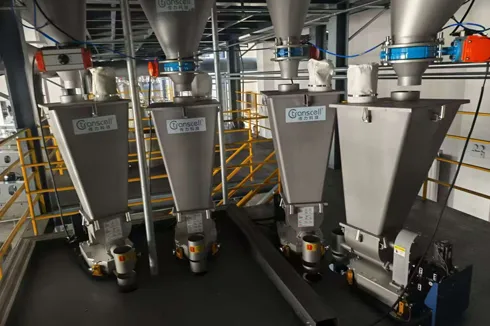
Automation projects often fail in the space between the sensor and the machine decision. The load cell may be accurate, the PLC may be powerful, and the feeder may be mechanically capable, yet the line still oscillates, overfills, alarms unexpectedly, or produces data that operators do not trust. The problem is frequently not one component. It is the way measurement, signal processing, I/O, control logic, communications, and machine behavior have been connected.
Process control instrumentation is the layer that turns physical variables into controlled action. In weighing and dosing applications, it must capture small load-cell signals, produce stable weight values, compare those values with targets, operate feeders or valves, report status, and exchange data with the wider automation system. Good instrumentation makes the process easier to operate and diagnose. Poor instrumentation creates hidden delay, noise, inconsistent cutoffs, ambiguous alarms, and avoidable dependence on manual adjustment.
This guide focuses on process control instrumentation for automated weighing, batching, filling, and gravimetric dosing. It explains which signals matter, how update rates and filtering affect control, how communication protocols should be selected, what should be tested during commissioning, and how Transcell's weighing and control portfolio can fit into a broader industrial automation architecture.
What Is Process Control Instrumentation?
Process control instrumentation is the collection of sensors, transmitters, weighing electronics, controllers, I/O, communications, and software functions used to measure process variables and automatically influence equipment behavior.
In a weighing application, the process variable is mass or force. The sensor converts force into an electrical signal. The instrument excites and reads the sensor, filters noise, performs calibration, and converts the result into a digital value. Control logic compares that value with a setpoint or recipe. Outputs then start, stop, slow, or modulate a feeder, valve, conveyor, pump, or other actuator. Communication interfaces send the same information to a PLC, HMI, MES, historian, or supervisory system.
The important point is that instrumentation is not only the device mounted in a panel. It is the complete signal path from the physical process to the decision and back to the actuator. A system can have high-quality components and still perform badly if the interfaces between them are poorly designed.
For automated weighing and dosing, the instrumentation has to support both measurement quality and response time. A stable static reading is valuable, but a filling machine may also need the value to update quickly enough to stop before material overshoots the target. A continuous feeder requires repeated mass-flow calculations and feedback. The correct instrumentation therefore depends on what the process is trying to control.
How Does Process Control Instrumentation Close the Measurement-to-Action Loop?
Process control instrumentation closes the loop by measuring the current process condition, comparing it with a target, calculating the required response, and sending a command to the equipment that changes the process.
Consider a simple hopper-filling sequence. A target weight is 100 kg. The controller reads the hopper weight and commands a feeder to run at high speed. When the weight approaches the target, it switches to a slower rate. Before the display reaches exactly 100 kg, it may stop the feeder to account for material that is still falling. The final stable weight is checked against tolerance. The result is stored or transmitted, and the next cycle begins.
The same loop becomes more complex in continuous dosing. The controller does not wait for a final weight. Instead, it measures how quickly weight is changing. If the actual mass flow is below the setpoint, the drive speed increases. If the flow is above the setpoint, the speed decreases. During refill, the controller needs a special strategy because hopper weight temporarily increases.
Control quality depends on delay. Every stage adds some: sensor response, filtering, conversion, communications, PLC scan time, actuator response, and mechanical material travel. If the total delay is long, the process may overshoot or oscillate. Good process control instrumentation is therefore designed around the dynamic behavior of the machine, not only around a static accuracy specification.
Which Signals Matter Most in Process Control Instrumentation?
The most important process control instrumentation signals are the measurement value, target or setpoint, equipment state, command outputs, interlocks, alarms, totals, and diagnostic information needed to understand why the process behaved as it did.
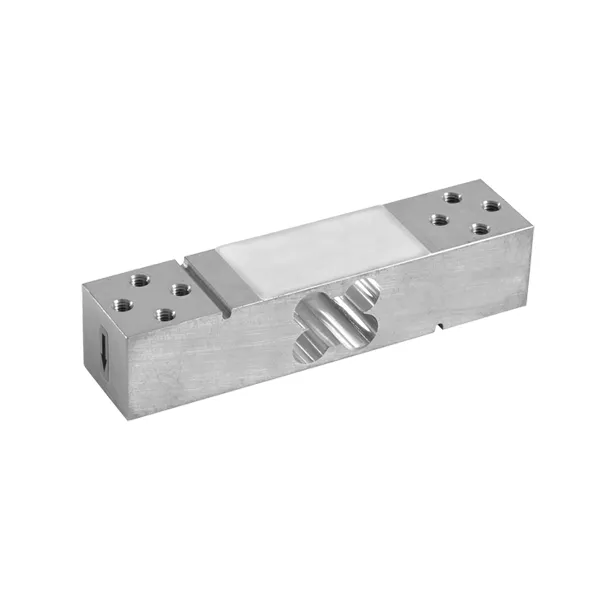
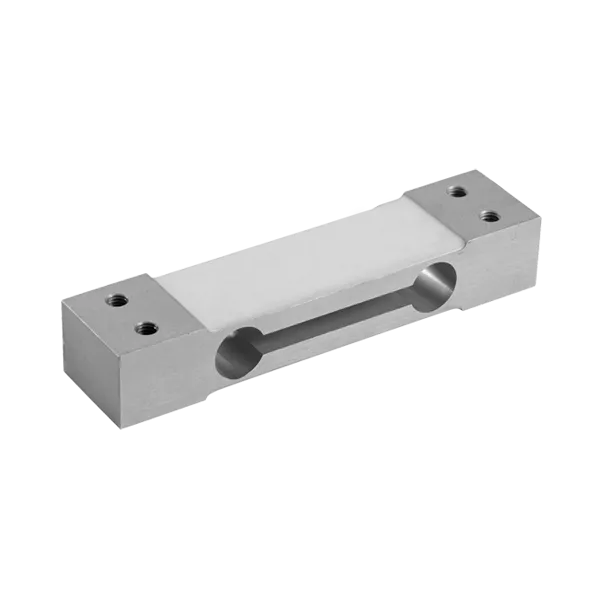
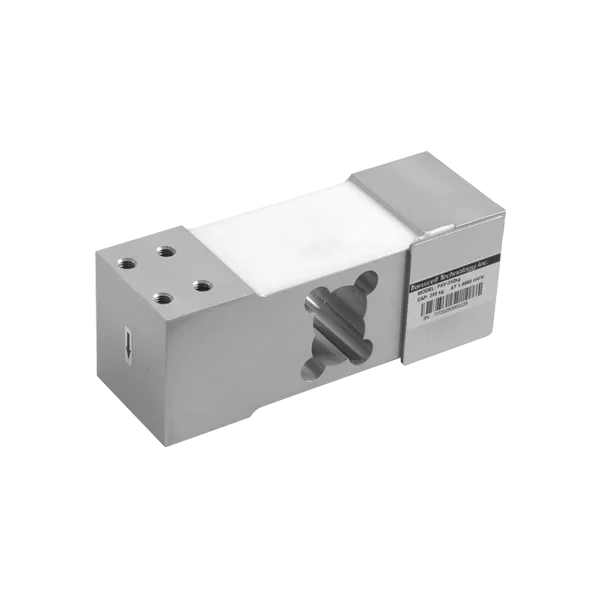
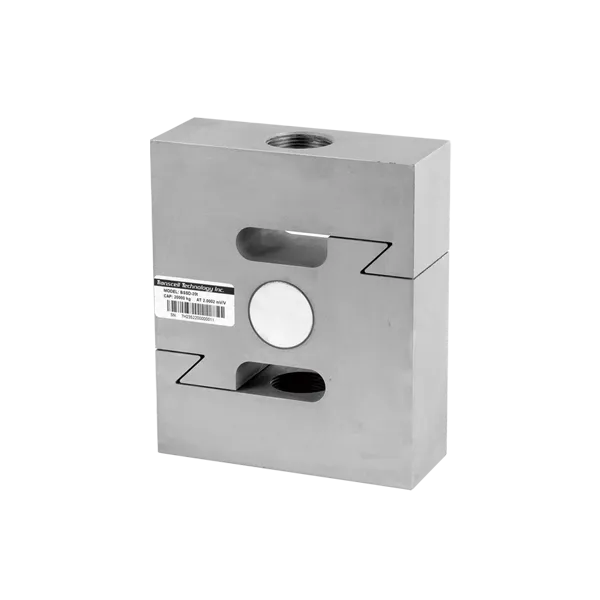
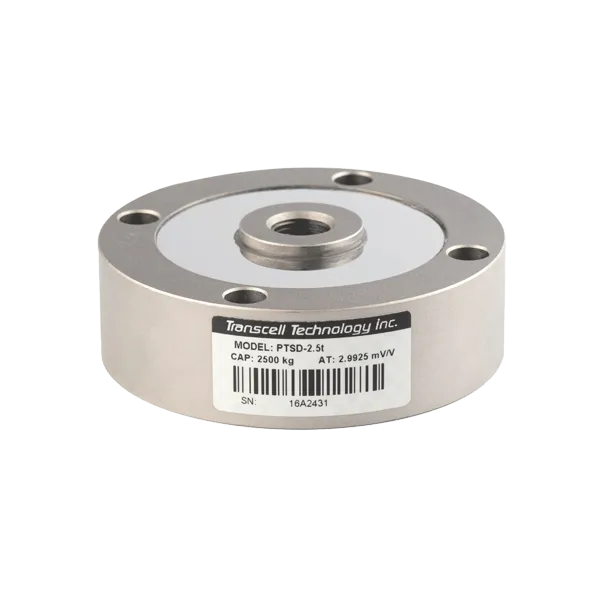
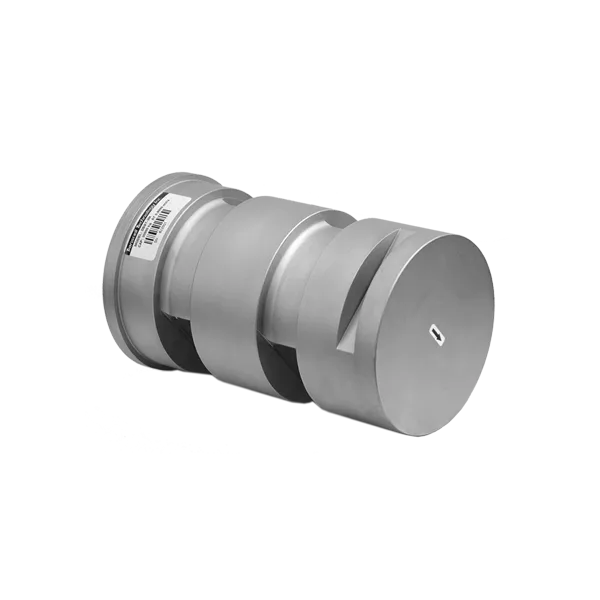
The raw measurement begins with the sensor. In an industrial weighing system, a load cell transducer commonly produces a millivolt-per-volt signal that must be excited and amplified by the weighing electronics. The controller then creates the process value used by the rest of the automation system.
Digital inputs may confirm that a gate is closed, a bag is present, a conveyor is running, or a safety condition has been met. Digital outputs may operate a valve, feeder, alarm, or relay. Analog outputs may provide a 4-20 mA or 0-10 V representation of weight or control demand. Network variables can carry setpoints, status words, measured values, totals, recipe identifiers, and fault codes.
Diagnostics are often the difference between a line that can be supported and one that creates long shutdowns. Operators should be able to distinguish "weight unstable" from "load cell signal out of range," "communication lost," "target exceeded," or "refill not completed." If every problem becomes one generic alarm, maintenance spends time proving what did not fail.
How Should Process Control Instrumentation Handle Weighing Speed and Filtering?
Process control instrumentation should filter enough noise to produce a trustworthy weighing value without adding so much delay that the controller reacts too late to real process changes.
Weighing signals are often noisy because industrial machines vibrate. Mixers, blowers, motors, extruders, conveyors, and floor movement can all affect the measurement. Digital filtering can reduce those disturbances. The tradeoff is response time. A very smooth signal may represent the past rather than the current process condition.
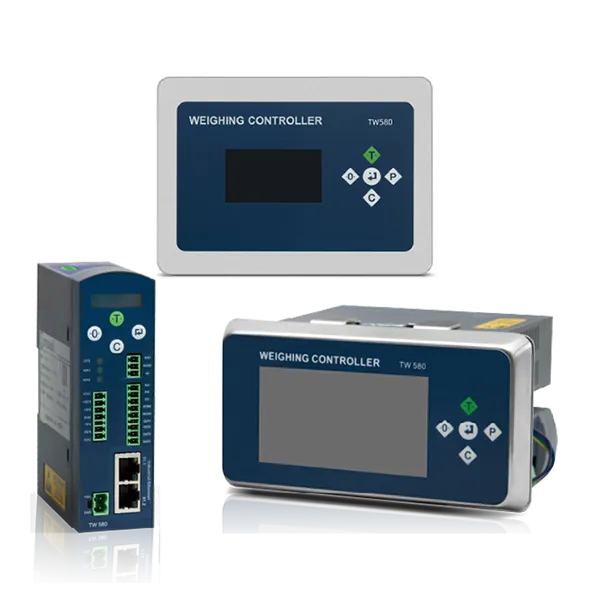
Transcell's TW580 and TW580C specifications both list a 960 Hz weight update rate, a 960 Hz weight comparison rate, and a 960 Hz PLC update rate. That high internal update capability gives the control system room to perform fast weighing tasks, but the real application response still depends on filtering, communications, machine mechanics, and actuator delay. Update frequency should never be confused with guaranteed final-product accuracy.
A practical commissioning method is to trend raw or minimally filtered weight alongside the controlled output. Increase filtering until the noise no longer causes false control action, then verify that the machine still stops or corrects quickly enough. The correct setting may be different for a quiet tank scale and a fast packaging machine.
What Communication Protocols Should Process Control Instrumentation Support?
Process control instrumentation should support the communication protocol that best fits the plant architecture, required update behavior, diagnostics, cybersecurity practices, and installed automation platform.
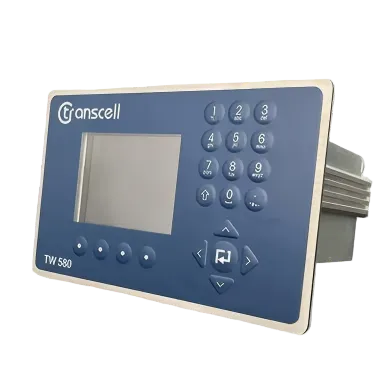
There is no universal "best" industrial protocol. The right choice is the one the plant can integrate, maintain, and troubleshoot. Transcell's TW580 currently lists Modbus TCP as standard, with optional PROFINET, EtherNet/IP, EtherCAT, Modbus TCP, and CC-Link IE Field Basic through industrial Ethernet configurations. It also supports optional Modbus RTU and serial communications. The TW580C lists isolated RS485 and RS232 as standard, with optional Ethernet and industrial Ethernet variants depending on configuration.
The protocol selection should be documented early because it affects hardware options, network topology, PLC programming, commissioning tools, and spare-part strategy. A plant standardized on PROFINET may prefer a native interface rather than converting through a gateway. A machine with a simple local controller may only need Modbus RTU. A high-speed machine may benefit from deterministic industrial Ethernet, but only if the rest of the architecture is engineered to use it.
Data mapping matters as much as the protocol. The integration team should define which variables are read-only, which can be written, how setpoints are scaled, how commands are acknowledged, what timeout represents a fault, and what safe state follows a communications failure. Without that agreement, two devices can be "communicating" while the machine logic remains unreliable.
How Does Process Control Instrumentation Coordinate Weighing, Dosing, and Batching?
Process control instrumentation coordinates weighing, dosing, and batching by linking measured mass with sequence logic, equipment commands, tolerances, and material-flow behavior.
Batching is sequence-oriented. The system may add material A to a hopper, verify tolerance, add material B, mix, discharge, and record the result. Each step has permissives and failure states. Filling is endpoint-oriented: the main challenge is stopping at the target without giveaway or underfill. Continuous dosing is rate-oriented: the challenge is maintaining mass flow over time rather than reaching one final number.
A modern weighing controller can offload some of these fast application functions from the PLC. Transcell's TW580 supports setpoint control, comparator functions, filling, packaging, checkweighing, and loss-in-weight applications. The TW580C supports basic weighing, setpoint control, comparator, fixed-quantity packaging, filling, bulk material handling, and checkweighing. The decision to use local application logic or central PLC logic should be based on system architecture, not habit.
Local control can improve response and keep a machine functional even when a supervisory network is unavailable. Central PLC control can simplify plant-wide sequencing and standardize software. Hybrid designs are common: the weighing controller handles fast weight processing and local cutoff, while the PLC manages recipe flow and line coordination. The interface between the two must be explicit.
How Do Process Control Instrumentation Architectures Compare?
Process control instrumentation architectures should be compared by response time, integration effort, diagnostic depth, scalability, maintenance skill, and the consequence of a communications or controller failure.
| Architecture | Where control logic lives | Best fit | Main strength | Main risk |
|---|
| Standalone instrument | Local weighing instrument | Simple scales, local filling, basic batching | Low complexity and fast local response | Limited plant-level coordination |
| PLC-centered | Main PLC | Multi-machine lines with centralized sequences | Single control environment and consistent standards | Depends on network and PLC scan strategy for fast functions |
| Smart weighing controller + PLC | Fast weighing locally; sequence split with PLC | Packaging, batching, dosing, connected machines | Good balance of local performance and plant integration | Needs clear ownership of commands and alarms |
| Distributed industrial network | Multiple smart nodes and supervisory control | Large connected plants and smart-factory programs | Scalable data and diagnostics | More cybersecurity and network-management responsibility |
For procurement, the cheapest architecture is not necessarily the lowest-cost lifecycle choice. If a line runs continuously and a one-hour troubleshooting event is expensive, diagnostic quality may be worth more than the difference between two control devices. If the plant has limited automation support, simplicity may be more valuable than advanced networking. The correct architecture is the one the operating organization can sustain.
How Should Process Control Instrumentation Be Designed for Harsh Industrial Environments?
Process control instrumentation for harsh environments should be specified for temperature, moisture, washdown, dust, vibration, electromagnetic interference, cleaning practice, and the physical access needed for maintenance.
Enclosure selection is one visible part of environmental design. The current TW580 specification lists different housing options with different protection levels: IP20 for the DIN-rail version, front-panel IP65 for the panel-mount version, and IP66/IP69K for the dustproof version. The listed operating temperature is -10°C to 50°C, with certified temperature from -10°C to 40°C and relative humidity of 10% to 90% non-condensing.
The sensor environment can be even more challenging than the control cabinet. Moisture, chemical exposure, impact, side load, and cable damage can degrade weighing performance. The mechanical installation should prevent unwanted forces from entering the measurement. This is why process control instrumentation work cannot be separated completely from machine design.
Electrical design should include proper grounding, cable separation where necessary, stable power, surge considerations appropriate to the plant, and protection for communication lines. Maintenance access should allow technicians to inspect terminals and connectors without dismantling half the machine. A robust design prevents small faults from becoming long production stops.

What Cybersecurity and Data Integrity Issues Affect Process Control Instrumentation?
Connected process control instrumentation should be treated as operational technology, with controlled access, documented network boundaries, change management, secure remote support, and reliable handling of production data.
As weighing devices become networked, cybersecurity becomes part of availability. The risk is not limited to a malicious attacker changing a setpoint. Poor network design can also create accidental outages, duplicate addressing, uncontrolled firmware changes, or unsupported remote-access paths. The more the process depends on connected devices, the more deliberately the network should be managed.
NIST Special Publication 800-82 Revision 3 provides current guidance for operational technology security, emphasizing that OT security has to preserve safety, reliability, and availability alongside confidentiality. For a weighing or dosing project, practical steps include network segmentation, role-based access where supported, documented device inventories, controlled configuration backups, and a defined procedure for software or firmware changes.
Data integrity matters operationally too. If a batch record is used for quality release, the system should define where the authoritative value is generated, how timestamps are synchronized, how recipe IDs are associated with weights, and what happens if communications fail during a transaction. Production data is only useful when operators and quality teams can trust its context.
How Should Process Control Instrumentation Be Commissioned?
Process control instrumentation commissioning should verify the complete loop from sensor input through signal processing, logic, output, actuator response, network communication, alarm handling, and safe-state behavior.
Start by checking physical installation and wiring. Confirm sensor polarity, excitation, shield termination, I/O voltage, output wiring, and network addressing. Calibrate the weighing channel and document zero and span. Check that the displayed value is stable under realistic machine vibration. Then exercise each input and output individually before testing automatic sequences.
For communications, verify more than "online." Read live values in the PLC, write a test setpoint, confirm scaling, and test status words and alarm bits. Disconnect the network and observe the fault response. Reconnect it and confirm recovery. If the controller uses multiple protocols or redundant paths, test the configuration that will actually ship.
Finally, run the process with representative material. A dry I/O test cannot reveal free-fall, bulk-density change, refill disturbance, valve delay, feeder pulsation, or material buildup. Record cycle time, final weight distribution, alarm frequency, and any manual adjustment operators make. Those observations often reveal whether the instrumentation design is genuinely ready for production.
How Can Process Control Instrumentation Improve Production Economics?
Process control instrumentation improves production economics when better measurement and faster control reduce material giveaway, rework, labor, downtime, and time spent diagnosing unstable processes.
Consider a filling line running 20 containers per minute for two eight-hour shifts, 250 days per year. That equals 4.8 million containers annually. If the process overfills by an average of only 2 grams per container, the annual giveaway is 9,600 kg. At a product value of US$1.50 per kilogram, that is US$14,400 per year. Reducing average giveaway by half would save US$7,200 before considering quality, labor, or throughput benefits.
The same logic applies to dosing. If an expensive additive is intentionally overfed because operators do not trust the measurement loop, the plant is paying for uncertainty. Better instrumentation can reduce the need for that safety margin, but only when the complete system has been validated. A fast controller cannot compensate for a poorly flowing material, and a high-resolution sensor cannot compensate for rigid piping that bypasses the scale.
ROI should therefore include both hardware cost and system effects: commissioning time, engineering hours, material loss, rejected product, maintenance calls, spare parts, production interruption, and future integration. A slightly higher initial investment may be justified if it makes the line more stable and easier to support.
Why Use Transcell Process Control Instrumentation in Weighing Applications?
Transcell process control instrumentation combines weighing-specific electronics with load cells, loss-in-weight feeders, and intelligent control products, giving industrial users a coordinated path from measurement to automated material handling.
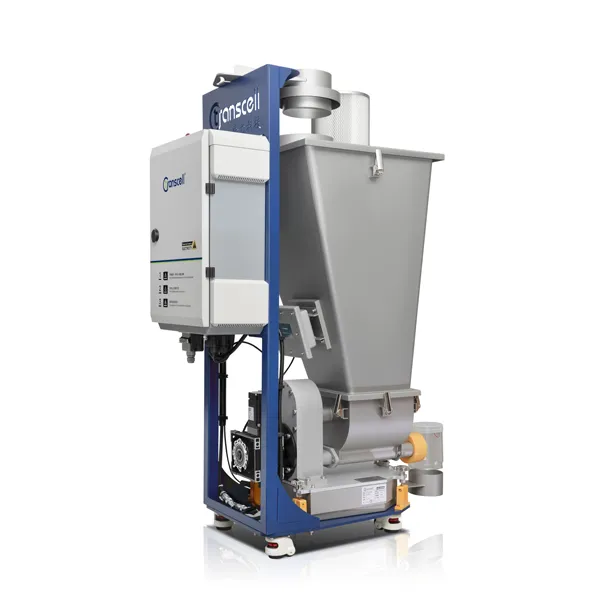
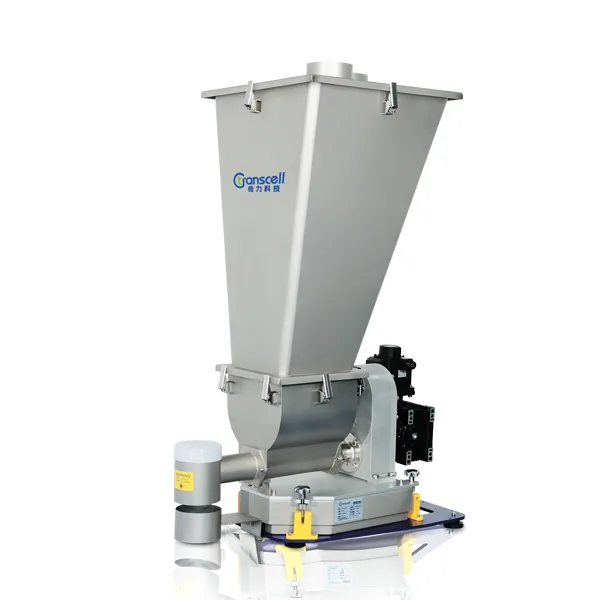
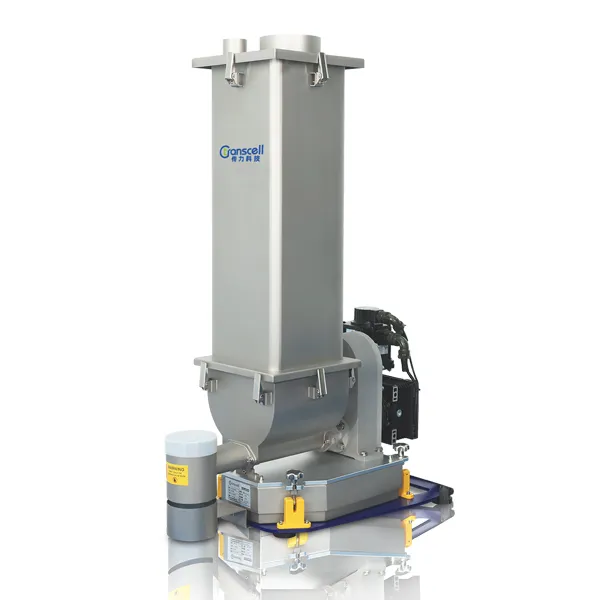
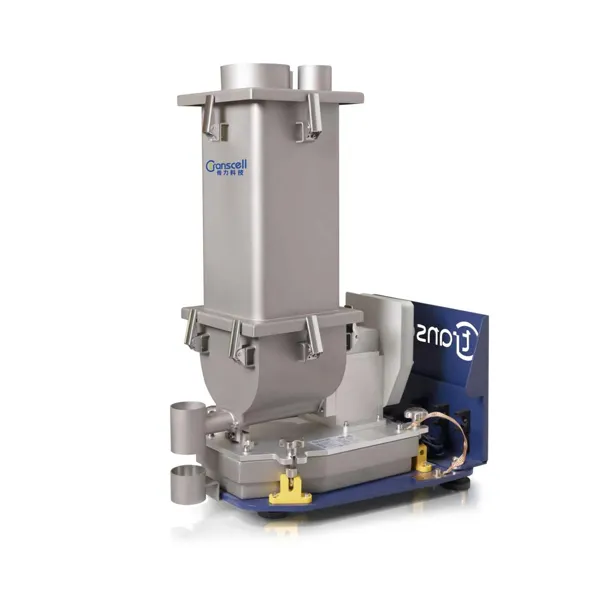
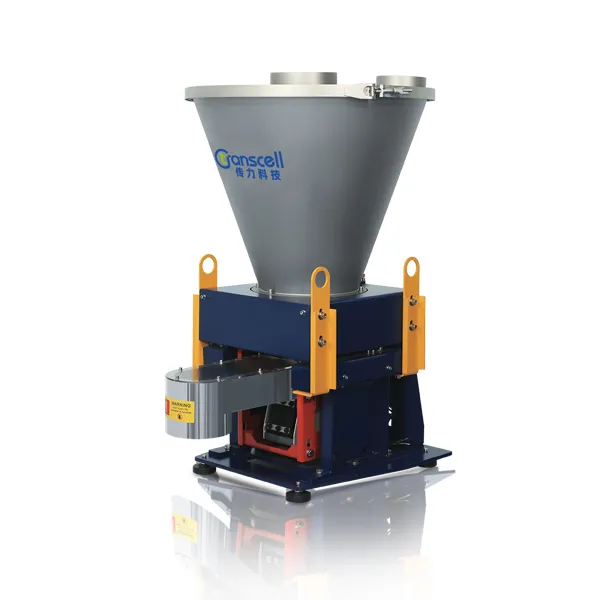
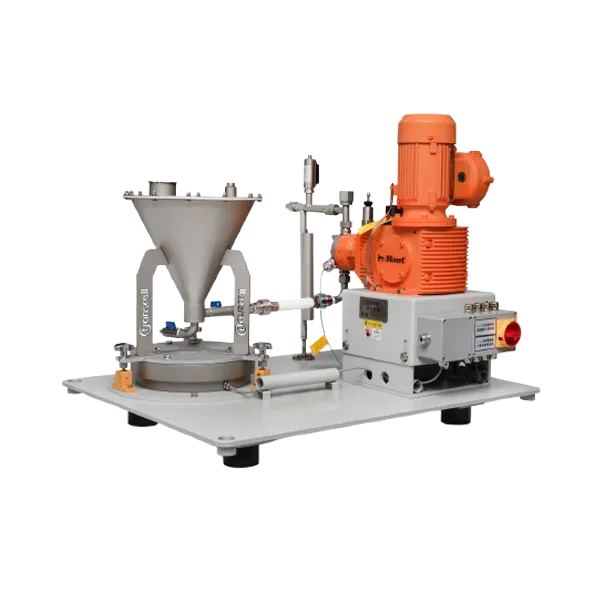
The company profile states that Transcell was founded in Chicago in 1981 and that the Changzhou operation was established in 2010. The current product range includes load cells, TW580 and TW580C weighing controllers, multiple loss-in-weight feeder designs, and an industrial internet intelligent control system. That combination is particularly relevant when a project involves both weighing accuracy and material-motion control.
For engineers evaluating process control instrumentation, the useful starting point is a functional specification. Define the variables to be measured, the required response time, number of weighing channels, I/O count, protocols, PLC platform, control ownership, alarm strategy, enclosure environment, data-retention requirement, and failure states. If material feeding is involved, include feed rates, material properties, refill arrangement, and actual process height.
Transcell's published controller specifications show the kind of details that should be reviewed before selection: number of supported 350-ohm load cells, verification scale divisions, update rate, power requirements, enclosure protection, digital I/O capacity, analog options, serial communications, and industrial Ethernet protocols. Comparing those items against the functional specification creates a much stronger procurement process than selecting by model name alone.
Process Control Instrumentation FAQs
These process control instrumentation FAQs focus on protocol choice, response time, PLC integration, calibration, safety, and practical specification for automated weighing applications.
1. Is a weighing controller considered process control instrumentation?
Yes. A weighing controller is process control instrumentation because it converts sensor signals into measured weight, applies control or application logic, operates I/O, and communicates with the wider automation system.
2. Should the weighing controller or PLC perform the batching logic?
Either can be appropriate. A local weighing controller can provide fast deterministic weight processing, while a PLC provides centralized line coordination. Many systems use a hybrid architecture. The project must define which device owns each command, setpoint, alarm, and sequence.
3. Which protocol is best for process control instrumentation?
The best protocol is the one that matches the plant standard, required update behavior, diagnostics, and maintenance skill. Common options include Modbus TCP, Modbus RTU, PROFINET, EtherNet/IP, EtherCAT, and other industrial Ethernet protocols depending on the controller.
4. Does a higher update rate always improve weighing accuracy?
No. A higher update rate provides more frequent data, but final performance also depends on sensor quality, mechanical installation, filtering, vibration, control logic, and actuator response. Fast data is valuable only when the rest of the system can use it correctly.
5. What should be tested if a weighing value becomes unstable?
Check the mechanical force path, flexible connections, material buildup, vibration, grounding, cables, sensor signal, power supply, filter settings, and nearby equipment before assuming the controller is faulty.
6. What information should be included in a process control instrumentation RFQ?
Include the application, number and type of sensors, load-cell sensitivity, required accuracy, update or cycle time, I/O count, communication protocol, PLC brand, power supply, enclosure requirement, operating temperature, data requirements, control functions, and any hazardous-area or hygiene constraints.
Conclusion: Specifying Process Control Instrumentation Around the Real Process
Effective process control instrumentation begins with the physical process and ends with a verified machine response, not simply with a list of controller features.
Define what must be measured and what action the measurement should trigger. Match sensor range and mounting to the real load. Choose weighing electronics with suitable update performance, I/O, protocols, and environmental protection. Decide where control logic lives. Document data mapping and communications failure behavior. Test the full loop with real material and realistic machine vibration. Then record baseline values so maintenance teams can recognize drift later.
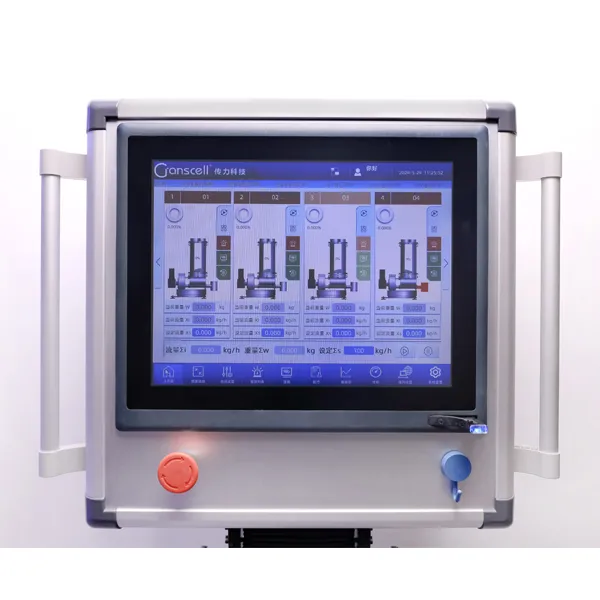
When the signal chain is engineered as one system, weighing becomes a dependable automation variable rather than a source of uncertainty. Transcell's combination of load cells, weighing controllers, loss-in-weight feeders, and industrial intelligent control products gives machine builders and process plants a practical platform for integrating measurement, control, and material dosing with clearer responsibility and stronger diagnostics.
External References
The following technical resources provide independent background on operational-technology security and commonly used industrial communications referenced in process control instrumentation projects.
 CN
CN